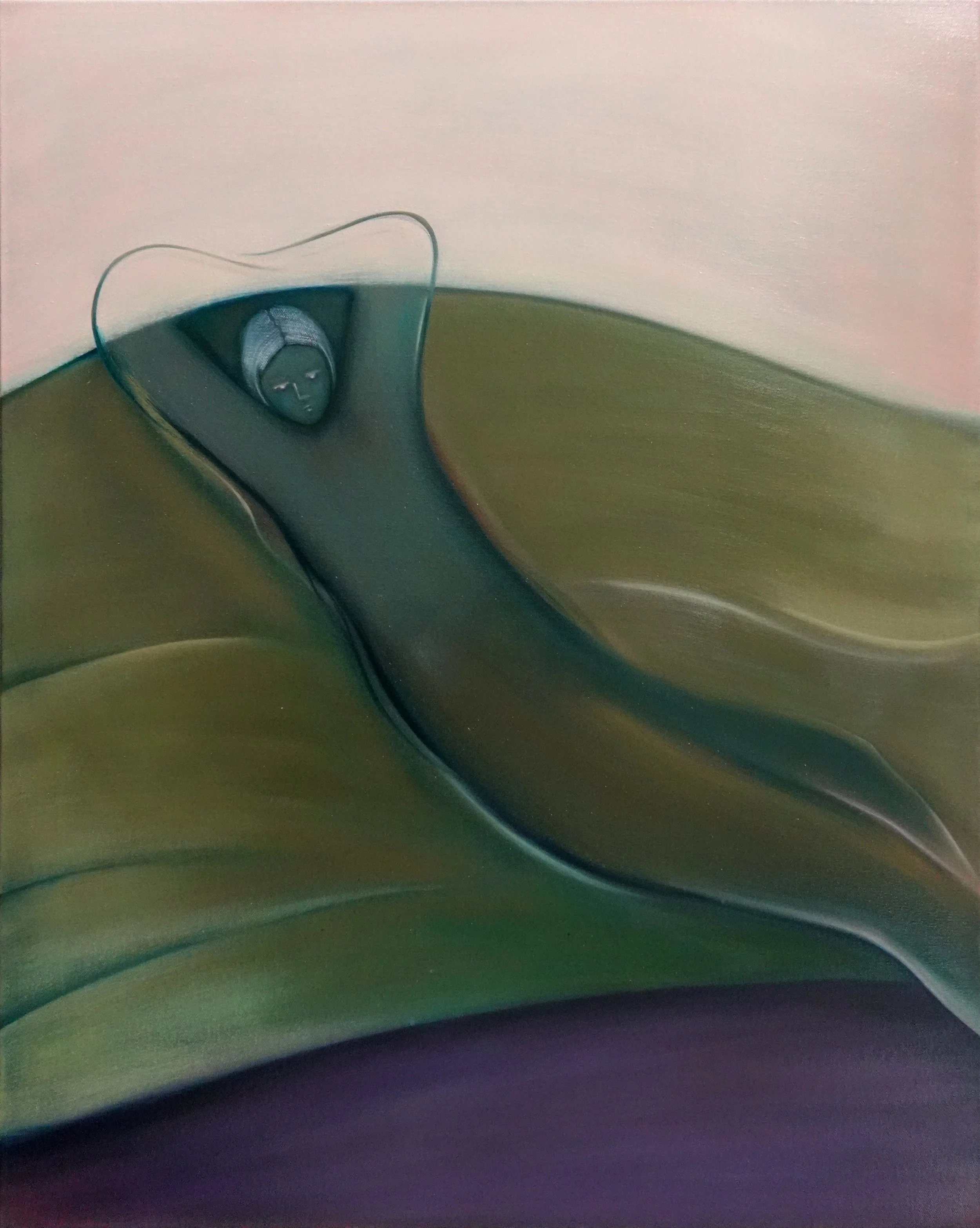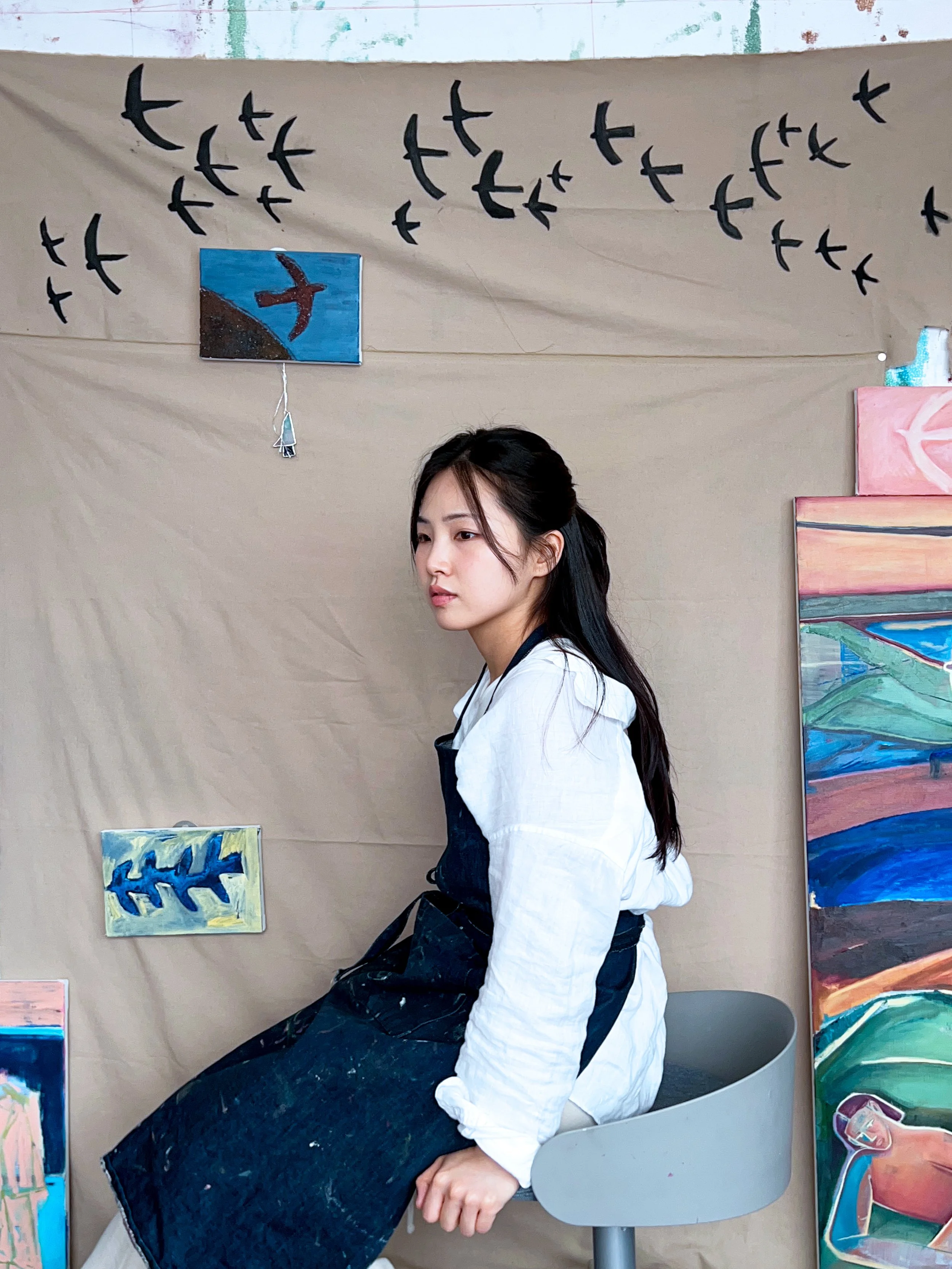
HAYEON U (b. 1993, Suwon, South Korea) is a Korean painter whose work explores the unresolved terrain between certainty and doubt, presence and absence, self and world.
After earning a degree in Business Administration, Hayeon worked as a designer in Korea's entertainment industry, including album art, before leaving to paint full-time. Without formal art training, she built an independent visual language out of steady observation and self-reflection, developed continuously since her school years.
Central to her practice is the notion of the "in-between": not a condition to be resolved, but a state she returns to and complicates across bodies of work, marked by ambiguous space and a gaze that never quite settles. Her paintings don't resolve emotional tension so much as sit inside it, holding vulnerability and resilience at once. For Hayeon, painting is less the illustration of an idea than a way of discovering it.
Her work has been shown in solo and group exhibitions in Seoul, including the group exhibition August Come They Will(2024, gallery h-u-e) and the solo show Walking the In-between (2025, ARTE J / Art Works Paris Seoul Gallery), and at Korean art fairs including BAMA (2025) and ART BUSAN (2026), both with gallery h-u-e. She lives and works in Suwon, South Korea.
More of Hayeon’s work may be found on her website and Instagram.
Below we provide the information on the exhibition of the paintings discussed and featured in The Pasticheur:
Artists
Hyeon O
U Hayeon
Exhibition: GAZE
Type: Duo Exhibition
Dates: November 8–29, 2026
Venue: h-u-e (gallery hue)
W Square, 1F, 145 Bunpo-ro, Nam-gu, Busan, South Korea
For inquiries: gallery_hue@naver.com
Instagram: @gallery_h_u_e
In Conversation
A Bilingual Q&A between Hayeon U and Jorge R. G. Sagastume, Editor
All questions by Jorge R. G. Sagastume; answers in both languages provided by Hayeon U.
한국어
1.
작가님은 작업에서 ‘어느 한 방향으로 나아가는 것이 아니라 그 사이에 머무르는 상태’를 그린다고 말씀하셨습니다. 그 ‘사이’가 한 작품의 분위기가 아니라 작업 전체의 주제라는 것을 처음 알아차린 것은 언제였나요?
2025년 7월, 첫 개인전을 준비하면서 알게 되었습니다.
새로운 작업을 시작할 때 저는 주제를 먼저 정하지 않습니다. 대신 그 시점에 어떤 감각에 마음이 가는지에 집중합니다. 영화나 인터넷에서 계속 눈길이 머무는 이미지를 모으고, 책을 읽다가 마음에 걸리는 문장을 적어 둡니다. 그 이미지와 글들을 서로 겹쳐 보면서 공통된 느낌을 찾으려 하고, 그 감각을 계속 상상하고 느끼려 애쓰며 작업을 시작합니다.
작업을 진행하는 중간중간 생각을 정리하는 글을 쓰는데, 그 글을 쓰다가 제가 좇고 있는 감각이 ‘사이’라는 단어와 맞닿아 있다는 것을 알게되었습니다. 그런 단어를 발견하면 마지막 퍼즐 조각을 찾은 느낌이 듭니다. 오랫동안 설명하기 어려웠던 생각과 감정에 이름을 붙여 줄 단어를 만났기 때문입니다.
2.
작가님은 경영학을 공부했고, 엔터테인먼트 업계에서 디자인과 앨범 아트 작업을 한 뒤 지금은 전업 화가로 활동하고 있습니다. 정식 미술교육을 받지 않은 이 경로는 지금 캔버스를 쓰는 방식에 어떤 영향을 주었다고 생각하나요?
무엇보다 색을 쓰는 데 더 자유로워졌다고 생각합니다. 미술교육에서 배우는 색의 관계나 이론에 따라 색을 고르지 않고 제 감정에 따라 선택하기 때문에, 색 사용이 더 자유롭고 저만의 특색이 되었다고 생각합니다.
3.
작가노트에서 작가님은 인물들이 바닥에도, 공중에도, 혹은 다른 어떤 공간에도 온전히 속하지 않는다고 썼습니다. 작품마다 인물에게 얼마만큼의 ‘땅’을 허락하고 얼마만큼을 지워 낼지는 어떻게 결정하나요?
저는 인물이 어디에 있는지 정확히 알 수 있기를 원하지 않습니다. 땅 위에 서 있는지, 하늘이나 바다에 누워 있는지 보는 사람이 확실히 알지못했으면 합니다. 공간을 물리적인 것으로만 보지 않고 의식이 확장된 곳으로도 보기 때문인 것 같습니다. 우리가 있는 곳은 우리가 어떻게 느끼는가에 따라 다르게 받아들여진다고 생각합니다.
인물에게 얼마만큼의 공간을 줄지 정할 때는 캔버스 안의 긴장감을 가장 중요하게 생각합니다. 인물을 기점으로 생기는 공간들이 서로 다른 긴장감을 지니기를 바랍니다. 어떤 부분은 편안하고 안정되게, 어떤 부분은 불안정하고 강렬하게 말입니다.
4.
작가님은 이 그림들 속 시선을 깨어 있지만 어디에도 완전히 머물지 않는 시선이라고 설명했습니다. 그 시선은 작가님 자신의 것인가요, 인물의 것인가요, 아니면 작가님과 인물 사이에서만 존재하는 것인가요?
그 설명은 그림 속 인물의 시선을 말한 것입니다. 하지만 그런 시선을 가진 인물을 바라보는 저를 포함한 관람객도 비슷한 느낌을 받을 것이라고 생각합니다. 또한 제가 지향하는 시선이기도 합니다. 저는 어느 한 지점에 고정되고 고착되는 것이 싫습니다. 명확한 한 지점을 바라보는 시선보다는, 어디에도 완전히 머물지 않으면서도 흐리멍덩하지 않은, 내면에서는 깨어 있는 시선을 추구합니다.
5.
작가님은 불안정한 상태에 머무르는 것이 해결해야 할 문제가 아니라 오히려 자신을 앞으로 나아가게 하는 힘이라고 말했습니다. 그것을 단지느낀 것이 아니라 분명하게 이해하게 된 순간이 있었나요? 그 순간은 작업실 안이었나요, 밖이었나요?
직전 시리즈 Floating in Between을 작업하던 끝 무렵에 든 생각입니다. 그 시리즈를 작업할 때는 특별한 문제도, 강한 감정도, 뚜렷한 방향도없어서 어디로도 나아가지 못한 채 부유하며 시간을 보냈습니다. 그 상태를 이어 가며 작업을 계속했고, 시리즈의 끝에서 발견한 감각은 부유하던 두 다리를 내디뎌 어디로든 다시 나아가고 싶다는 것이었습니다. 그리고 저는 멈춰 있는 것보다 나아가는 것에서 안정감을 더 느낀다는것을 알게 되었습니다.
앞으로도 머무르고 나아가기를 수없이 반복하겠지만, 머무른다는 것은 멈춰 있는 것이 아니라 다시 나아가기 위한 준비 단계라는 생각이 들었습니다. 작업이 풀리지 않을 때면 작업실 근처 공원을 걷곤 하는데, 아마 그때 든 생각이었을 것 같습니다.
6.
The Thinking People에서 Walking in Between, 그리고 Floating in Between으로 이어지는 동안 ‘사이의 상태’를 그리는 방식에는 무엇이 달라졌나요? 같은 감각이 새로운 공간으로 옮겨 간 것인가요, 아니면 감각 자체가 변하고 있는 것인가요?
시리즈마다 ‘사이’가 다루는 주제와 범위가 달라졌다고 할 수 있습니다.
첫 번째 시리즈 The Thinking People에서는 가장 내면적이고 일차원적인 의미의 ‘사이’를 다루었습니다. 제 안의 정리되지 않은 생각들 사이에서 가장 많이 고민하던 지점들이 주제였습니다.
‘사이’라는 주제를 처음 알게 된 두 번째 시리즈 Walking in Between에서는 제 내면을 넘어 ‘나와 외부 사이’를 다루었습니다. 작업실 안팎에서 보내는 시간과 인간관계가 주된 이야기였습니다.
그리고 Floating in Between에서는 앞선 시리즈의 일상적인 문제들을 지나 잠시 부유하며 그 사이에 머무르는 상태를 표현했습니다.
여기까지의 작업에서는 ‘사이’를 어떤 공간의 ‘경계’로 생각해 왔습니다. 하지만 요즘 진행하는 신작들에서는 ‘사이’를 ‘경계’가 아닌 ‘연결’로바라보고 있습니다. ‘사이’를 바라보는 시점 자체가 달라진 것입니다. 그래서 어떤 결과물이 나올지 저 스스로도 기대하며 작업하고 있습니다.
7.
작가님은 이전 작업에서 감정의 균열과 관계 속에서 생겨나는 거리감을 다루었다고 말했습니다. 작가님에게 회화는 그 거리를 메우기 위한 방법인가요, 아니면 그 거리에 있는 그대로 머물기 위한 방법인가요?
저에게 회화는 심리치료와 같다고 생각합니다. 마음속에 품고 있는 문제들을 작업으로 풀어내면, 작업이 그에 맞는 해결책을 건네줍니다. 여러과정을 거쳐 지금은 그 거리를 애써 메우려 하지 않아도 된다고, 그대로 머물러도 되고 다른 돌파구를 찾아도 된다고 작업이 말해 주고 있습니다.
8.
새로운 캔버스를 시작할 때 먼저 이미지가 떠오르나요, 아니면 모호한 공간이 먼저 생기고 그 안에서 인물을 발견하게 되나요?
저는 공간과 인물을 따로 생각하지 않고 서로의 연장선으로 생각합니다. 인물이 지닌 선과 면이 어떤 공간 위에 놓일 때 생겨나는 또 다른 공간을 발견하는 것을 좋아하고, 그것이 제가 화면을 구성하는 방식입니다.
9.
누군가 작가님의 그림 앞에서 “이 인물은 어디에 있나요? 바닥인가요, 공중인가요, 다른 세계인가요?”라고 묻는다면, 답을 주는 대신 그 사람이 무엇과 함께 머물러 보기를 바라나요?
먼저 그 사람이 그곳이 어디라고 느끼는지가 가장 궁금합니다. 그다음에는 왜 그렇게 느꼈는지 물을 것 같습니다. 제가 표현하려 한 감각을 설명하기보다, 그 사람이 어떤 느낌을 받았고 왜 그런 느낌을 받았는지에 더 관심이 있습니다.
10.
북촌에서의 첫 개인전을 돌아보고 지금 준비 중인 새로운 작업을 바라볼 때, 작가님이 자신의 그림을 바라보는 시선에서 가장 크게 달라진 점은 무엇인가요?
앞선 답변에 이어서 말씀드리면, ‘사이’를 ‘경계’가 아닌 ‘연결’로 바라보게 된 점이 가장 큽니다.
오랫동안 제 안에 품고 있던 모순적인 감정들과 인간관계에서의 고민들을 이전 작업을 통해 어느 정도 풀어내고 나니, 시선이 더 넓은 공간, 더넓은 세계로 확장된 느낌입니다. 저 자신과 세상을 바라보는 눈이 조금 더 긍정적이고 따뜻해진 것 같기도 합니다.
요즘 저는 양극단의 길 가운데 서서 어디로 가야 할지 고민하는 ‘사이’에 놓여 있다고 느끼지 않습니다. 끝없이 펼쳐진 공간에서 이곳과 저곳을잇는 ‘사이’에 놓여 있다고 느낍니다. 바다를 가만히 바라보고 있으면 어느새 제가 바다가 된 것 같은 느낌이 듭니다. 귀를 채우는 바람과 파도소리, 희미하게 보이는 하늘과 바다의 수평선, 살결로 느껴지는 바람과 바다 내음. 제가 바다의 일부가 된 것 같은 그 감각을 저는 ‘연결’이라고부르고 싶습니다.
ENGLISH
1.
You write that you paint “the state of remaining in between” rather than moving in one direction. When did you first notice that this in-between state was your subject, and not just a mood passing through a single painting?
I first realized it while preparing for my first solo exhibition in July 2025.
When I begin a new body of work, I don’t start by deciding on a theme. I pay attention to the sensations I’m drawn to at that moment. I collect images that keep catching my eye in films or online, and I write down passages from books that stay with me. I place those images and words next to each other and look for a feeling they share. Once I sense it, I stay with it, imagining it and feeling it as I paint.
While I work, I also write down my thoughts from time to time. In those notes I realized that what I was pursuing was closely tied to the word “in-between”. Finding a word like that feels like finding the last piece of a puzzle. It names thoughts and emotions I had carried for a long time without being able to describe them clearly.
2.
Your path runs from business administration, through design work in the entertainment industry, including album art, to painting full time. How has that route, rather than formal art training, shaped the way you use the canvas?
More than anything, I think it made me freer in the way I use color. Rather than choosing colors by the relationships and theories taught in art education, I choose them according to my emotions. Because of that, my use of color feels freer and has become one of the distinctive features of my work.
3.
In your statement, the figures don’t belong to a fixed place, whether floor, air, or something else. How do you decide, painting by painting, how much ground to give a body and how much to take away?
I don’t want the viewer to know exactly where the figure is. Standing on the ground, lying in the sky, floating on the sea: I prefer not to give a clear answer. I think that’s because I don’t see space as only physical. I also see it as an extension of consciousness, and the place we are in changes depending on how we experience it.
When I decide how much space to give a figure, the most important thing is the tension within the canvas. I want the spaces that form around the figure to hold different kinds of tension, some calm and stable, others unstable and intense.
4.
You describe the gaze in these paintings as awake, but settled on nothing. Is that gaze yours, the figure’s, or something that exists only between the two of you?
When I wrote that, I was describing the gaze of the figures in the paintings. But I think viewers, myself included, feel something similar as we look at them. It’s also the kind of gaze I aspire to. I don’t like being fixed in place or attached to a single point. Rather than a gaze trained on one clear destination, I’m drawn to one that doesn’t fully settle anywhere, yet isn’t vague or absent. It stays awake inwardly.
5.
You write that staying inside instability is what moves you forward, rather than something to resolve. Was there a moment, in the studio or outside it, when you understood that clearly, rather than simply felt it?
It came toward the end of my previous series, Floating in Between. While I was working on it, I had no particular problem, strong emotion, or clear direction, and I spent that time drifting, unable to move toward anything. I kept painting in that state. By the end of the series I had found a new feeling: after drifting for so long, I wanted to put both feet back on the ground and move forward again, wherever that might lead. I also realized that I feel more stable when I’m moving than when I’m standing still.
I’m sure I will keep repeating this cycle of staying, moving, and staying again. Now I think that remaining still isn’t the same as stopping. It’s a time of preparing to move forward again. I think I realized this while walking through a park near my studio whenever I felt stuck in my work.
6.
From The Thinking People to Walking in Between to Floating in Between, what has changed in how you paint the in-between state? Is it the same sensation in a new place, or is the sensation itself shifting?
I think each series explores a different meaning and range of “in-between”.
The Thinking People dealt with the most personal and internal kind of in-between. The paintings came from the thoughts and questions that remained unresolved within me.
In Walking in Between, the series where I first became aware of “in-between” as a central theme, my focus moved beyond my inner world to the space between myself and the outside. I was thinking about the time I spent inside and outside my studio, and about my relationships with other people.
In Floating in Between, I moved past those everyday questions and painted a state of drifting and simply remaining within that in-between space.
Until then, I had thought of “in-between” mainly as a boundary. In the new work I’m making now, I’m beginning to see it as a connection instead. The way I look at “in-between” itself has changed, and I’m curious to discover where these paintings will lead me.
7.
You mention working, earlier on, through emotional fractures and the distances that form inside relationships. Do you think of painting as a way to close that distance, or to stay honestly inside it?
For me, painting is very much like therapy. When I bring the problems I carry inside me into my work, painting offers its own kind of answer. After going through many stages, I no longer feel that I have to force myself to close those distances. My work tells me instead that it’s all right to remain there for a while, or even to find another way forward.
8.
When you begin a new canvas, does an image arrive first, or does the ambiguous space come first, with the figure something you find inside it?
I don’t think of the figure and the space as separate. To me, they continue into one another. I enjoy discovering the new spaces that appear when the lines and shapes of a figure are placed within a space, and that’s how I build a painting.
9.
If someone stood in front of one of these paintings and asked you where the figure is, on the floor, in the air, in another world, what would you want him or her to sit with instead of an answer?
I’d first want to know where he or she feels the figure is. Then I’d ask why he or she felt that way. I’m less interested in explaining what I intended than in hearing what the viewer experienced and why.
10.
Looking back at your first solo show in Bukchon, and forward to your next body of work, what feels most different in how you see your own paintings now?
To continue from my last answer, the biggest change is that I no longer see “in-between” as a boundary but as a connection.
After working through many of the contradictory emotions I had carried for so long, and the questions I had about relationships, I feel that my perspective has opened into a much wider space. Perhaps the way I look at myself and the world has also become warmer and more hopeful.
These days I no longer feel that I’m standing between two opposite paths, trying to decide which way to go. I feel that I exist in the space that connects one place to another within an endless landscape. When I look quietly at the sea, there are moments when I feel I have become part of it. The sound of the wind and the waves fills my ears. The horizon, where sea and sky meet, appears faintly before my eyes. I feel the wind and the scent of the ocean on my skin. In those moments I’m no longer separate from the sea. That feeling is what I want to call connection.
© 2026 Hayeon U; Jorge R. G. Sagastume