To access the series, please click below on The Body, After
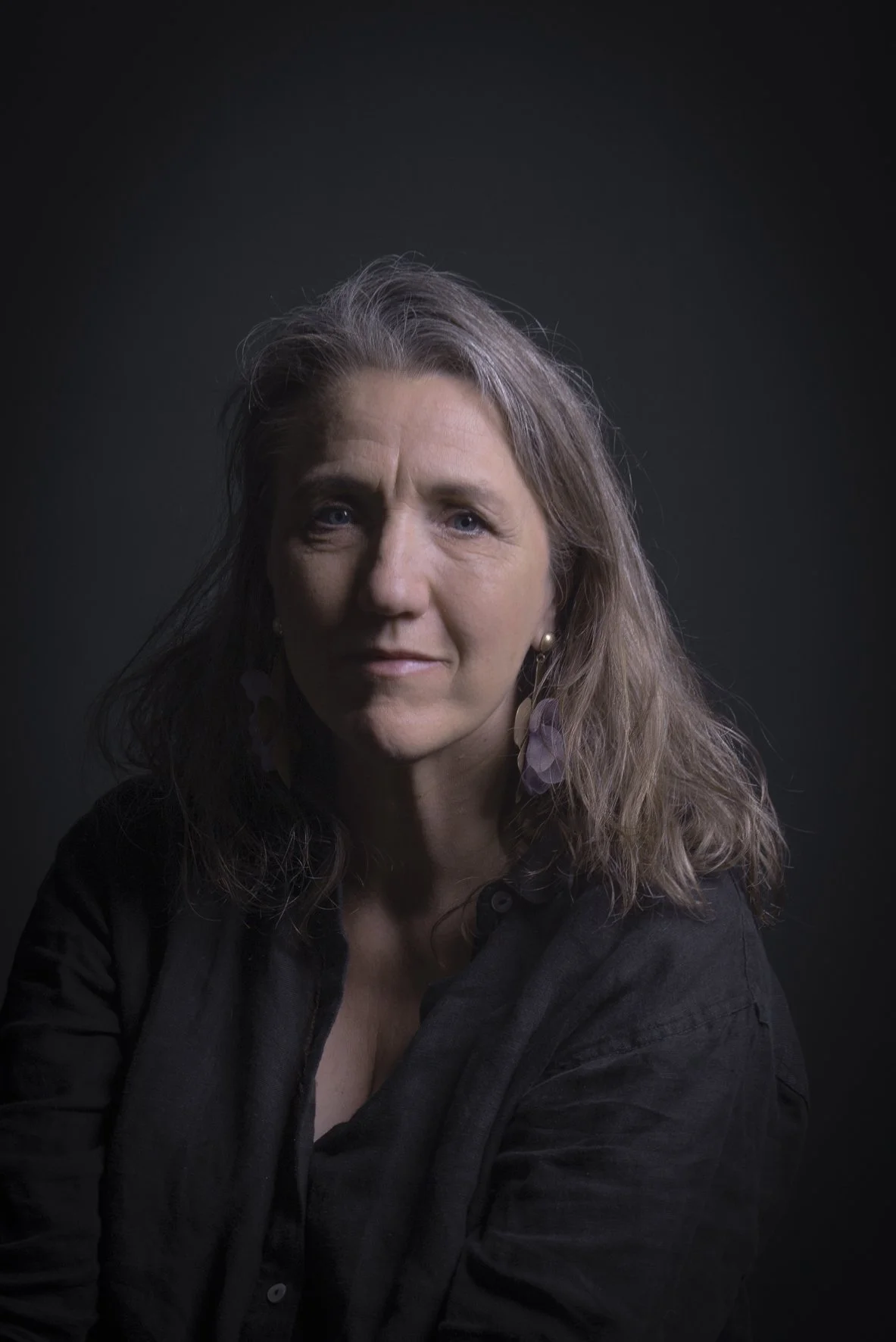
DANIËLLE VAN ZADELHOFF came to photography not through a linear ascent, but through rupture. Born in Amsterdam in 1963, she grew up surrounded by art. Her father was a painter and sculptor, and her home teemed with volumes on the Old Masters. Yet it was not until 2013, in the aftermath of illness, personal loss, and upheaval, that she picked up her first camera. That moment, shaped by grief and longing, marked the genesis of a singular photographic voice.
Initially self-taught, Van Zadelhoff later studied under Leopold Beels van Heemstede and received formal training in Antwerp. Her true education, however, came through light and silence. Working almost exclusively with natural light, she developed a chiaroscuro inflected visual language that draws deeply from the Dutch Golden Age, Rembrandt, Vermeer, and Caravaggio, while dislocating those influences from historical reenactment. Her subjects, often unclothed and unguarded, turn inward or beyond the frame, suspended in a timeless hush. Flesh, fabric, and shadow are not merely rendered. They are contemplated. What her work captures is not the body as image, but the condition of being seen.
Van Zadelhoff’s photographs invite moral and emotional reflection. They move through vulnerability, loneliness, erotic tension, and spiritual ambiguity without resolving into narrative. “Behind every image”, she has said, “there is a contemporary story that looks to the future”. Her practice seeks the metaphysical threshold, the moment where the visible edges toward the felt. Her studio, housed in a seventeenth century mansion outside Antwerp, functions as both sanctuary and séance. It is a place where light negotiates with memory and the past is allowed to breathe into the present.
Though a latecomer to photography, Van Zadelhoff’s rise has been swift and undeniable. Her work has been exhibited widely across Europe, including Belgium, France, Germany, Italy, Poland, Spain, and the United Kingdom, and is held in major private and institutional collections such as Musea Brugge (Belgium), the Centro Ricerca e Archiviazione Fotografia (Italy), CAC Málaga (Spain), Pio Monte della Misericordia (Naples), and the Massachusetts Institute of Technology (USA).
Her major projects include Lazarus Masks (2016), a conceptual series developed in collaboration with Neri Oxman and Naomi Kaemper that combined three dimensional printed “air urn” death masks with portraiture, and Survivors. AIDS Since the 80s (2017), a series commissioned for London City Hall honoring long term AIDS survivors with a focus on fragility, dignity, and resilience. In 2024, she was the subject of Depictions, a solo exhibition at Romania’s National Museum of Art, where her photographs were placed in dialogue with Old Master paintings in a sustained meditation on light, shadow, and human truth.
Her monographs include Daniëlle van Zadelhoff (Stockmans, 2017), Relatos del Alma (CAC Málaga, 2018), and Survivors (Stockmans, 2018). Each extends her uncompromising search for the soul within the skin.
Van Zadelhoff’s photographs don’t ask to be deciphered. They ask to be felt. They resist nostalgia and revival alike. They move instead through the long corridor between presence and absence, where light pauses and the body remains.
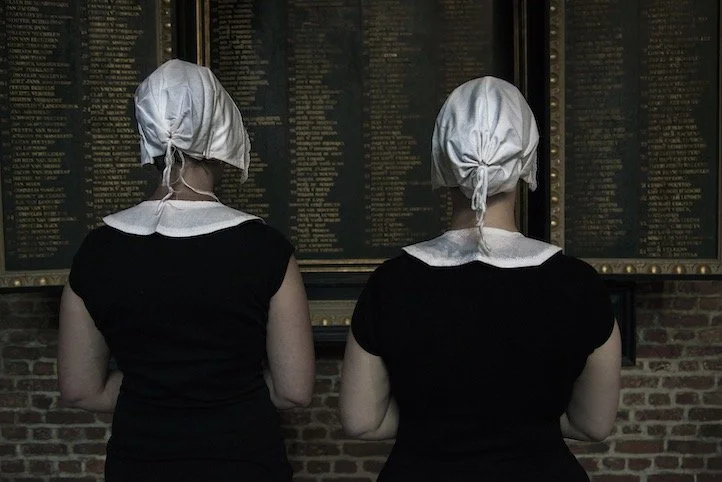
The Body, After is a collaborative project that brings together a selection of Daniëlle Van Zadelhoff’s works in dialogue with original poems by Jorge R. G. Sagastume, written in response to the images. The project unfolds as a sustained meditation on the body under structure, adornment, time, and aftermath, allowing image and text to remain distinct yet mutually attentive.
Sagastume is a writer, editor, and professor of literature and philosophy, and the editor of The Pasticheur. Literature, Art & Ideas. His work moves between poetry, storytelling, criticism, and visual dialogue, with a sustained interest in the body, the self, memory, and the ethics of looking.
More of Daniëlle Van Zadelhoff’s work may be appreciated on her website.
Artists & Writers in This Issue
In alphabetical order by the first name
