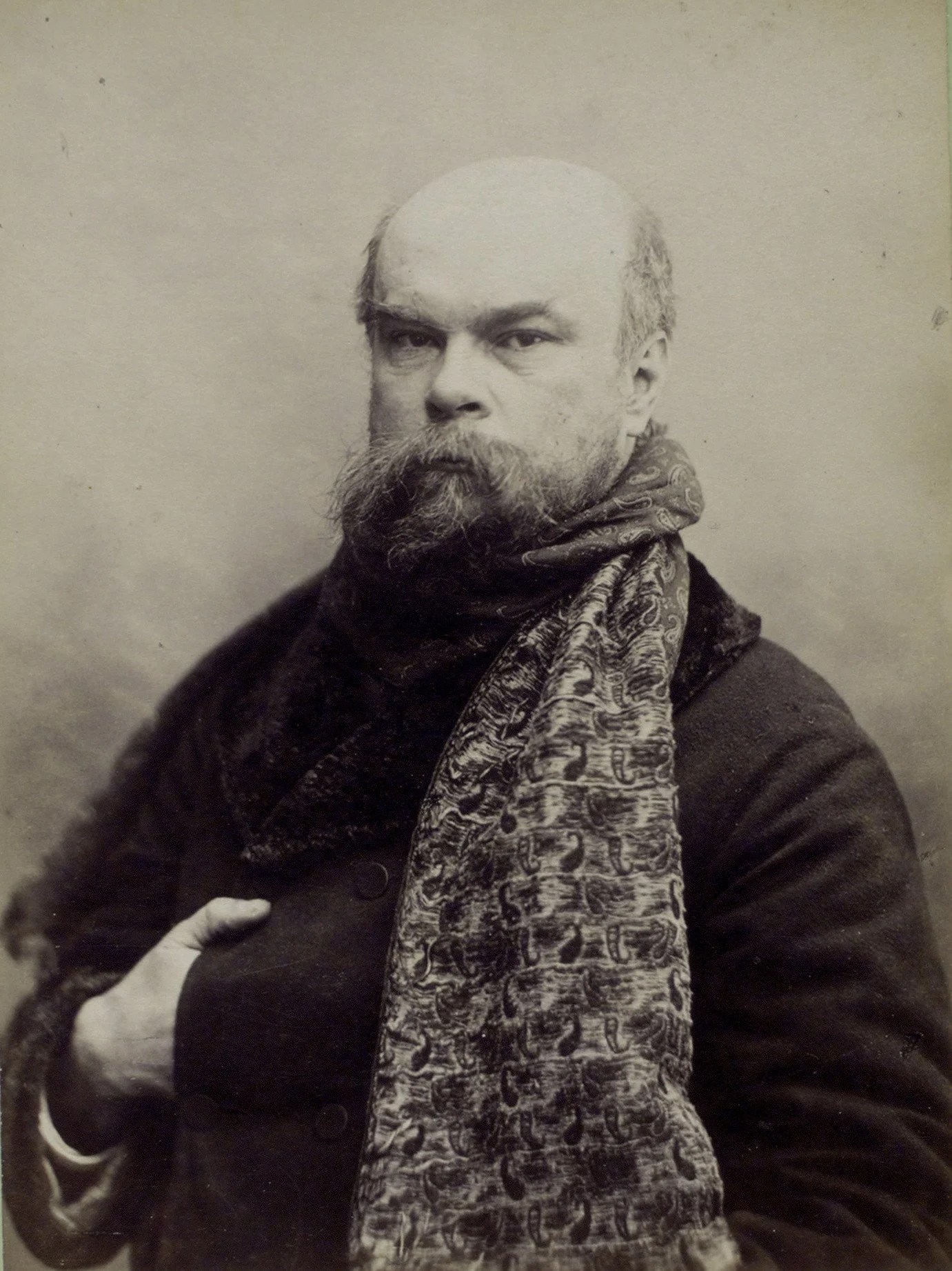
PAUL VERLAINE (Metz, 1844 – Paris, 1896) is remembered as the poet of music and half-light, but he was also a cartographer of the unstable mind. Beneath the lyric rain and muted cadences lived a restless observer of cities, memory, and moral weather. In prose as in verse, he returned obsessively to Paris, not as geography but as apparition.
Quelques-uns de mes rêves, translated here by Robert Boucheron, reveals a different Verlaine from the one canonized in anthologies. Here, the poem dissolves into drifting narration. The city splits and reforms. Funeral trains glide without engines. Cemeteries bloom like Mediterranean illusions. Childhood memory fuses with architecture. The real Paris intervenes only to be altered, reframed, made strange.
The turbulence of his life is well known. The affair with Arthur Rimbaud. The gunshot in Brussels in 1873. Prison. Conversion. Poverty. Hospitals. Cafés. The naming of the poètes maudits, as though he sensed that literature required a lineage of the wounded. Yet beyond the biography lies something quieter and more unsettling: a consciousness perpetually in transit between lucidity and dream.
In these nocturnal visions, Verlaine does not seek confession or doctrine. He records movement. Fear. Oblique tenderness. The father who walks beside him long after death. The smell of plaster dust. The blur of markets and burial grounds. Memory advances, then evaporates. The page becomes an instrument not of music, but of drift.
Named Prince des poètes in 1894, two years before his death, Verlaine’s title recognized more than melodic innovation. It acknowledged a writer who trusted instability. For him, reality was never fixed. It trembled. And in that trembling, literature found its most human register.
Photograph 1893, by Otto Wegener

Artists & Writers in This Issue
In alphabetical order by the first name
