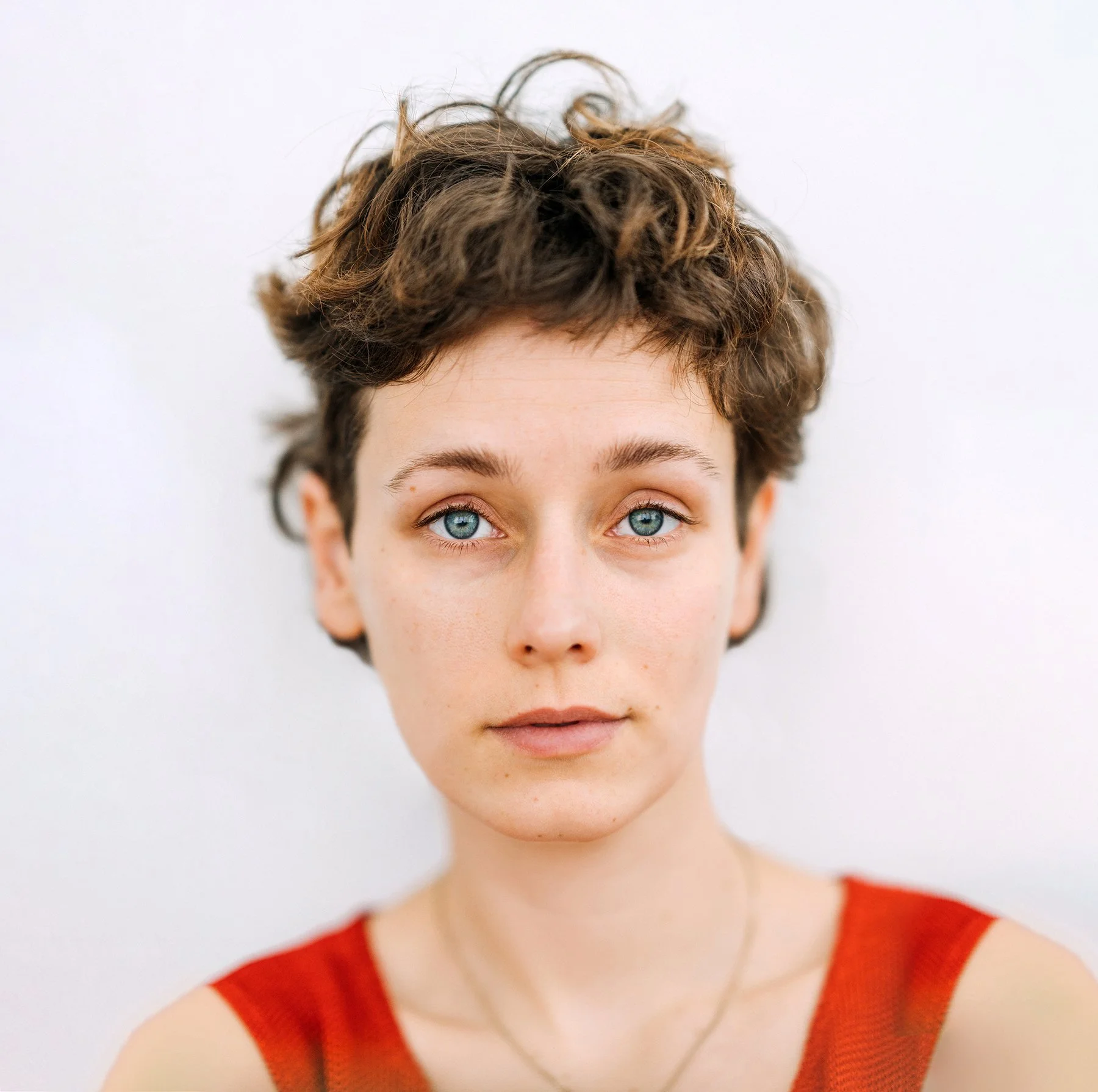
LAURA ZALENGA is a German conceptual portrait photographer whose work moves with deliberate clarity between the self and its surroundings. After nearly a decade in Rotterdam, she is now based near Munich. Trained in architecture, Zalenga brings a precise, minimal visual language to photography, one shaped by structure, restraint, and an acute awareness of space.
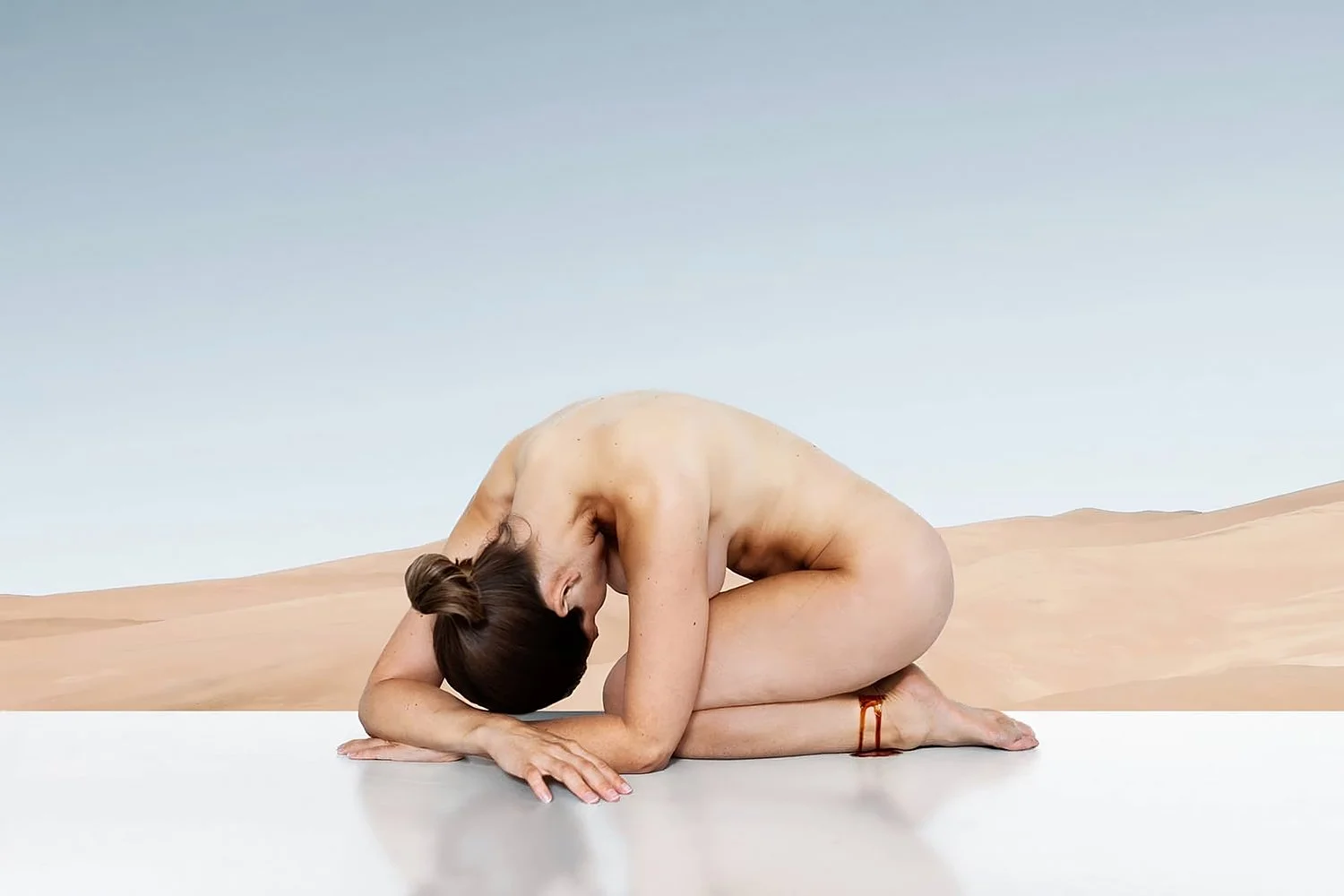
Her practice frequently centers on self-portraiture, not as self-display but as a method of inquiry. Figures appear embedded within landscapes or urban environments, suspended between presence and disappearance, belonging and estrangement. In these images, the body becomes both subject and measure, a quiet instrument through which space, time, and vulnerability are tested.
Alongside her artistic practice, Zalenga lectures widely on photography and the particular power of self-portraiture. She teaches workshops and courses focused on conceptual development, creativity, and the careful reading of locations. Deeply invested in long-form projects, she is especially drawn to series that engage global concerns and social taboos, approaching them with empathy, rigor, and visual restraint.
Her work has been exhibited internationally and featured in numerous publications, and she is the recipient of multiple awards, including Photographer of the Year from Refocus and an Adobe Creative Residency. Across formats and contexts, Zalenga’s work remains guided by a single conviction: that the self, when placed attentively in the world, can become a site of reflection rather than assertion.
More of her work may be appreciated on her website.
In Conversation
To access the artist’s work, please click below on Introducing Laura Zalenga
Laura Zalenga's self-portraits ask a question philosophy has struggled with for centuries: what remains of the self when the tools of memory and imagination are removed? Her aphantasia, the inability to summon mental images, means that every photograph begins not from an inner vision, but from an idea that must find its form in the body, the landscape, the frame. What follows is a conversation about that process. Zalenga speaks plainly about vulnerability, solitude, and the strange companionship of the camera. Her answers clarify what the images already suggest: that the self is not discovered but composed, one deliberate gesture at a time.
Q&A
1. Your captions suggest a deep emotional literacy, a willingness to name tenderness, fear, and discomfort without softening them. Do you see photography as a space where vulnerability becomes a form of knowledge?
Vulnerability might be my favourite state of being. It allows connection, to yourself and to others. It allows all emotions to be real. I think most emotions, even those we don't associate much with vulnerability, are vulnerable if they are consciously shown purely.
Vulnerability is a key ingredient of a self-portrait. Self-portraiture is where I explore myself fully and without anyone initially looking or judging. It is where I can show all of me, where I can discover me, where I can practice vulnerability.
I consciously foster and show vulnerability in my work, because to me it's one of the reasons I share my work with others: a motivation to be vulnerable as well. Vulnerability in solitude gave me permission and a space to be my full me, with all emotions that were not welcomed in daily life, and I want to promote this freely accessible gift.
2. Many of your self-portraits feel like dialogues with a quiet, parallel self, a version of you watching from just outside the frame. When you create, who is the "other" you are speaking to?
In a way you could say in my self-portraits I am having a dialog with myself. Or maybe I rather listen to the version of me that is fully itself. So I guess my every-day-self is the one standing just outside the frame (jealously looking at what's possible and hopefully learning from it) while listens to the inaudible monolog of the vulnerable, open, more real and free version of myself.
3. Your series reveal many emotional states: exhilaration, exhaustion, resistance, wonder, quiet grief. Do your images come from a place of pre-existing feeling, or does the act of making them generate the feeling itself?
Mostly, my self-portraits are a place to allow emotions and experiences I carry with me to show. In the process I weave them into an image and, in doing so, transfer parts of them into the piece — returning only when I feel ready to meet these part of me and my life again. But the process itself also generates new feelings, often joyful or playful ones. So as for so often it's a mix: some emotions are pre-existing and consciously explored, while others arise in the act of creating, as the body and attention respond to the moment.
4. Self-portraiture is often imagined as a process of self-discovery, but yours sometimes feels like an act of self-release, letting something go rather than pinning it down. Am I correct in reading you this way? If so, what do you hope remains after the photograph is made?
That is very accurate. Afterward, what remains is usually a sense of relief or renewed energy. It can feel almost like purging things that weigh me down, but in a calm and healing way. I just realise now, that I never create with even thinking about the "after". Maybe, as the creating, frees up space and energy, the "after" is only the next "before".
5. In many of your images, it feels like the camera is listening as much as seeing. What does a self-portrait hear?
Maybe it's the exact fact that it doesn't listen that makes it such a desirable companion for my creating — an object that records what I want to record, so I can look back, store and sometimes understand through it. It's not alive, it doesn't judge, comment or interpret, but its presence allows me to externalise and revisit emotions. In that sense, the camera "hears" only in as much as I choose to project into it, creating a space to listen to myself.
6. You often mention isolation as both origin and method. When you look back now, has your solitude become a lens through which the world becomes more legible, or is it still a room you enter and leave carefully?
Conscious, active, but still untamed solitude remains a preferred tool for me to explore and to find sparks to create from. It has become increasingly difficult though to find forms of solitude that are not organised, optimised, or filled with overly clear intention.
It often feels like climbing a mountain to find it: the ascent requires focus and resistance to falling into routine, but once I reach the top, I can let go completely.
I am never afraid of solitude. What unsettles me is the possibility of not finding my way there often enough, or of slowly losing the ability to access this specific state in an accelerating world.
7. Architecture formed part of your early training. In your self-portraits there is a striking attention to weight, balance, negative space. Do you think your architectural background taught you how to inhabit space, or did your self-portraiture teach you how to reimagine it?
Architecture primarily gave me clarity. It trained me to recognise what supports an idea and what merely distracts from it, both visually and conceptually. That shift is visible in my photographic work.
At the same time, my sensitivity to space existed long before the degree. I had already been attentive to how rooms feel, how bodies relate to them, and how space can be listened to rather than simply occupied. So architecture didn't introduce this awareness but it gave me structure to refine my visual language.
Self-portraiture, on the other hand, allows me to question those structures again. Working with my own body in space makes rules flexible and creation emotional.
8. Some of your captions suggest a gentle resistance to the roles assigned to women: beauty, politeness, the pressure to be pleasing. In your work, what does it mean to refuse the "flattering pose"?
Refusing the 'flattering pose' is about denying the viewer an easy categorization. Traditional cues from standardised beauty ideals, fashion trends, and expected posture impose familiar readings, and I deliberately leave them behind so the body isn't reduced to sexualisation or used as a shorthand for assumptions about gender or class.
In my imagery, I often aim for a genderless presentation. By stripping away obvious markers, I hope viewers engage less with categorization and more with emotional and conceptual resonance. It's not about erasing identity, but about opening a space where the body can exist beyond the boxes society assigns. I hope for perception more guided by empathy and attention, than by preconceptions.
9. Your images appear to treat the body less as an identity and more as an instrument of expression: a gesture, a contour, sometimes almost an abstraction. When you portray yourself, what is the relation to your body in that process?
Instrument of expression resonates with me, as the word 'instrument' hints at the sensitive process that needs practise. In this case practise of letting go of expectations and routines, instead allowing the body to shape following the emotions of that moment.
I draw a lot of inspiration and understanding from Pina Bausch's "Tanztheater": aimed perfection in execution and forceful intensity meeting surrender and total openness.
My body needs to be my steeled tool that endures lying in snow without protection, and at the same time it needs to be the implementing energy of what otherwise won't be readable.
10. There is a recurring presence of nature in your work, but not as scenery. More like a second body, a partner in the composition. What does nature allow you to say that the studio or the urban world cannot?
Nature allows me to show humans in relationship with the world, rather than as separate or dominant. We see a lot of landscape and travel photography, but rarely is the human element treated as fragile, integrated, or relational. By abstracting myself in the landscape, I try to convey that humans are temporary, nature endures, and coexistence should be the goal instead of exploitation.
Nature also offers solitude, calm, and introspection. It's a place where I can explore, experiment, and respond to an environment that is larger, unpredictable, and alive. That unpredictability is essential: it teaches me to interact and improvise, and how humans exist within, rather than over, their surroundings.
Laura Zalenga's responses confirm what her work enacts. The self-portrait is not a mirror but a method. It doesn’t reveal an essence waiting inside; it generates a provisional truth that holds only until the next image asks for revision. Her practice reminds us that identity is not fixed but syntactical, written and rewritten in the language of gesture, light, and space. To see her work is to witness a self being composed with quiet rigor. To read her words is to understand the intention behind that composition: not confession, but construction. Not display, but deliberate inquiry into what it means to become legible to oneself.
Jorge R. G. Sagastume
To access the artist’s work, please click below on Introducing Laura Zalenga
Artists & Writers in This Issue
In alphabetical order by the first name
