Special Feature:
Staying with the Unknown
EDITORIAL
What kind of wholeness is possible after the self has been broken?
That question surfaced only after I placed the work of Laura Ann Reed and Nicolette Mishkan beside one another. I hadn't gone looking for two works concerned with fragmentation, and when I first considered the pairing, I didn't know they shared an intellectual genealogy. I knew only that something happened when I moved between them.
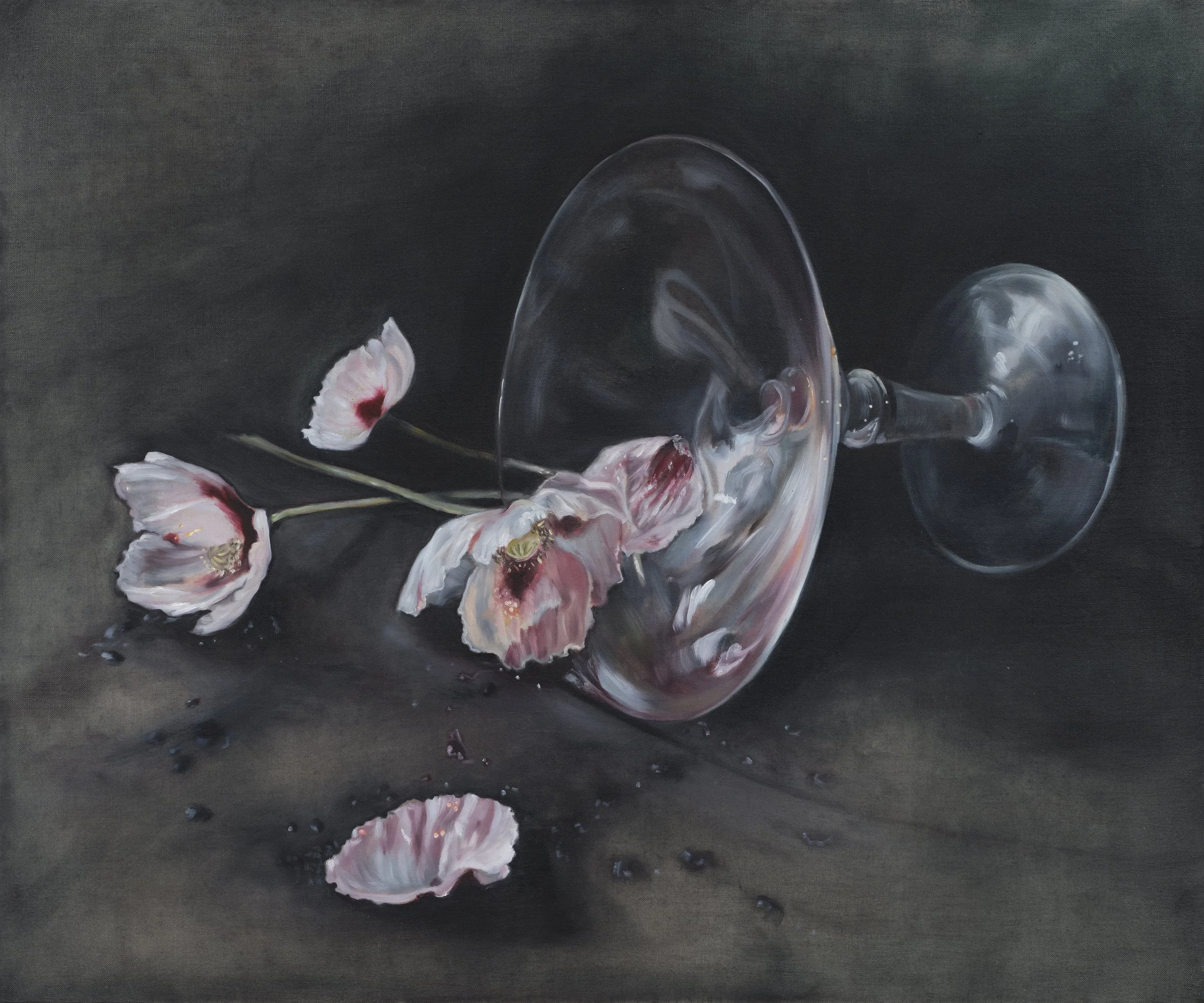
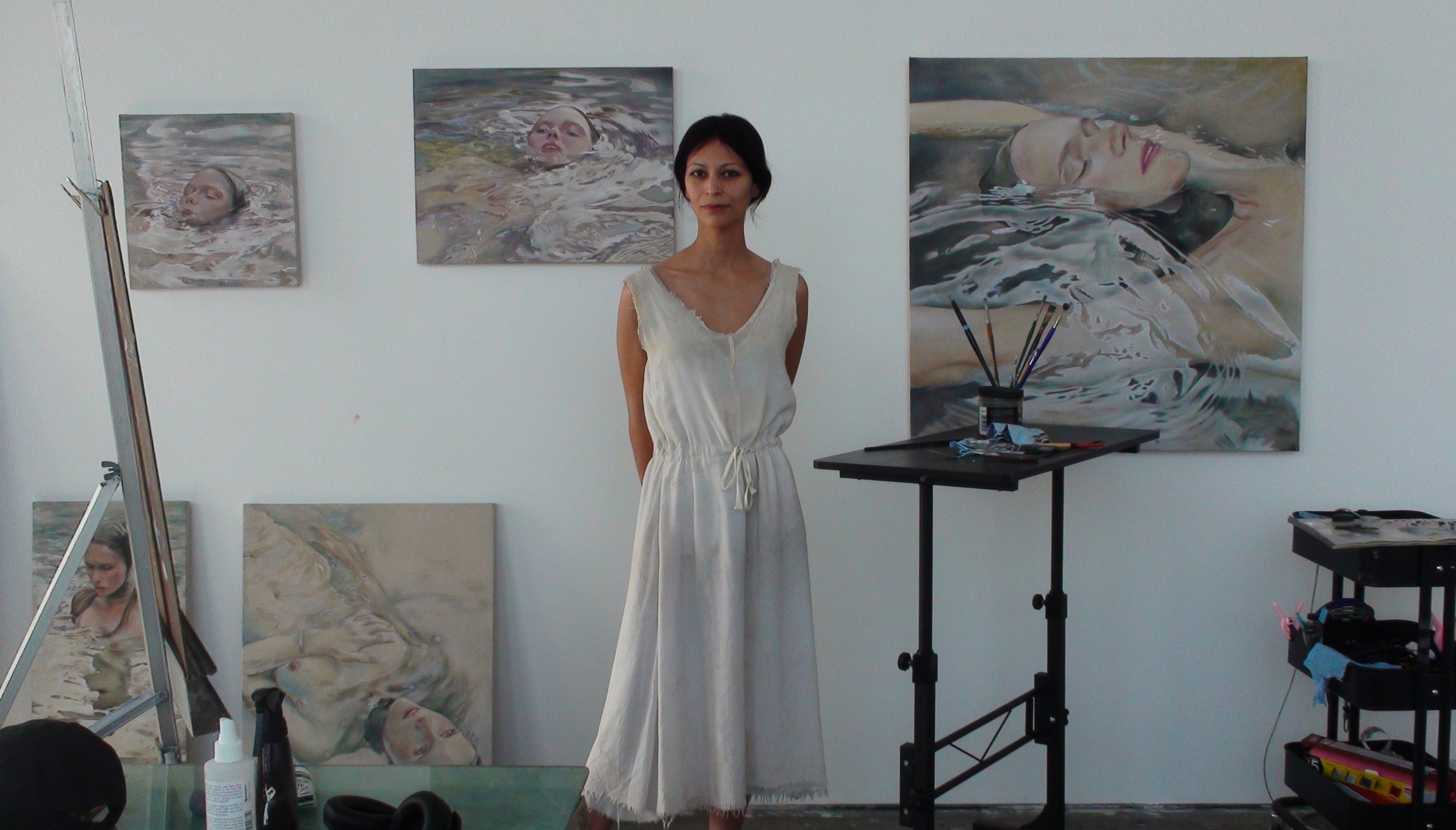
Mishkan's Lethe's Tavern, a cycle of fifteen paintings, begins with descent. Its title invokes the river of forgetting, but forgetting in these works is neither simple erasure nor escape. The self appears repeatedly, altered from painting to painting: submerged, multiplied, intoxicated, emptied, broken and reconstituted. Greek mythology meets Sufi poetry and Lurianic Kabbalah, particularly the breaking of the vessels and the scattering of divine sparks. What results isn't the recovery of an original self. The self that survives has passed through dissolution and can no longer imagine itself as singular or complete.
Reed's Nelly Sachs Cycle: A Circling moves differently. It doesn't descend. It circles.
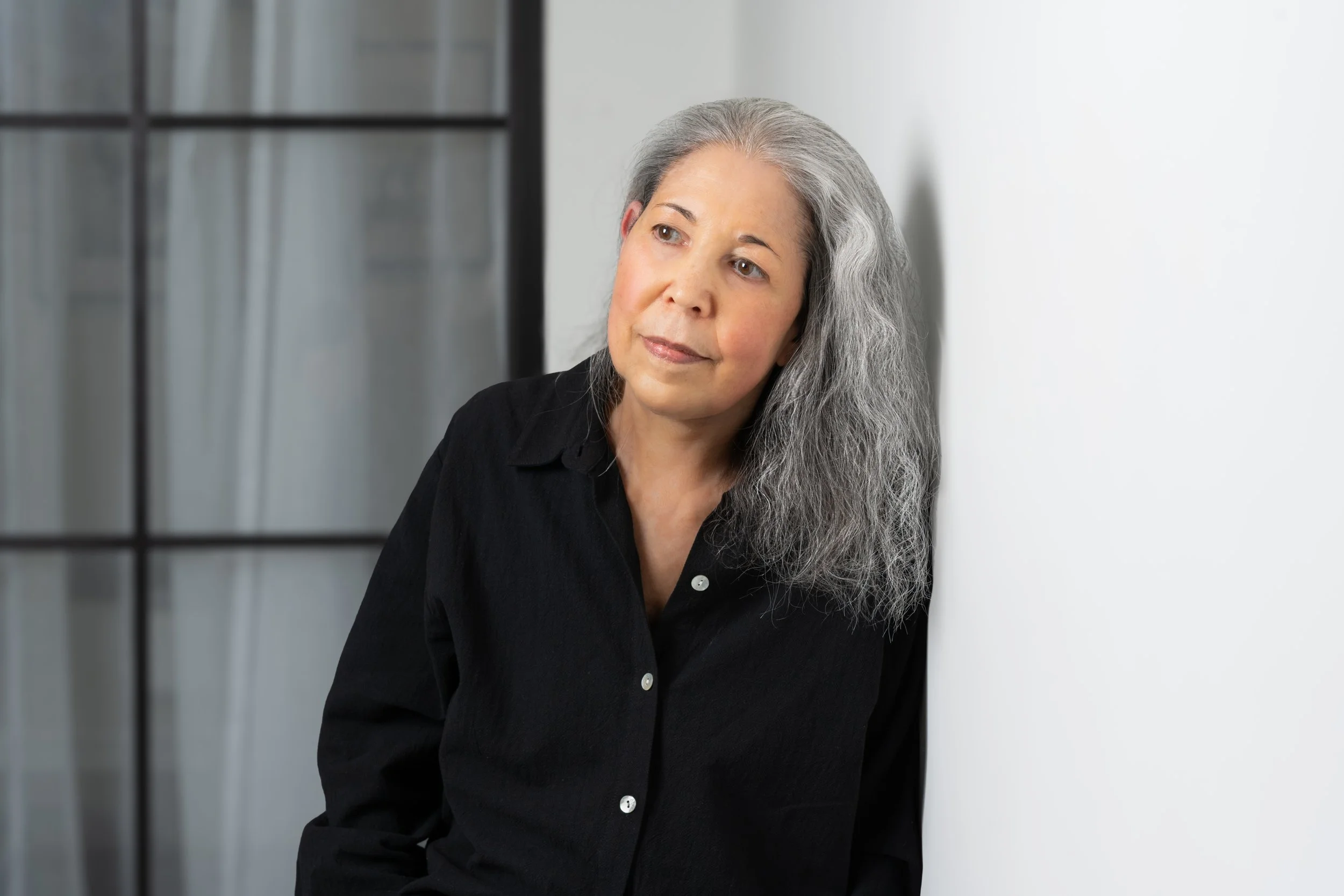
Reed writes in the presence of Nelly Sachs, particularly the late poems of Glowing Enigmas. Sachs's words pass into Reed's poems alongside paintings, dreams, biography, memory, and Reed's own experience. The resulting poems don't attempt to recover Sachs or speak for her. They remain near her. They approach, withdraw, return. Again and again they encounter displacement, absence, the dead, failed speech, and the strange persistence of what can't be made present again.
One project descends. The other circles.
What interested me was where those movements seemed to meet. Neither Reed nor Mishkan offers restoration as a return to an earlier condition. Something has been lost. Something has been broken. Whatever wholeness remains possible must include the knowledge of that breaking.
From that recognition came the title of this feature: Staying with the Unknown.
The title matters because uncertainty in these works isn't simply a problem awaiting resolution. Mishkan herself came to understand Lethe's Tavern, after gaining some distance from it, as less concerned with forgetting than with the discomfort that arises when certainty is unavailable. The impulse to know, define, and arrive at an answer gradually gives way to something more difficult: remaining present when the answer doesn't come. Reed's poems inhabit a related uncertainty. Language approaches what can't finally be spoken. The invisible remains invisible. The dead remain absent. Her poems circle because arrival itself may be impossible.
The feature's form matters for another reason too.
Earlier in my conversation with Mishkan, I considered writing poems of my own in response to Lethe's Tavern. She decided against it: the paintings needed to remain autonomous, not become the occasion for another work. I understand better now why that decision mattered.
Reed's poems don't respond to Mishkan's paintings. They were written elsewhere, out of a different encounter. Mishkan's paintings don't illustrate Reed's poems, and Reed's poems don't provide language through which the paintings should be understood. Each body of work arrived here independently.
What interests me is what happened afterward.
Two works with no knowledge of one another were placed beside one another, and a relation neither had anticipated became visible.
Only after the feature had begun to take shape did Reed point out something I hadn't known when I brought the two projects together. Sachs's Glowing Enigmas, so important to Reed's cycle, grew out of Sachs's sustained engagement with Jewish mysticism, and in particular, Lurianic Kabbalah.
A connection I had understood as structural revealed a deeper genealogy.
In the cosmology associated with Isaac Luria, creation itself contains catastrophe. Divine light enters vessels that can't contain it. The vessels shatter. Their fragments fall, carrying sparks of divine light into the world. The work of tikkun, repair, involves gathering what has been scattered. Wholeness, in such an account, can't mean pretending the breaking never occurred. The broken world is the world in which repair must take place.
Mishkan engages this tradition explicitly. In Lethe's Tavern, the vessel and its breaking become part of a meditation on memory, identity, dissolution, and reconstitution. Reed reaches the same tradition by way of Sachs, whose poetry transformed mystical ideas of exile, fracture, and redemption through historical catastrophe, loss, language, and the dead. The two contemporary works had traveled very different routes toward terrain they partly shared.
Had I known the connection beforehand, it would have been easy to construct a feature about Lurianic Kabbalah and place these works within it. But that isn't what happened. I paired them because each seemed to illuminate something in the other that I hadn't been able to see when encountering it alone. The historical connection came afterward.
Francis Bacon begins "Of Vicissitude of Things" by bringing together two much older ideas:
"Solomon saith, There is no new thing upon the earth. So that as Plato had an imagination, That all knowledge was but remembrance; so Solomon giveth his sentence, That all novelty is but oblivion".
Then comes the sentence that seems uncannily written for this encounter:
"Whereby you may see that the river of Lethe runneth as well above ground as below".
Memory and oblivion cease to be simple opposites. What appears new may depend upon what has been forgotten. What returns doesn't necessarily return unchanged.
Something similar occurs whenever one work enters deeply enough into the presence of another. Sources disappear and reappear. Images migrate. Questions survive the circumstances in which they were first asked. A mystical cosmology developed centuries ago passes through Sachs, is transformed by the catastrophe of the twentieth century, enters Reed's encounter with Sachs, and appears elsewhere, independently, in Mishkan's paintings. None of these works is reducible to what preceded it. Each makes something new from what it has inherited, remembered, forgotten, or unknowingly encountered.
This is why I don't want Staying with the Unknown to become a feature "about" Lurianic Kabbalah. The connection is more interesting running underneath it. Reed's poems aren't illustrations of Lurianic Kabbalah. Mishkan's paintings aren't visual demonstrations of it. Nor should one body of work become an interpretive apparatus for the other. Their differences are precisely what allow the encounter to remain alive.
Perhaps genuine encounter requires this: not that one work surrender its autonomy to another, but that both remain themselves long enough for something neither contains to appear between them.
That possibility clarifies something about The Pasticheur itself.
A journal devoted to literature, art, and ideas can easily become a container: poems here, paintings there, criticism somewhere else. From the beginning, I have wanted The Pasticheur to do something different. The distinctions between these forms matter, but so do the moments when something crosses them. A philosophical problem may become visible in a painting before it is formulated as an argument. A poem may change what we notice in an image. An image may return us to a sentence we thought we understood.
The most interesting encounters don't collapse those differences. They preserve them.
That is what happened with Laura Ann Reed and Nicolette Mishkan. Their works remain distinct. They come from different practices, different histories, and different intentions. Yet placing them beside one another allowed a question to emerge that belonged fully to neither and somehow to both.
Perhaps this is one kind of wholeness available after breaking: not the restoration of a lost unity, but a relation among fragments that remain fragments. A constellation rather than a completed form. Something held together without requiring that its differences disappear.
There is a temptation, once we discover a connection, to believe we have explained it. Staying with the Unknown asks us to resist that temptation. The discovery of a shared genealogy doesn't close the space between these works. It makes that space stranger. What matters isn't that we have found the hidden answer connecting Reed and Mishkan. What matters is that their encounter has allowed us to see something that neither work, standing alone, required us to see.
That is the wager behind this feature, and increasingly, I think, behind the journal itself.
The Pasticheur places works beside one another and asks what becomes visible in the space between them. We are less interested in works that explain or illustrate one another than in encounters that alter how each can be seen. A poem may reveal something latent in a painting; a painting may return us differently to a poem. Sometimes the connection is historical or philosophical. Sometimes it is formal, intuitive, or discovered only after the encounter has begun. The journal exists to make room for those crossings, without requiring that they resolve into a single meaning.
Jorge R. G. Sagastume
Editor-in-Chief
© Nicolette Mishkan
