What Surfaces Remember
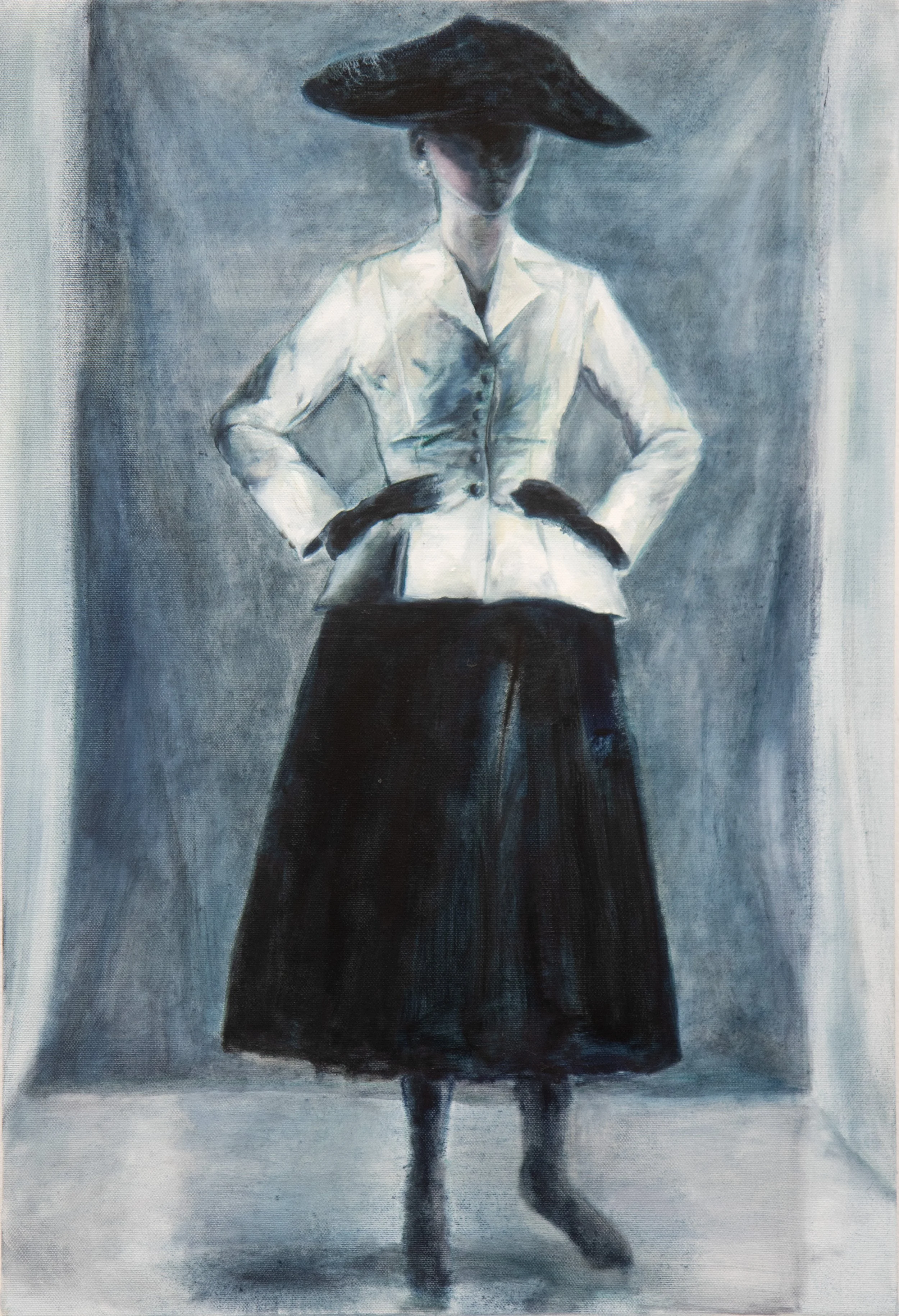
The October issue of The Pasticheur brings together the paintings of Jueon Im and the poetry of Kristina Tamulevičiūtė. Their work emerges from different histories and distinct artistic practices, yet each asks a related question: how does a life become visible?
The answer begins with surfaces.
We often speak of surface as the opposite of depth, as though truth were hidden somewhere behind the visible world. This distinction becomes difficult to sustain before Im’s paintings. Her gloves, shoes, dresses, folds, and ribbons don’t conceal a completed self, waiting underneath. They show the places where the self takes form. Clothing presses against the body, follows its movements, and preserves something of its posture. A shoe carries the shape of a foot even when a foot can’t be seen. Fabric records weight, restraint, elegance, labor, and the quiet discipline of appearing before others.
Phenomenology has long argued that the self doesn’t exist apart from the body through which the world is encountered. I feel, Im’s paintings carry this further. In her work, the body extends into the objects it touches. A glove becomes a second skin. A jacket holds the architecture of a back. The pearl-trimmed opening of Purple Toe makes a shoe resemble a collar, confusing the divisions between clothing, anatomy, and ornament. These objects have absorbed the body’s habits; they continue to speak after the figure has been cropped, turned away, or removed.
Im’s concern with the self is, thus, concrete. It resides in the painted sheen of black leather, the tension of a seam, the curve of a heel, and the pale pressure of cloth against flesh. The self appears as something made through contact. It is shaped by what surrounds it and by the forms into which it enters.
Tamulevičiūtė approaches the same problem through history. In her poems, the self carries experiences that began before the individual life. War, hunger, occupation, language, and family memory enter the body until inheritance becomes physical.
In “Cuckoo”, a domestic dream of flowers, a wall clock, and a “tiny love nest” gives way to callused heels and shoes that have been purchased rather than inherited from a great-grandfather. That distinction is small enough to pass unnoticed, yet an entire history lies inside it. To own shoes untouched by an ancestor’s poverty becomes a measure of distance from the past. The relief remains fragile. Memory still enters the mouth, where “archaic words melt” like brown sugar.
“Fingers” makes this inheritance harder to bear. A mother crosses snow-covered fields with a starving child. Her fingers remember the ruler striking them at school whenever a black piano key was pressed between two white ones. Years later, those fingers, swollen and blue, enter the baby’s mouth and offer nothing that can satisfy hunger. The body keeps several times at once: childhood punishment, forced silence, maternal terror, and the will to continue walking.
In “Skin”, history enters a house. Windows are broken, hinges and bricks disappear, moss is stolen to insulate huts, and ragged curtains move across the openings. Later inhabitants repair the foundations and cover the damaged ground with grass. Yet the final image refuses the comfort of restoration: strip the plaster from the walls and one finds skin.
This is the philosophical force of Tamulevičiūtė’s poetry. History doesn’t remain safely behind us as a sequence of public events. It settles into language, gestures, buildings, and the body. Hunger changes the meaning of a hand. War changes the meaning of a window. And memory gives a wall the vulnerability of flesh.
Placed beside Im’s paintings, these poems widen the question of the self. Im examines the forms through which a person becomes visible, clothes and fashion among other things, while Tamulevičiūtė shows how those forms have already been touched by forces beyond individual choice. The garment may express a private sensibility, but cloth also belongs to work, class, gender, ceremony, and inheritance. The body enters the world through surfaces already marked by other lives.
This meeting between painting and poetry also offers a form of critique. And critique can begin by teaching the eye to recognize what ordinary vision overlooks. A polished shoe may contain an idea of discipline. A curtain may preserve fear, secrecy, or the memory of a vanished room. A hand can carry the history of a forbidden language. Once these surfaces become legible, the self can no longer be understood as private property. Each life bears the marks of its encounters with family, objects, institutions, and history.
The works gathered in this special feature ask us to look at what remains exposed. Im gives painted form to the pressure between body and object. Tamulevičiūtė follows historical violence until it reaches the fingers, the heels, and the walls of a home. Their surfaces hold what abstraction often loses: the material evidence of how a human being is made.
A life leaves marks, and it also receives them.
Jorge R. G. Sagastume
Editor
