Editor’s Note
Susanna Fiona Murray:
After Us / The Dianara
Susanna Fiona Murray Murray makes photographs that resist settling into a single condition. A veiled figure who is also a goddess older than the room. Two old hands at rest on damask. A rusted sign on the path to a Picene necropolis, eroded into a vocabulary of four surviving words. A red coat that turns out to be worn backwards. A place setting that becomes lineage when the eye refocuses. Two photographs leaning against the same wall, one a skeleton, one a young woman whose origin no archive will ever recover. The image is always doing more than the first look catches. The first look identifies; the second begins to feel how unstable identification can be.
Across After Us and The Dianara, this instability takes different forms. After Us asks the viewer to reconsider time: what appears contemporary reveals itself as continuous with what was buried twenty-eight centuries ago. The Dianara turns instead to the familiar: what looks domestic carries something older and ritualistic, not entirely absorbed by the rooms that hold it. In both series, opposite readings stay true at once. Residue is also inheritance, withholding also a form of survival. The familiar becomes strange not because it changes but because the viewer finally notices what was already there.
The texts here don’t explain the photographs, and the photographs don’t illustrate the poems beside them. Each stays separate. Yet the writing remains with the image long enough for other structures to surface: ritual inside a gesture, lineage inside an object, continuity inside corrosion. Some images take a poem; others go unanswered, and that silence becomes part of the sequence too.
The reader is invited to slow down enough for the photograph to exceed recognition, to stay with it after certainty has passed. What emerges then is not a settled meaning but a quality of attention, one in which contradictory things keep company: intimacy and distance, preservation and disappearance, tenderness and refusal.
The ceremony is older than the meaning.
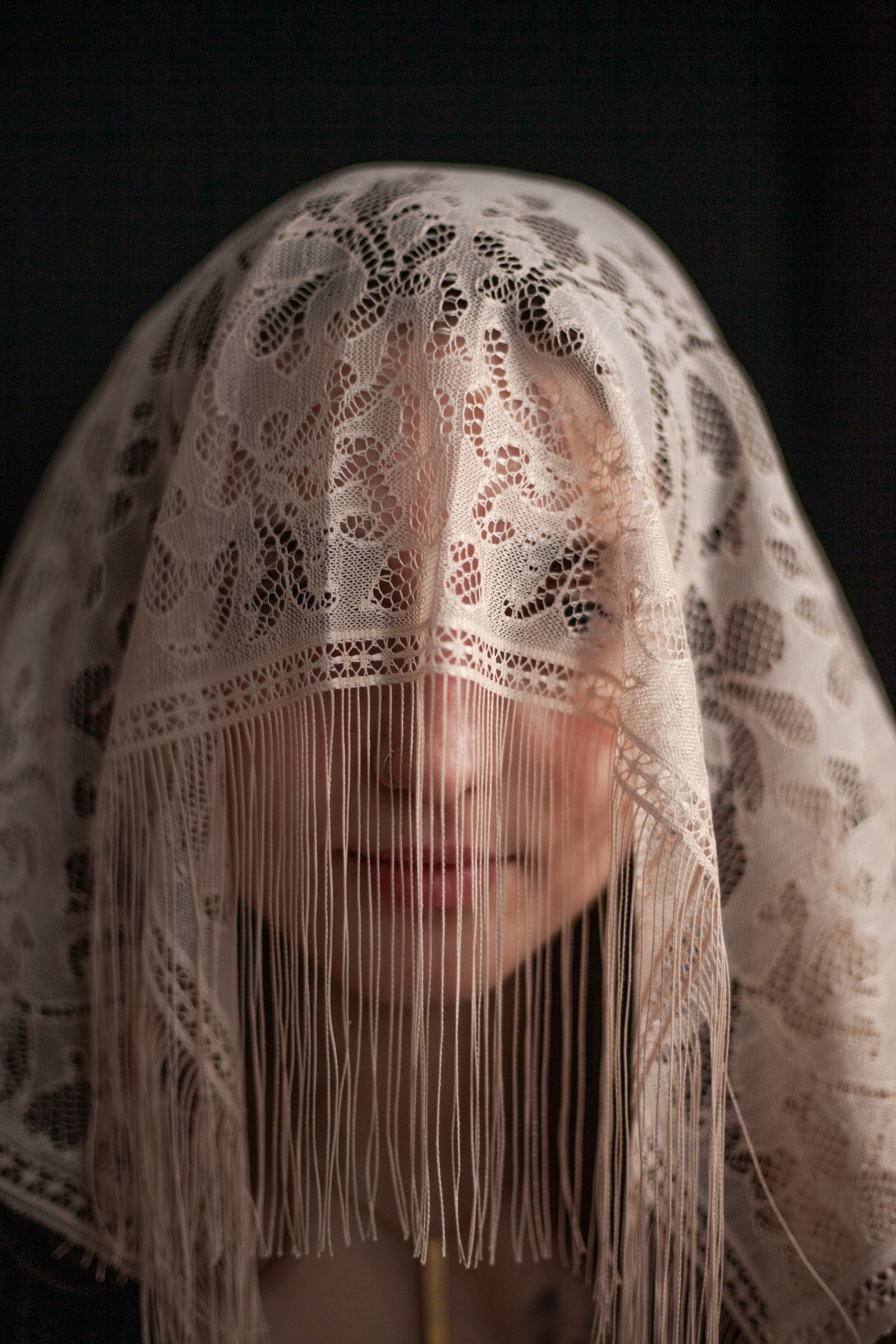
The Ancient Goddess (After Us, 2025)
Veil
A woman wrapped for a photograph.
The lace lets a mouth through.
Not the eyes.
What you take for a face
is a pattern of small flowers
arranged against the dark.
A gesture older than her.
Older than the room.
Older than the hand that lowered the veil.
She stands behind it.
She is carried by it.
You move closer.
The weave gets more defined,
not her.
Stand here long enough
and the room learns
to wait the way she waits.
You want to be noticed.
You receive instead
the patience of a thing
that does not need to be seen
to remain.
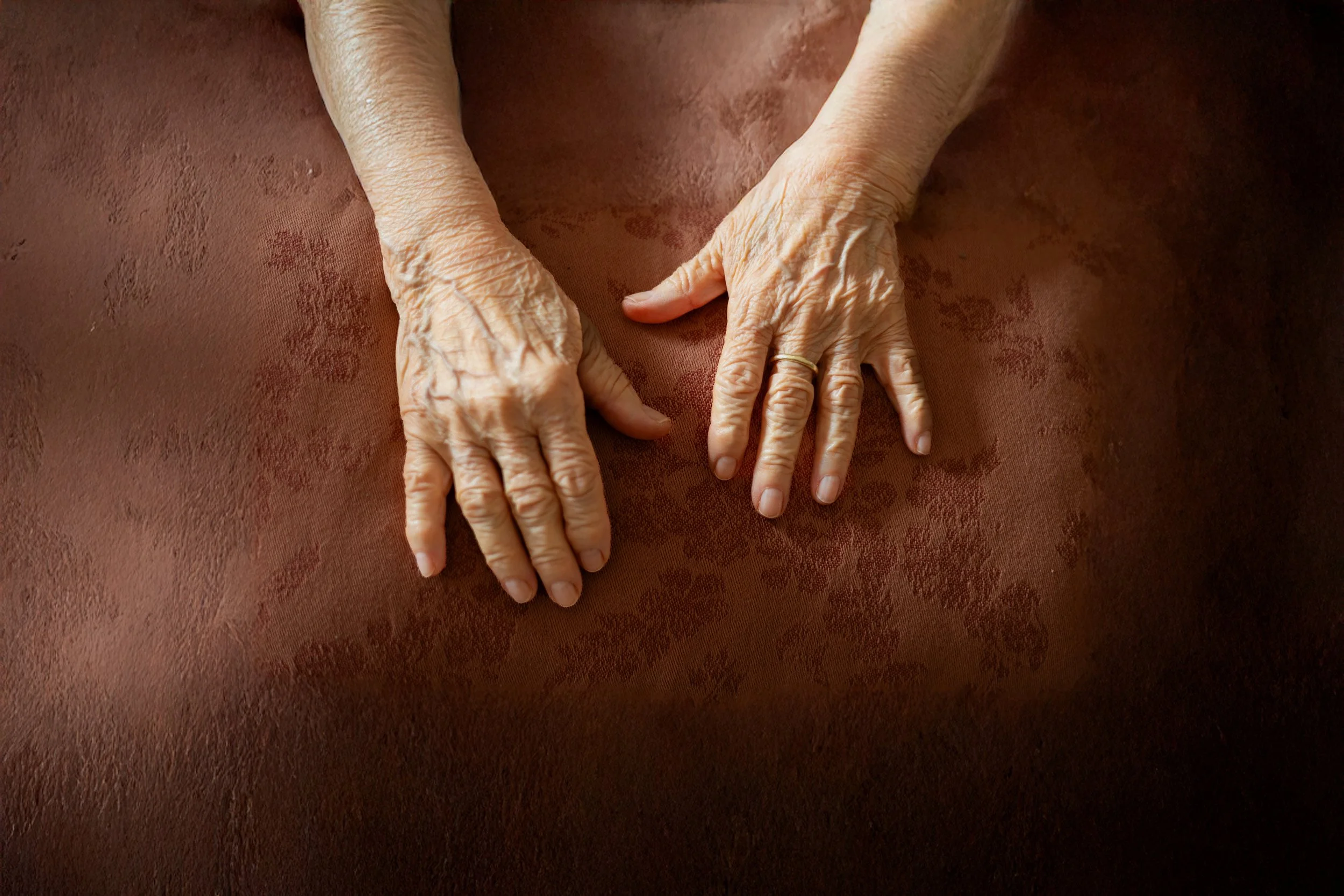
Holding Time (After Us, 2025)
Looking Back
Two hands on damask.
Small flowers caress them.
A ring on one finger.
Shaping the phalanx through time.
The hands don't grip.
The hands don't lift.
Under them something warm,
or the color of warmth
after it has gone.
The fingers rest in twos,
the way old companions do:
nothing to say, nothing withheld.
You arrive:
hands are at rest;
you leave: they rest still.
A small weight passes between you,
unspoken, the way light enters a room
that was already lit.
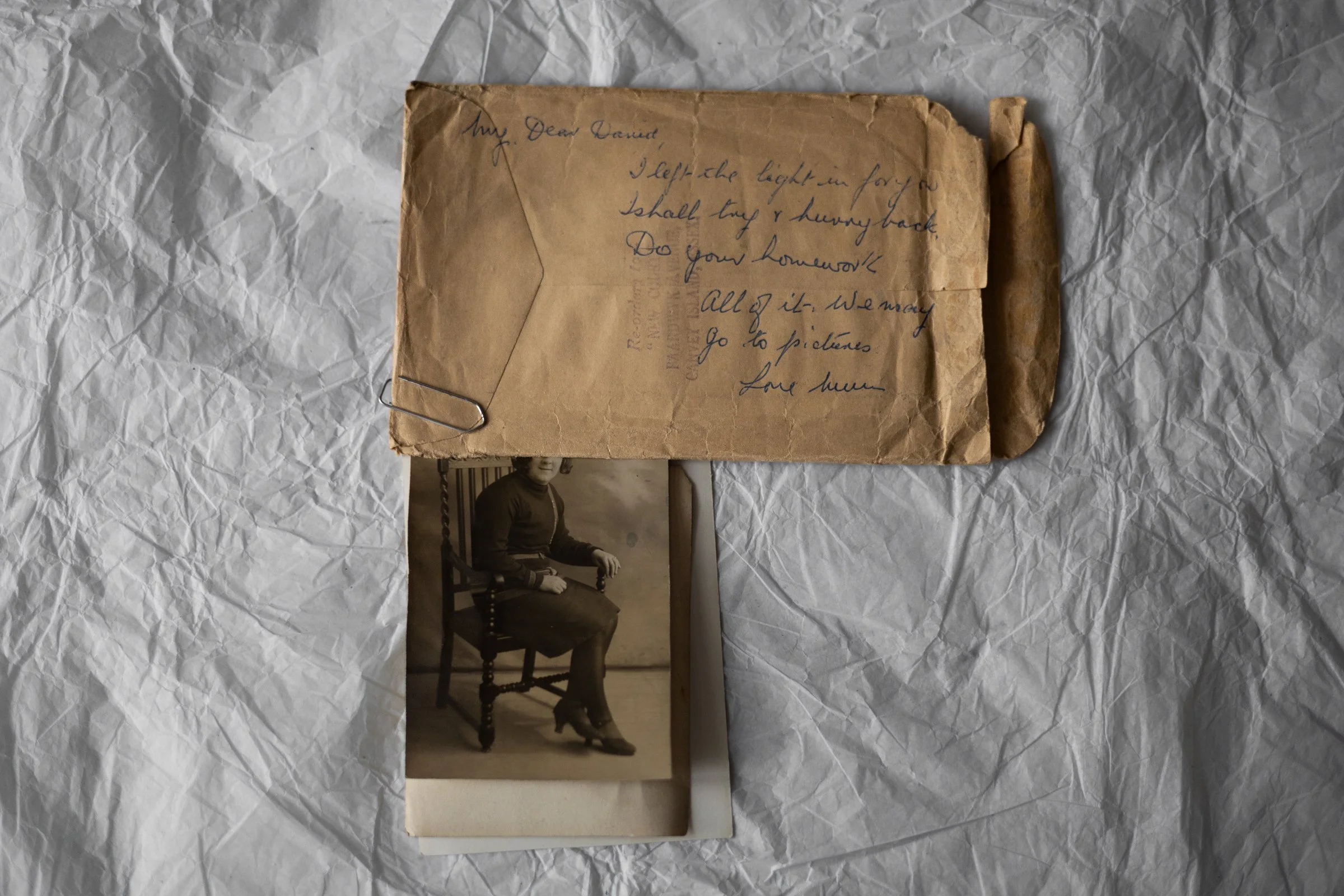
I Left the Light In (After Us, 2025)
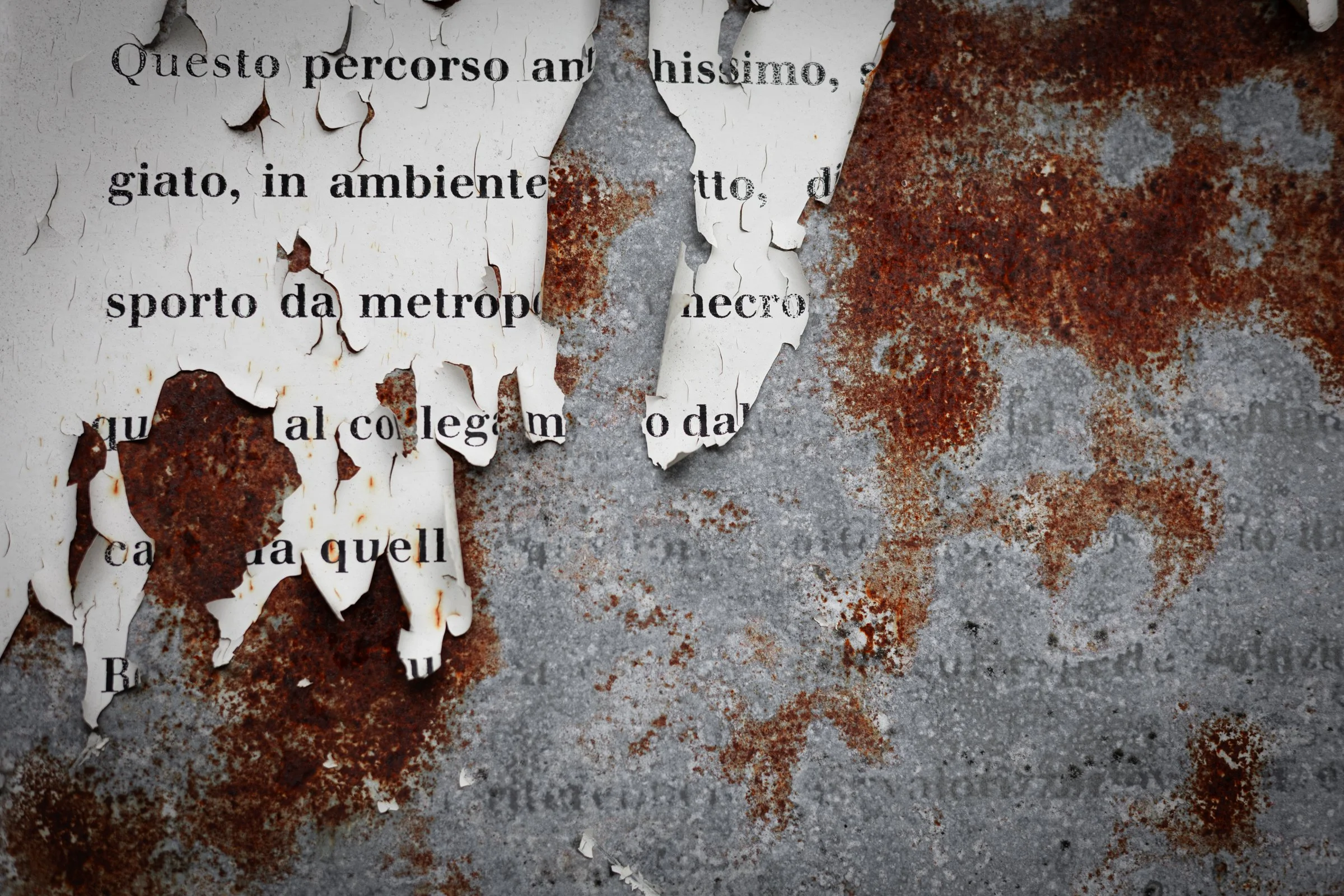
Partial Transmission (After Us, 2025)
Egg Tempera
The sign was placed here to instruct you: Questo percorso antichissimo, it begins, and the rust has eaten the rest of what the writer meant.
What stays is different: antichissimo, ambiente, metropoli, necropolis. The metal underneath has chosen the words to keep.
You can call this loss.
You can also call it editing.
What corrodes the paint
also carried the dead.
A walker reads what's left.
The reading is true to the walk:
some of it ancient,
some of it gone,
some of it still a city of the dead
that survives the city that named it.
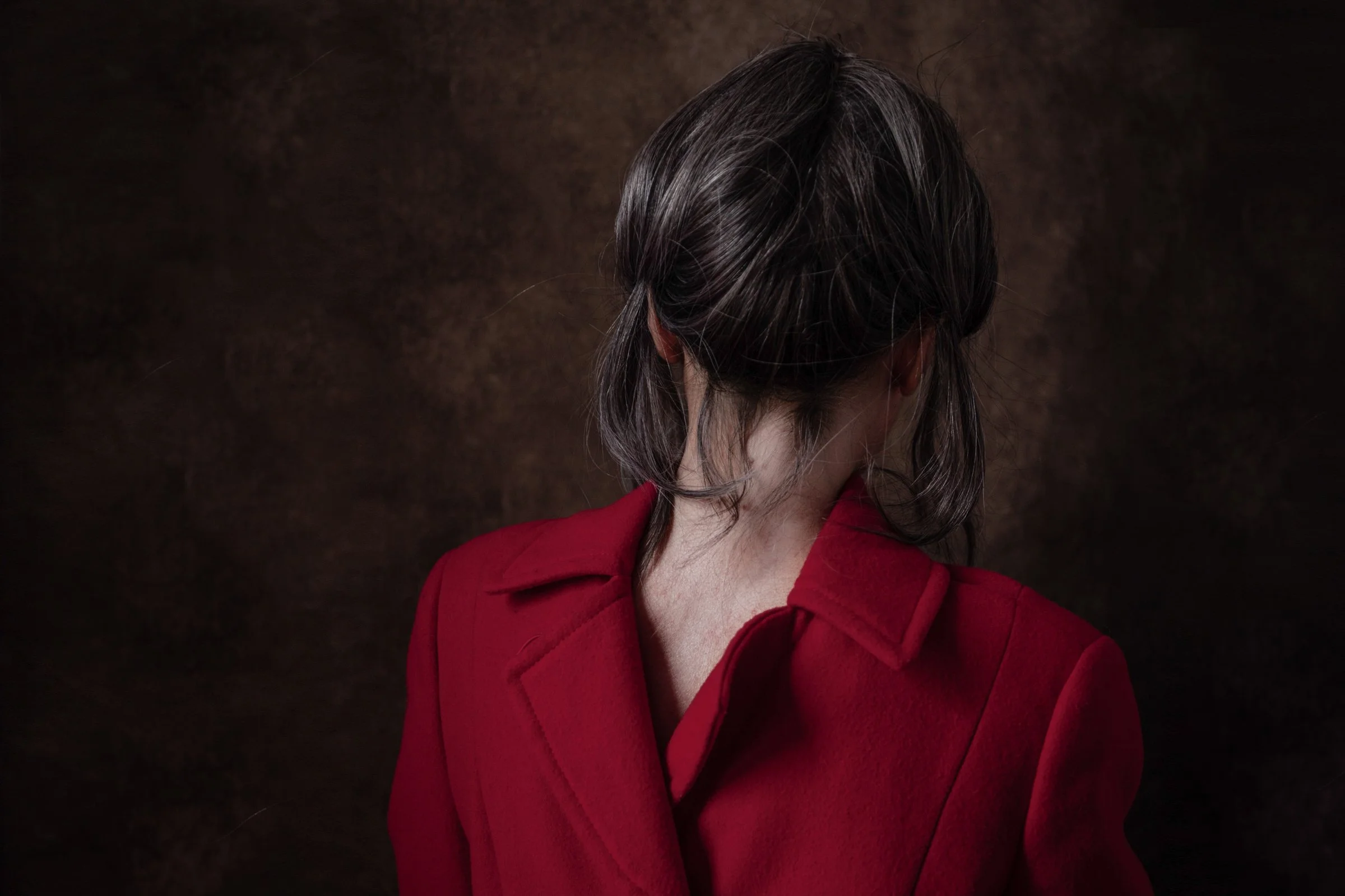
Behind Your Head (The Dianara, 2022)
Reversal
A red coat.
Collar, lapels,
facing the room
it has just entered.
Wait, someone lives
inside that coat, but
there’s hair where
a face should be.
Why is she wearing the coat backwards?
She has put it on the way it was given to her
and then turned around inside it.
The garment is correct
but she has refused
the direction it assumes.
You stand
where you were placed,
behind her head: where the
day-to-day self doesn’t look.
You wanted to meet her.
Understand her.
You understand the coat
and the hair
but not her.
Look again.
The Beast (The Dianara, 2022)
Iron and Steel (The Dianara, 2024)
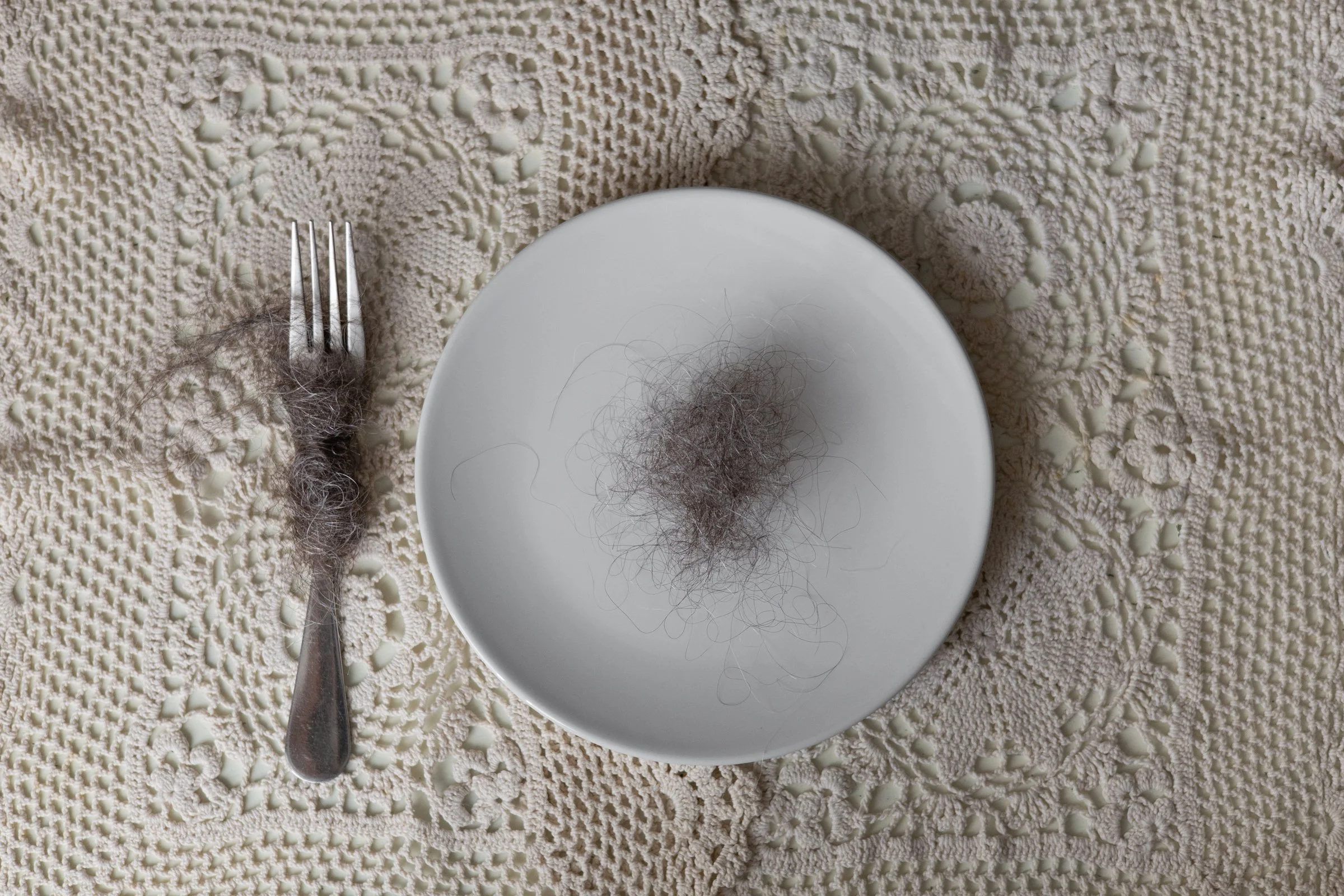
Strand
A table set for one.
A placemat crocheted by someone
who is no longer there.
A plate. A fork.
The latter carrying
what the plate sets forth.
You lean closer
and what you take for food
is hair.
Not foreign. Gathered,
the way hair gathers
on a brush, in a corner,
and on the placemat,
if you wait long enough.
The older hands
that made the mat
also left this behind.
And you are about to eat
what made the table.
If you ran the strand
under a microscope
you would find your own
sequence inside it.
Lift the fork.
The meal is the lineage.
What you take in
is what made you,
and what you become
will feed somebody else.
Trittico, Panel III (After Us, 2025)
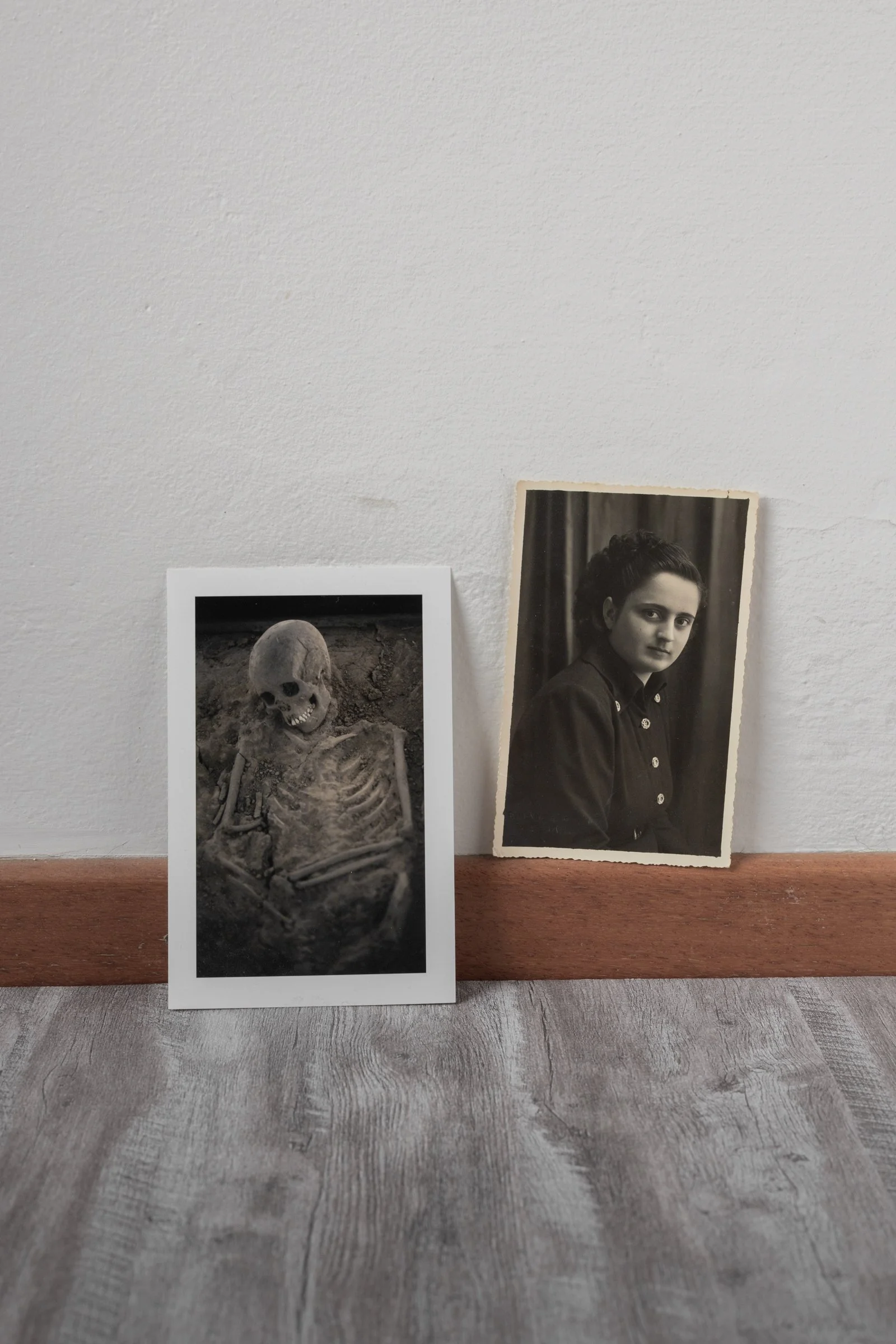
The lean
Two photographs leaning
against the same wall.
On the left, a skeleton
folded in the position
received by the earth,
hands near the chin,
knees drawn up.
On the right, a young woman
in the dress of a school
that may have been
near Pesaro, or Buenos Aires,
or any place
that taught girls to sit still
for a camera or a brush.
No common language.
The one on the left, buried
before the alphabet
that named the girl was written.
The one on the right, photographed
in a year the bones
could not have imagined.
And yet they lean.
Leaning might be the key.
Not that they are the same.
That the space between them
is smaller than the space
we are taught to keep.
Someone loved the girl
enough to keep her picture.
Someone loved the body
enough to bury it carefully.
The love did not survive.
The keeping did.
And you stand in front of them
the way you stand
in front of any small accident
of belonging.
What separates them
is what separates you
from them,
and from each other,
and from yourselves.
What keeps them
is also what keeps you,
including this room,
this page,
the hand that placed them here,
or there, and
the language used to name them,
the technologies that bring them now
to wherever you are.
The ceremony is older than the meaning.
Ceremony is what remains
when meaning is gone.
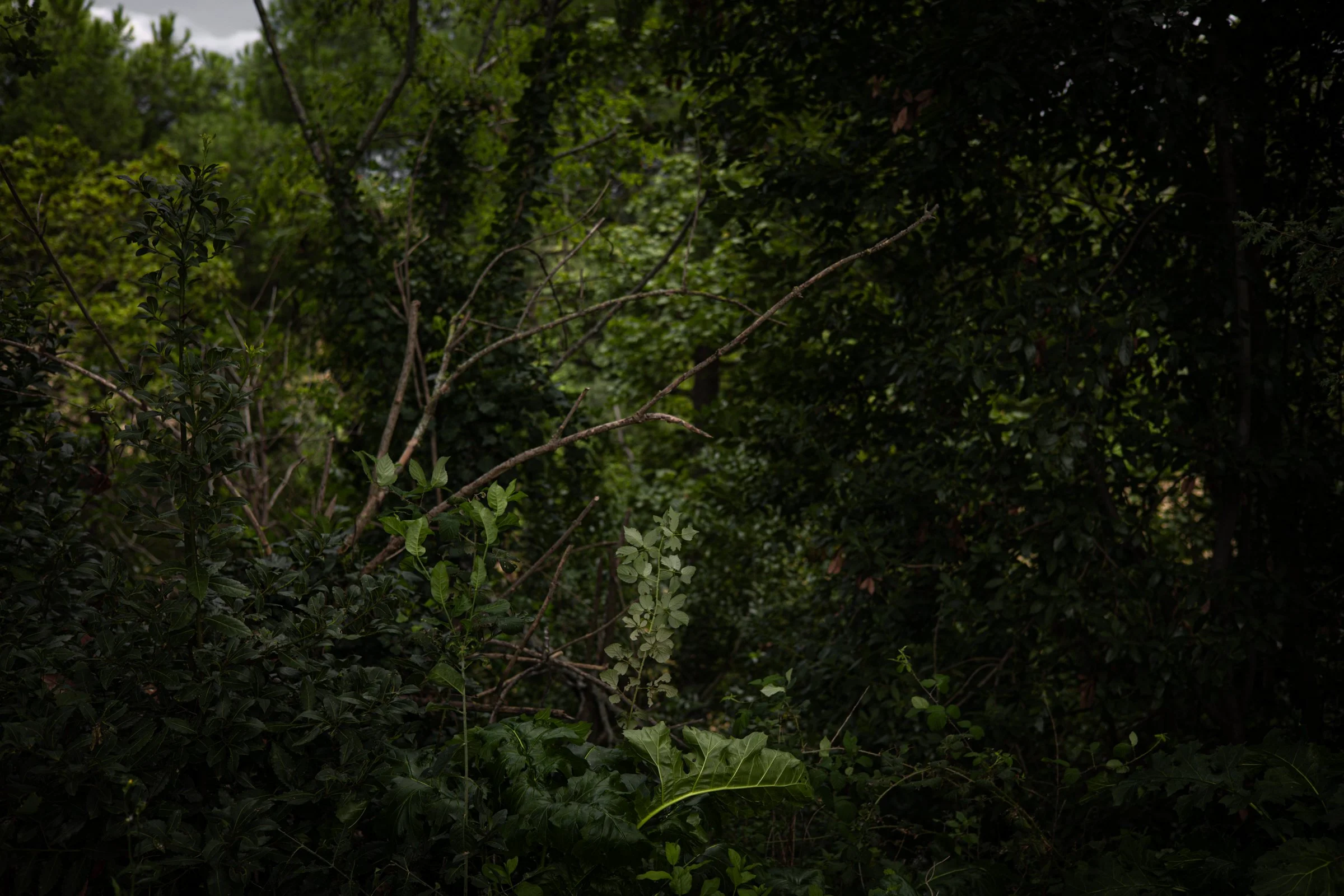
Dense Site (After Us, 2025)
© 2026, All Visual Work by Susanna Fiona Murray
© 2026, All Text by Jorge R. G. Sagastume
Artists & Writers in This Issue
| Velibor Baćo | Alexis Krasilovsky | Nathaniel Lachenmeyer | Jeff Larason | Lisa Suhair Majaj | Liliana Mercau | Susanna Fiona Murray | Laura Ann Reed | Michael Roberts | John Whalen-Bridge | Hilmi M. Zawati |
