Editorial
On Metaphors
Donald Davidson, in What Metaphors Mean, writes that "the interpretation of dreams requires collaboration between a dreamer and a waker, even if they be the same person; and the act of interpretation is itself a work of the imagination. So too understanding a metaphor is as much a creative endeavour as making a metaphor, and as little guided by rules". He also emphasizes that, linguistically speaking, a metaphor means literally what its words mean and nothing more, so that most metaphors are false: if I say "John is an open book", it is not true.
In this issue of The Pasticheur, I am especially grateful for the artists we include, because they help me better understand the idea of metaphor. Mario Giacomelli, whose work we owe to the courtesy of his granddaughter, Katiuscia Biondi Giacomelli, and the Mario Giacomelli Archive, began his career believing he had to portray truth. He quickly understood that photography was profoundly metaphorical, even when capturing the landscape of his native Senigallia. As his work progressed, he took everyday situations, objects, and people he knew well and turned them into images that revealed angles our reality-accustomed eyes might otherwise never perceive.
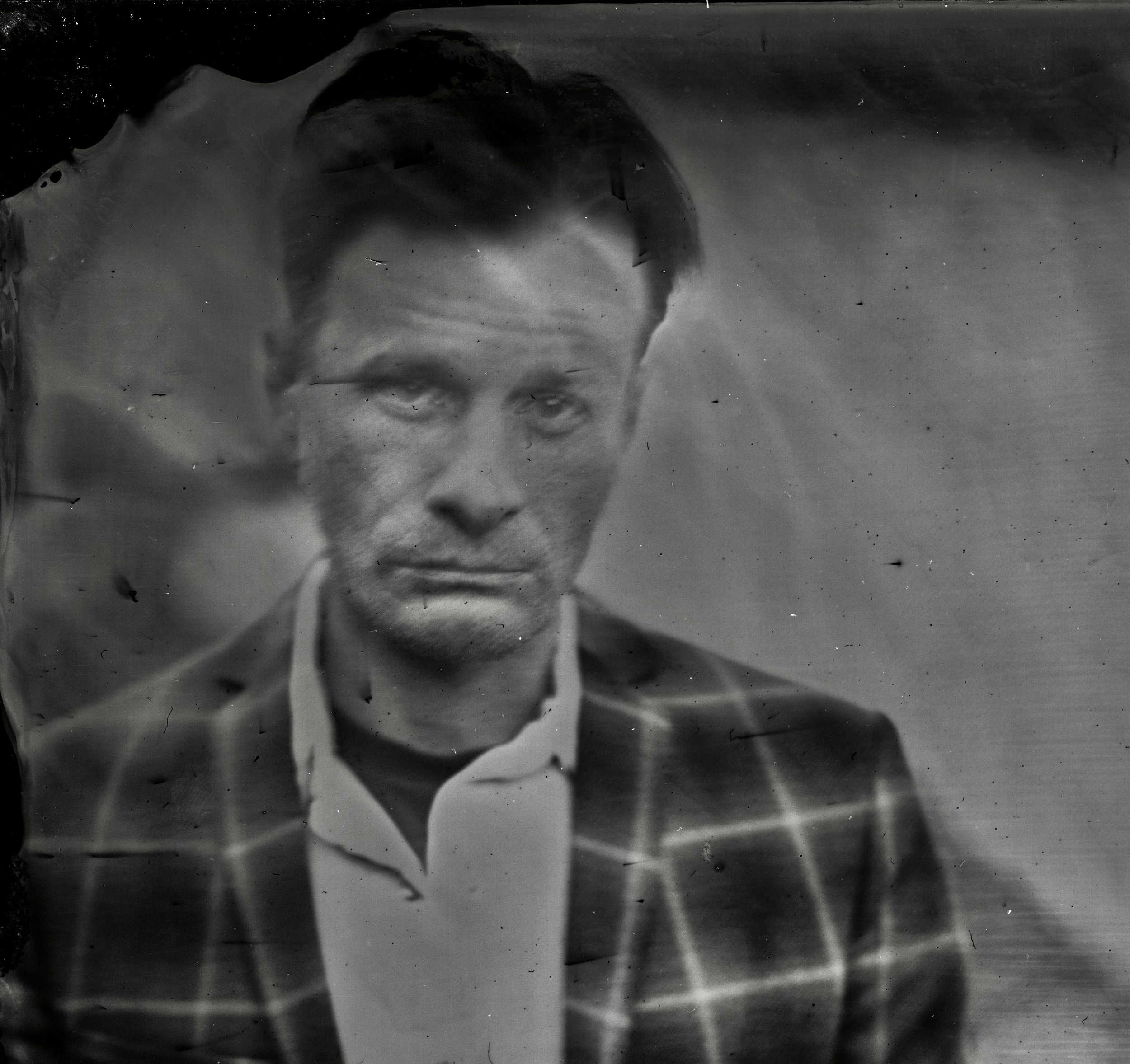
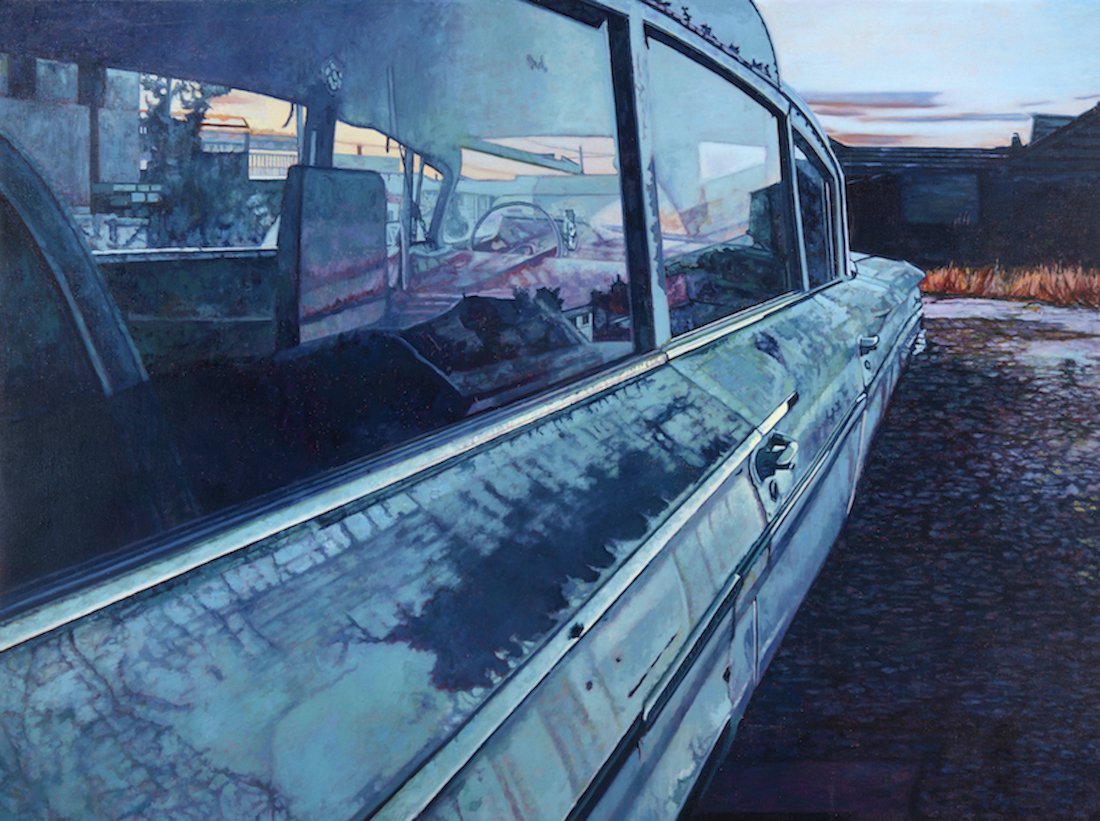
In line with Giacomelli, we present Michael Hower, who likewise brings the dead to life through his photography of central Pennsylvania, and Morgan Craig, whose oil and tempera paintings achieve a similar effect. Whatever their intent, all three invite interpretation, and interpretation requires imagination. And imagination is always a product of identity, an infinite layering of contingencies.
The work of Esteban Moore, in poetry, perhaps aligns most closely with metaphor for most readers, carrying the added complexity of using words to make images. Like painting and photography, his poetry imprints itself on the reader. Moore, like the visual artists here, animates the seemingly lifeless elements of his native Argentina. This shows even in his portrayal of people, as in his poem "Alejandra":
each day I'm surprised / by the death of a woman / fragile, nervous...
and I imagine the body / outside the disordered room
pale, it drifts along a city street / covered by the sky I love / and I am certain / oh world / that you have not known how / to make use of all her grace
The poem, dedicated to the memory of Alejandra Pizarnik, speaks to me as an Argentine, though differently than it might to Esteban Moore himself, since our contingencies have shaped different identities. Familiar with Pizarnik's work, I hear in Moore's words a critique of a materialist, capitalist world that often overlooks poets unless they are already famous, if it recognizes them at all.
Davidson further tells us that "metaphor is a legitimate device not only in literature, but in science, philosophy, and the law; it is effective in praise and abuse, prayer and promotion, description and prescription". And beyond this, against Black, Henle, Goodman, Beardsley, and others, he argues that metaphor accomplishes more than has often been acknowledged, and works its wonders in its own way.
December marks an end and also a beginning, often bound up with imagery. For those in the North the image is gray and cold; for those in the South, bright and warm. In much of the world, though, December has become a season of marketing and consumption rather than reflection and gratitude.
I am grateful that this journal celebrates powerful creators, and proud that this December marks the end of The Pasticheur's second year. Here's to many more years of wonder.
Jorge R. G. Sagastume, Editor
This Issue’s Contributors