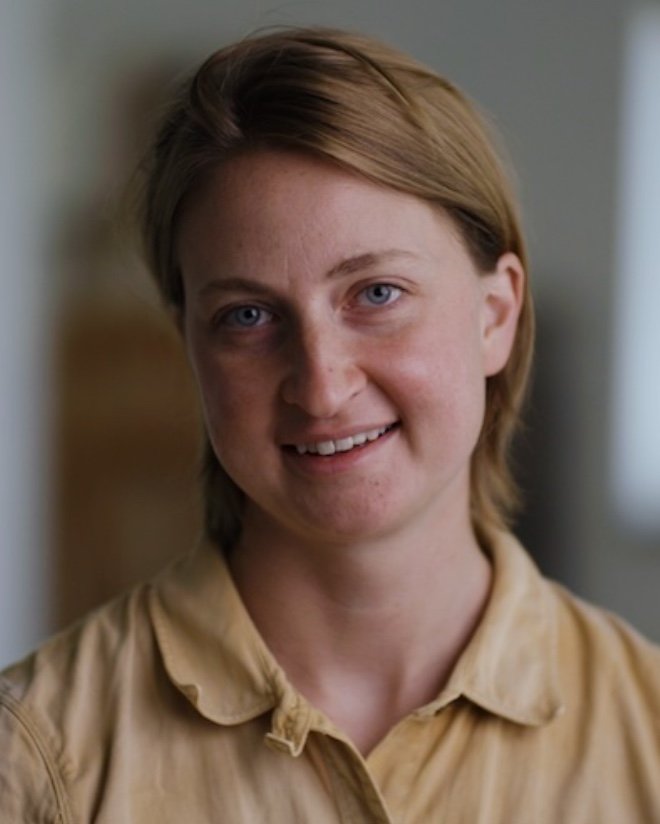
Editorial, May 2025
Caress the Detail: On Art and Literature as Dissent
"Caress the detail, the divine detail." — Vladimir Nabokov
There is a form of resistance that begins not with protest but with attention. In an age of spectacle, simplification, institutional certainty, and untruthful unity, that can seem almost radical: the slow, unhurried act of looking closely, noticing the seam, the scar, the brushstroke, the breath caught between lines. This issue of The Pasticheur gathers artists who inhabit that space, where the world is neither explained nor resolved but made vivid, textured, and urgent through detail.
Each of the works here rejects the smoothness of easy meaning. They speak instead in accumulations of fabric, pigment, silence, syntax. Together they remind us that dissent does not always announce itself loudly. Sometimes it murmurs. Sometimes it is stitched, layered, or measured out in verse.
Jeanne Ciravolo begins with what most would overlook: kitchen towels, sun-bleached linens, the domestic scraps of invisible labor. Under her hand these materials become repositories of memory and resistance. Her fragments hold faces rendered in thread, bodies obscured and revealed in folds of cloth. These are not simply portraits but survivals, and what looks like repair becomes reimagining. A floral border frames not a table but a nude female form, tender, assertive, unresolved. Ciravolo's work does not shout; it insists.
Eleanor Conover's paintings insist through density and depth. Her compositions evoke the deep time of erosion and sediment, of coasts shaped by repetition rather than force. Each canvas is a field of friction, scraped, stained, built up, broken down. These are not abstractions in the formal sense but records of touch, something almost geological, a memory held in pressure rather than image. To look is to slow down, to feel the drag of color across the surface, to witness what survives the shift.
Joseph A. Miller offers stillness that stings. His figures, rendered in exquisite detail, inhabit suspended moments: a child in a war zone, a girl under a heavy sky, hands slack at her sides. The compositions are quiet, but within that quiet lie ache, suggestion, aftermath. Miller does not pose questions; he sets scenes, and the viewer must inhabit them, stay with them, wonder what came before and what might follow. What he seeks is presence rather than resolution, and in that presence, discomfort.
Sara Yourist explodes the decorative from within. Her paintings stage an operatic clash between beauty and disquiet, where delicate figurines perform acts of dominance and despair. Sugared colors, melting forms, oozing vessels, each element exaggerated to the edge of satire. Beneath the theatricality lies something precise: a critique of control, of taste, of the roles we play and the forces that shape them. Nothing in Yourist's work is innocent, least of all the prettiest parts. Her details are traps, and we are caught willingly.
Allen Juan Zegarra Acevedo writes with a poet's scalpel. His language is lean and exacting, yet rich with resonance. In "Inheritance" he asks, "Is it the same rat / that preys on your harvest?", a question of lineage, of power, of who eats and who toils. In "Exodus", a flimsy boat carries lives weighed down by salt and longing. Zegarra Acevedo never sentimentalizes the migrant condition; he illuminates it image by image, phrase by phrase, making visible the emotional residue of dislocation. The detail is not only divine. It is political.
To caress the detail, as Nabokov advised, is not to retreat into the aesthetic but to enter the world more fully: to insist that a thread matters, that a smudge is part of the story, that precision can be a form of care, and care a kind of refusal. This issue invites us to attend rather than interpret, to inhabit texture rather than chase clarity. These works do not demand answers. They demand our presence.
And in that presence something else comes clear. Not everything must align. Art, literature, and thought grow stronger through disagreement, and to dissent is not to disrupt a community but to constitute one. What is dangerous is not difference but the false peace of imposed agreement, the assumption that we should all feel the same way, see the same things, speak in one voice. That is not solidarity but immaturity. These artists remind us, quietly and precisely, that difference is not a flaw in the fabric. It is the pattern.
So take your time, reader. Let your eyes adjust. Let yourself be pulled in by a thread, a crack, a line of verse. What resists explanation may offer revelation, and what resists agreement may offer truth.
Jorge R. G. Sagastume, Editor-in-Chief
This Issue’s Artists