Please Scroll Down
Editorial, December 2025
A Cartography of the Unseen
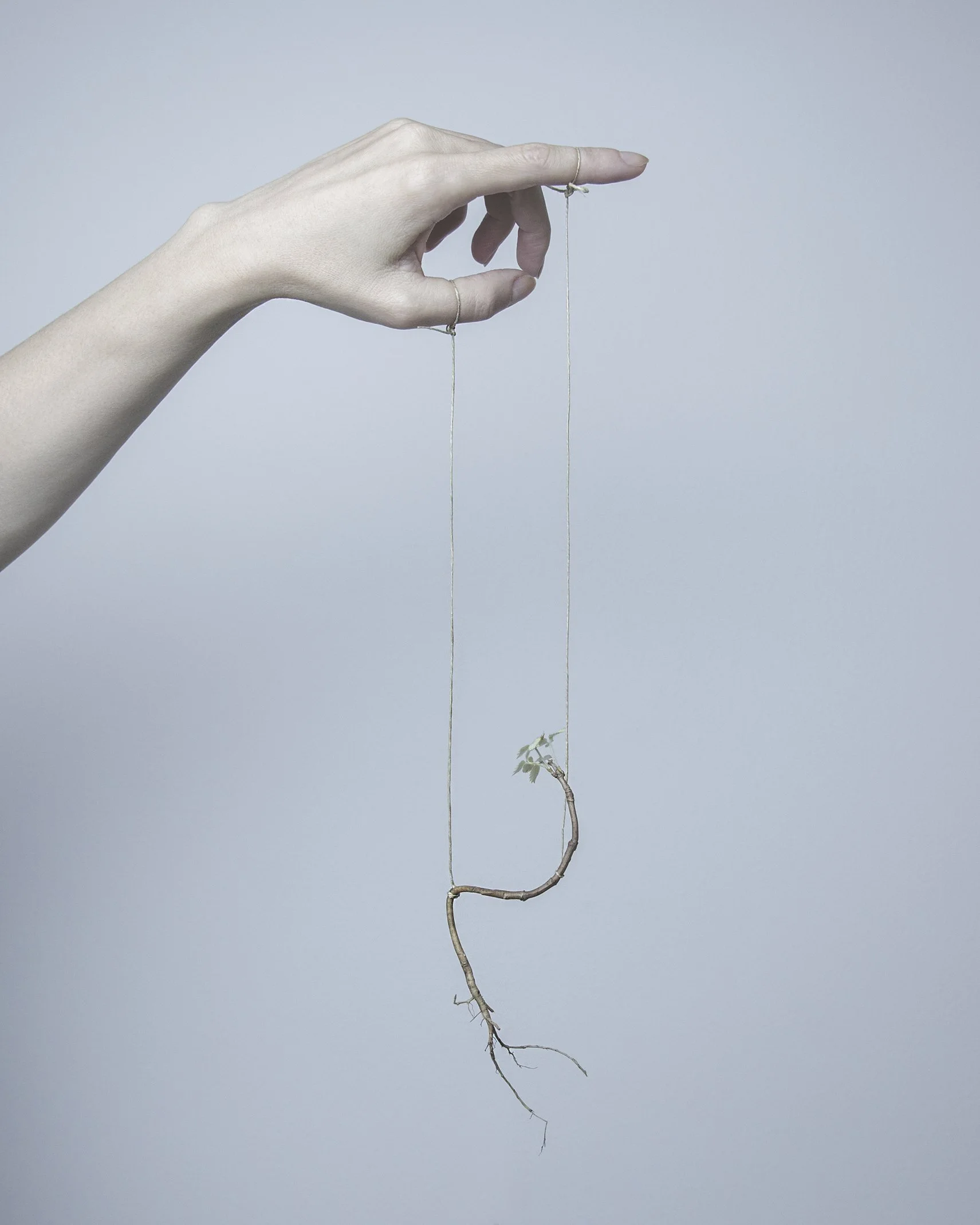
There are realms of experience that live below the threshold of ordinary sight. The unseen is not darkness but depth, the underside of memory, the fold of perception where meaning gathers before it becomes language. Philosophers have long reminded us that what we do not see shapes us as much as what stands before our eyes. The unseen is where the self listens, where the world speaks softly, and where revelation happens without spectacle.
This issue turns toward that interior landscape. It gathers Slovenian women artists and writers whose works illuminate what usually stays beneath the surface, and shows that the unseen is not remote but intimate: as close as breath, the shimmer inside a fracture, the echo inside a gesture, the world insisting that attention is a form of care.
Each visual artist approaches this space in her own language.
Nataša Segulin follows light as if it were thought made visible. She lets brightness settle on stone, skin, or water until a hidden truth stirs, so that light becomes the thing that traces the shape of what we might otherwise overlook.
Ana Straže works where impression becomes memory. Her images feel carved from stillness; texture and hue hold the warmth of something remembered. In her work the unseen carries weight, as if the image were holding its breath.
Nina Žnideršič, in her series Art Is Everywhere, turns the shell of an egg into a world of radiance. Fragility becomes architecture, translucence becomes matter, a remnant turns cosmic. The images ask us to slow down. What begins as surface reveals constellations; what once enclosed life opens into revelation. Žnideršič shows that wonder hides in the humblest corners, and that what is nearly discarded can still carry the pulse of creation.
Vanja Bučan steers the unseen toward the staged and the psychologically charged. Her images unsettle the border between nature and artifice: the familiar becomes strange, the constructed becomes intimate. Concealment and revelation turn out to be intertwined, and identity is performed even in stillness.
The literature, curated by my colleague and editor Martha Košir, moves through another dimension of the unseen. These writers explore inner landscapes shaped by what stays unresolved, unspoken, or carried in the body long after the original moment has passed. Their voices move through tenderness and fear, through inherited silence and the delicate labor of finding language again. They remind us that some experiences do not declare themselves. They ripple, they echo, they mark the self in ways that ask for patience rather than pronouncement.
Across the issue, the thread that binds the works is a fidelity to the subtle: a belief that what is most human is often what is hardest to name, a trust in small illuminations, and a recognition that the unseen is not a void but a reservoir of meaning. Light becomes the guide, a thin glimmer in a darkened frame, a fracture bright enough to show the way, a line of verse that carries more than it says.
As the outsider in this circle of Slovenian women, I enter their world with gratitude. Their images and writings open a space where presence replaces explanation, where silence holds its own truth, and where the fragile becomes luminous.
This issue is not concerned with conclusions but with perception: with learning to see what flickers beneath the surface, and with recognizing that the quiet is not empty. It is full of life.
—Jorge R. G. Sagastume, Editor-in-Chief
Editorial, Literature Section
The literary section of the December 2025 issue of The Pasticheur centers on the theme of trauma, as explored in the works of five contemporary Slovenian women poets and writers: Alja Adam, Maja Vidmar, Andreja Vidmar, Leonora Flis, and Katja Gorečan. Their writings illustrate that literature continues to serve as a powerful medium for expressing and examining trauma across multiple dimensions.
The term’s etymological roots help to illustrate the scope and depth of trauma. Derived from the Greek traûma, meaning ‘wound’ (Online Etymology Dictionary), the word was initially used to describe physical injury but gradually expanded to encompass not only bodily harm but also emotional and psychological wounds (Merriam-Webster Dictionary).
In contemporary usage, trauma refers to “any disturbing experience that results in significant fear, helplessness, dissociation, confusion, or other disruptive feelings intense enough to have a long-lasting negative effect on a person’s attitudes, behavior, and other aspects of functioning” (APA Dictionary of Psychology). Traumatic events may stem from human actions or from natural phenomena, and they “often challenge an individual’s view of the world as a just, safe, and predictable place” (APA Dictionary of Psychology).
The works presented in this issue reveal trauma in its many forms; it is both physical and emotional and often spans generations. It is rooted in memory, where moments of closeness are intertwined with grief, despair, anger, emotional confusion, and struggle to reconnect. It reveals itself through a profound inner conflict between alienation and closeness, fear and love, loss and recovery.
This selection brings to light the ways in which trauma expresses itself through acts of self-protection, which frequently result in withdrawal or retreat. This survival strategy, common for both children and adults, is expressed through Andreja Vidmar’s powerful metaphor of vanishing into a snail shell.
What emerges is the interplay between intimacy and aggression, tenderness and abandonment, a persistent desire for reconnection and release, and a search for hope amid emptiness and fear.
There is a void that needs to be filled, fear that seek confrontation, aggression that requires restraint. This struggle occurs not only on a personal level, but also within broader social and historical contexts, both present and past.
Ultimately, these works remind us that trauma is not a closed chapter but often an enduring presence. It resonates in silence as much as in speech, in absence as much as in connection. Through words and powerful imagery, the authors trace not only the hurt but also the fragile hope of healing. Most importantly, they demonstrate that through the act of sharing and bearing witness, trauma no longer needs to be endured alone.
—Martha Košir
Associate Editor
This Issue’s Contributors