Editorial
On Knowing
This issue of The Pasticheur gathers an array of works closer to what we had in mind when we created the journal. This was not planned, and neither was their fusing into at least one shared concern.
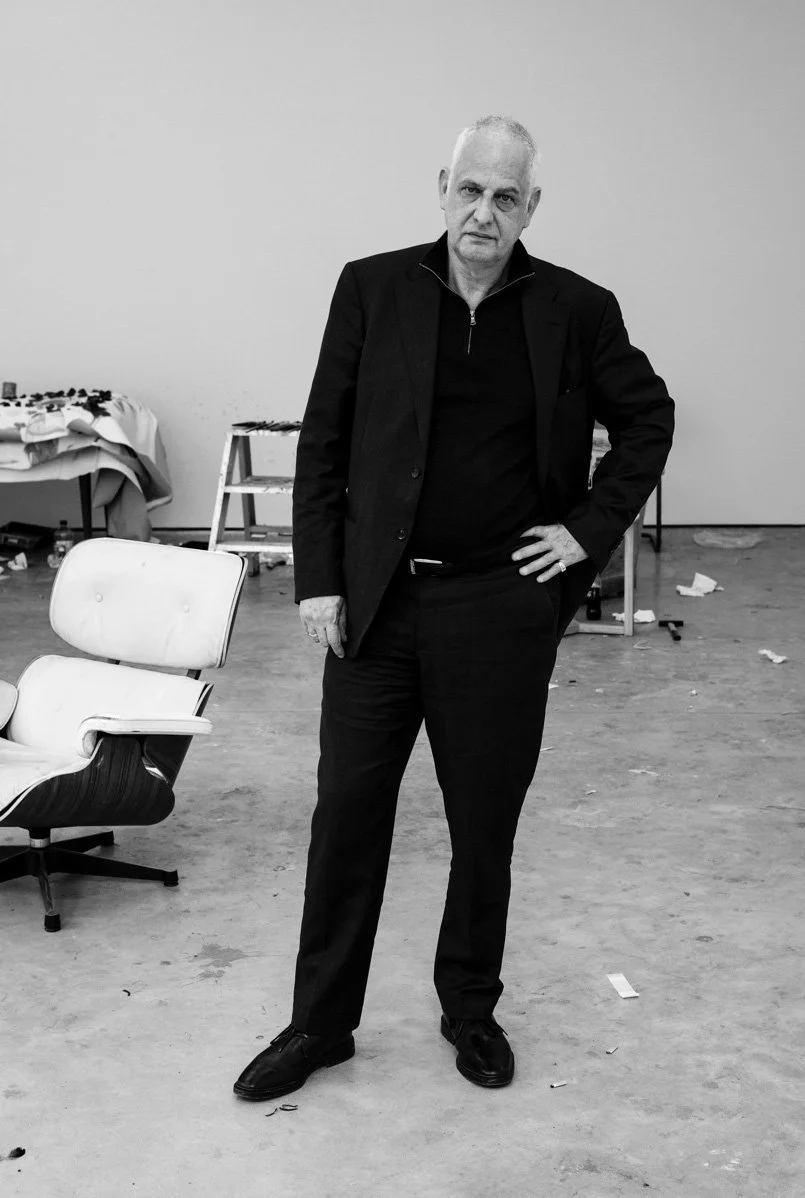
Luc Tuymans needs no introduction. He is one of the most important Belgian painters of his generation and, as his biographical note puts it, he "pioneered a decidedly non-narrative approach to figurative painting, exploring how information can be layered and embedded within certain scenes and signifiers". Yet when I look at his Les yeux sans visage, 1990, I cannot help but instantly make a narrative. Whether Luc intended this I cannot tell, but the painting points, to me, toward the concept of knowledge, toward the way the blank face is no different from any face. All faces, and all eyes, are fictional in that they are merely signifiers of complex signifieds, given the nature of our language games, painting and the other arts among them. All of Luc's paintings here speak, to me, to the second basic philosophical question: what may I know?
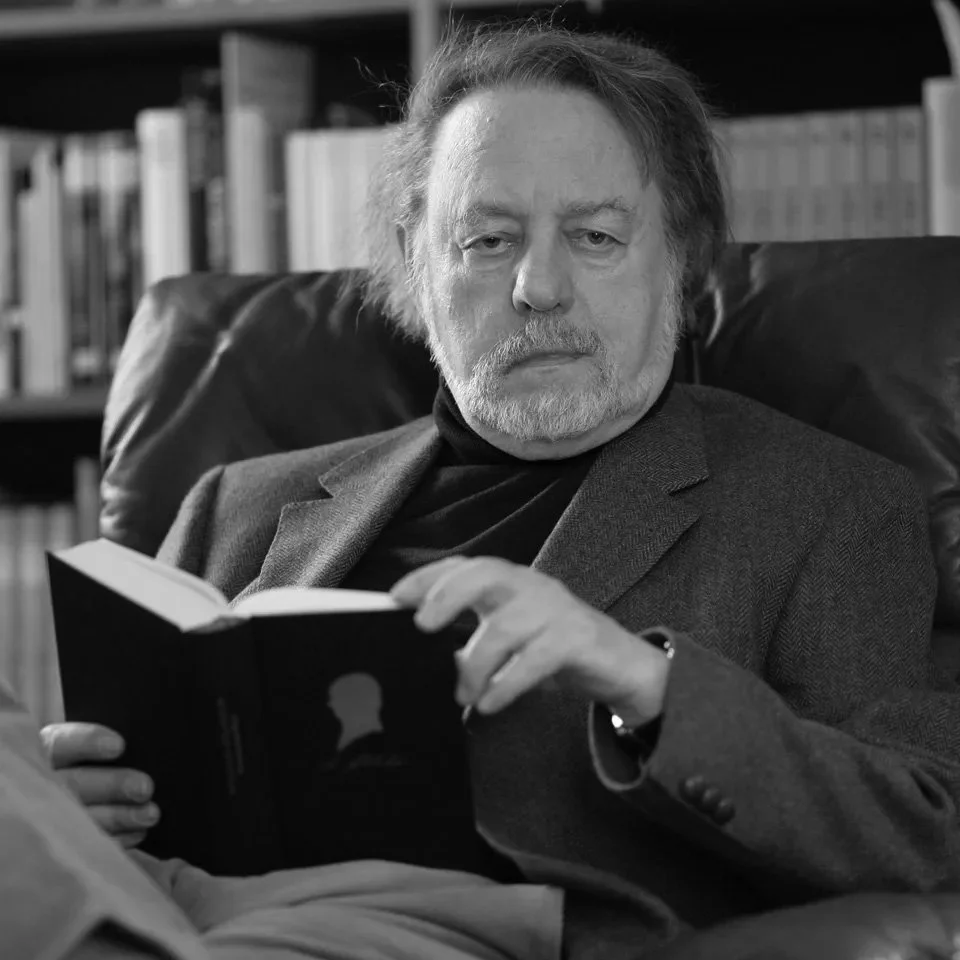
Another remarkable artist we are honored to publish is Ror Wolf, a well-known writer, visual artist, and collagist. What we include here points, again to me, to the same question, and quoting his piece "Details" will speak for me:
My readers will know that I have travelled the world and seen a lot. Admittedly I have never been to this area referred to on page 18. For simplicity's sake we may imagine that the area is flat and watery and that the water is thick and warm as noodle soup. In fact one sees nothing but water but then the real things happen under water anyway, the slippery, the greasy, the gruesome details. However, before I go into detail I want to end this article although this does not necessarily mean that the subject is exhausted.
Dean West is another renowned artist whose work, in both his photography and his short film, openly engages narrative and is marked by a dialogue between media: painting, literature, film, and music. His work fascinates me. It is clean and deceptively simple, meticulously staged, every detail contributing to the message, framed to speak loudly, and yet the meanings one might draw from it are complex and multifaceted. Take his piece "Bus": given the narratives of today's world I could quickly assign it a specific meaning, but that would be simplistic and unnecessary. "Bus" takes me into a clearly fictional world, though being fictional does not mean I do not live in it. His short films here aim at the same.
In this issue we encounter literature, painting, photography, and film, but that is not all. The young Noam Wegner, a painter, writer, actor, and illustrator, makes work far removed from reality that invites us to walk into a possible world, following, to me, the ideas of Leibniz, for whom our basic modal concepts, necessity, contingency, possibility, and impossibility, can be defined as follows:
Possibility: a proposition is possible if and only if it is true in some possible world. A being is possible if and only if it exists in some possible world.
Contingency: a proposition is contingently true if and only if it is true in this world and false in another. A proposition is contingent if its contrary does not imply a contradiction.
Necessity: a proposition is necessarily true if and only if it is true in every possible world.
Impossibility: a proposition is impossible if and only if it is true in no possible world.¹
My readers know that although I have access to the mystical Aleph, I still cannot fully answer the question: what may I know?
Jorge R. G. Sagastume
¹ See Leibniz, Modal Metaphysics, Stanford Encyclopedia of Philosophy.
This Issue’s Contributos
-
![]()
Ror Wolf
Writer & Graphic Artis
-
![]()
Luc Tuymans
Painter
-
![]()
Dean West
Photographer & Filmmaker
-
![]()
Noam Wegner
Digital Graphic Artist