The Color of a Flea’s Eye: The Picture Collection
In 1930, the Picture Collection of the New York Public Library received a peculiar request. A user asked for an image that showed the color of a flea’s eye. The question was at once absurd and profound. It assumed that even the nearly invisible could be located, classified, and placed within reach.
For decades, the Collection answered such desires. Department stores, dictionary illustrators, journalists, teachers, filmmakers, handbag designers, foreign ministries, advertising agencies, barbers, and even the United States military turned to it in search of images. They came looking for references, for proof, for inspiration, for something to anchor thought in visible form. Inside its files, folders labeled with subjects as precise as “Air Raids,” “Pack Animals,” or “Wind” overflowed with pictures cut from discarded books and magazines, mixed with prints, photographs, and film stills. It was a vast analog search engine, built not from code but from scissors, paste, and human judgment.
The system was democratic by design. Classification responded to users, not to doctrine. Each request altered the archive. Each act of sorting, labeling, borrowing, and reclassifying reshaped it. Over time, millions of physical images passed through this process, forming a rough, material algorithm that both absorbed and quietly redirected American visual culture.
For nearly a decade, Taryn Simon immersed herself in this history. She studied letters, memoranda, and records that tell an overlooked story of radical access to images long before digital search. At the center of that story stands Romana Javitz, the Collection’s superintendent and guiding force. Javitz rejected hierarchy. She treated images as working documents, tools meant to circulate, to educate, to unsettle. Sensing omissions in the dominant narrative of the nation, she assembled a repository of what had been ignored or suppressed. Folk art. African American life. Stark photographs of the Great Depression, some sent quietly to the Collection out of fear that Congress might otherwise bury them.
During her tenure, photographers such as Berenice Abbott, Lewis Hine, Walker Evans, Helen Levitt, and Dorothea Lange contributed work. Artists found refuge there as well. Diego Rivera, Joseph Cornell, and Andy Warhol mined its files, Warhol borrowing hundreds of images and never returning them. The Collection became both archive and studio, a place where images waited to be used again.
Simon entered this restless accumulation and momentarily stilled it. She selected folders with titles like “Broken Objects,” “Rear Views,” and “Waiting Rooms,” arranged their contents in layered constellations, and photographed them. Her act of photographing interrupted the archive’s constant motion. It revealed meanings that had formed accidentally through proximity. These compositions expose the Collection as an unwitting chronicle of shifting social values, tracing hidden tensions of gender, race, and power. They also remind us that no system of organization is neutral. Every archive carries the touch of the hands that built it and the desires of those who searched within it.
In this way, the request for the color of a flea’s eye lingers. It is less a curiosity than a metaphor for an enduring faith that the world, no matter how vast or minute, can be gathered, ordered, and made visible.
Adapted from the artist’s statement.
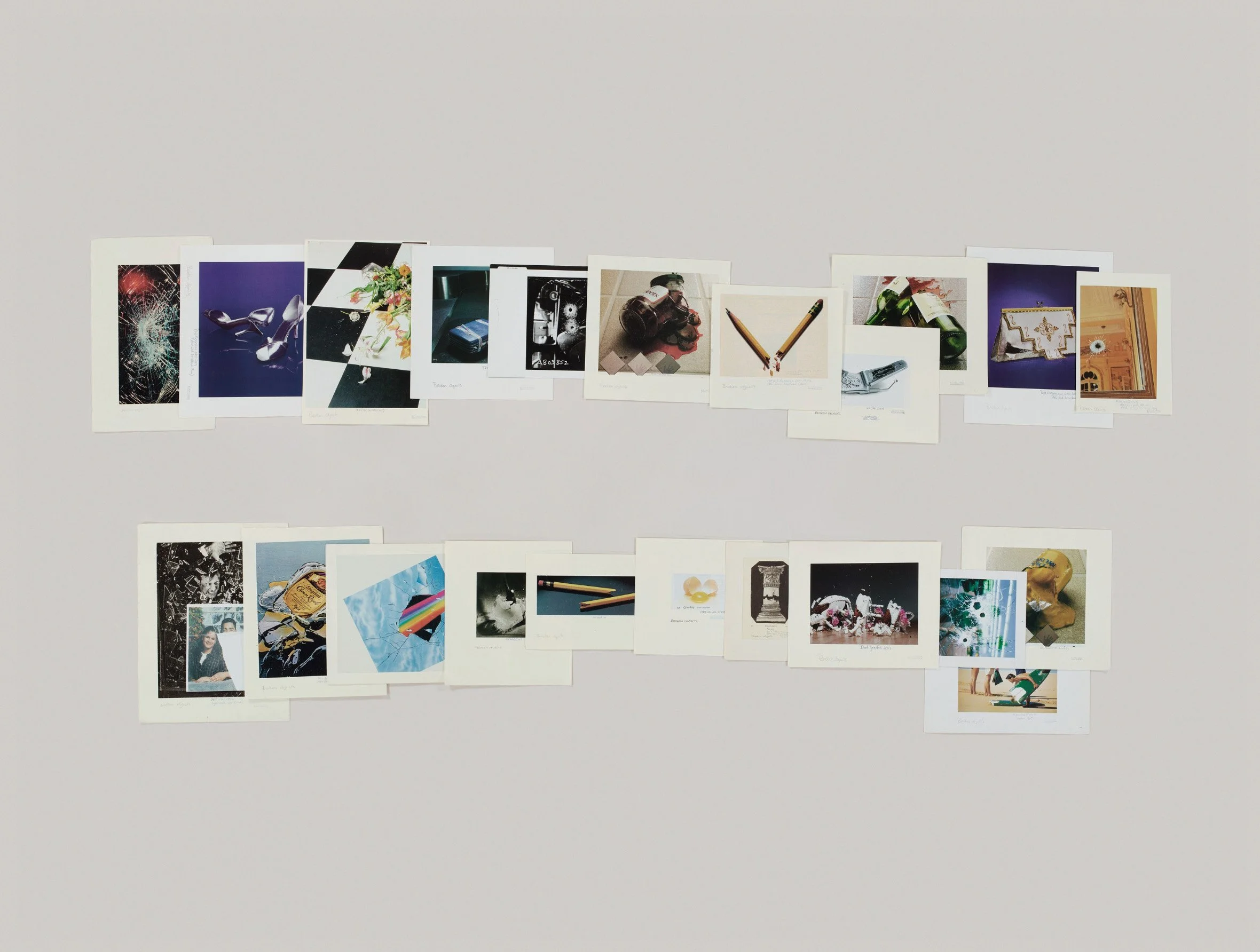
Broken Objects
Archival inkjet print
47 x 62 inches (119.38 x 157.48 cm)
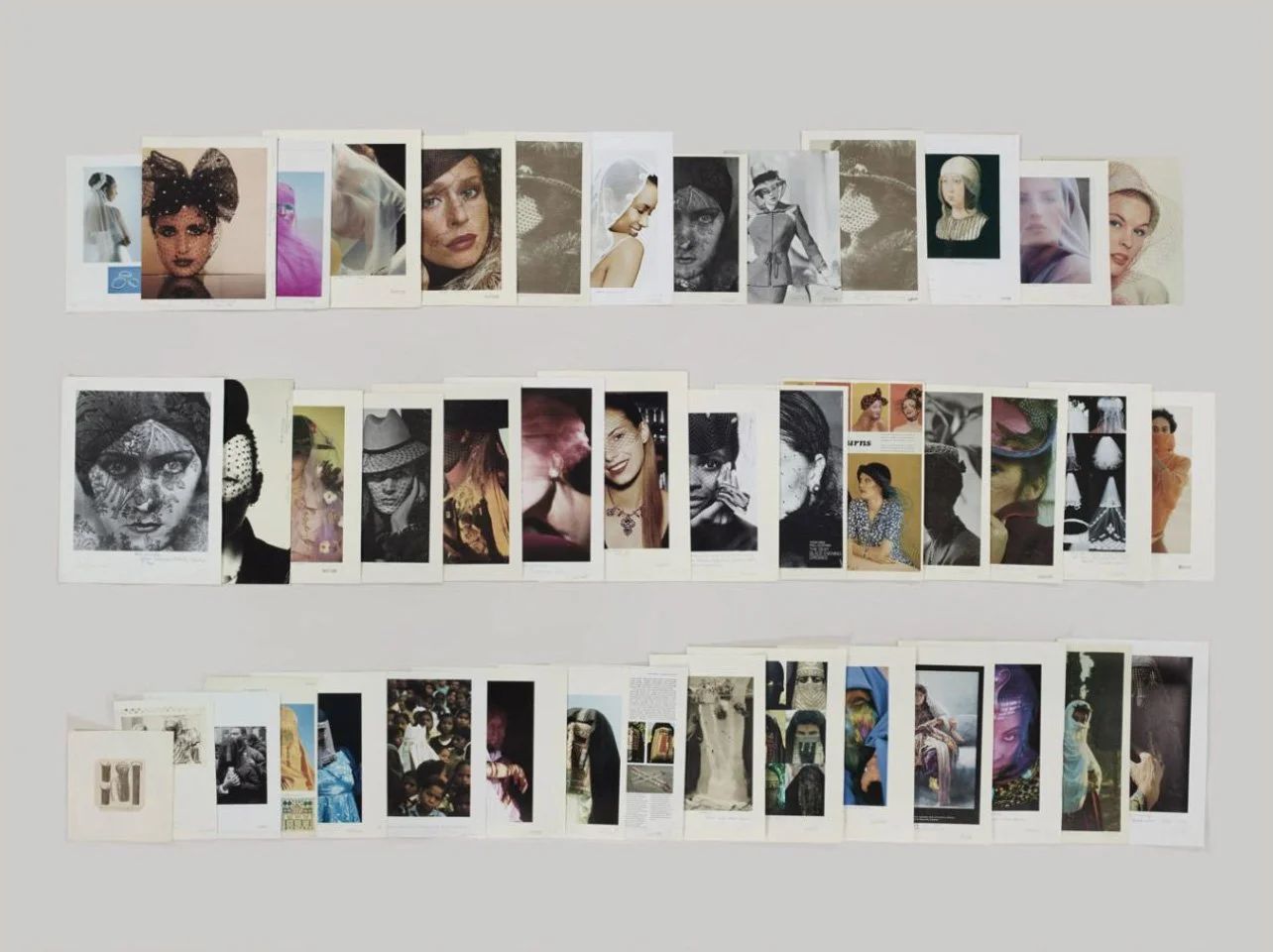
Costume - Veil
Archival inkjet print and Letraset
47 x 62 inches (119.38 x 157.48 cm)
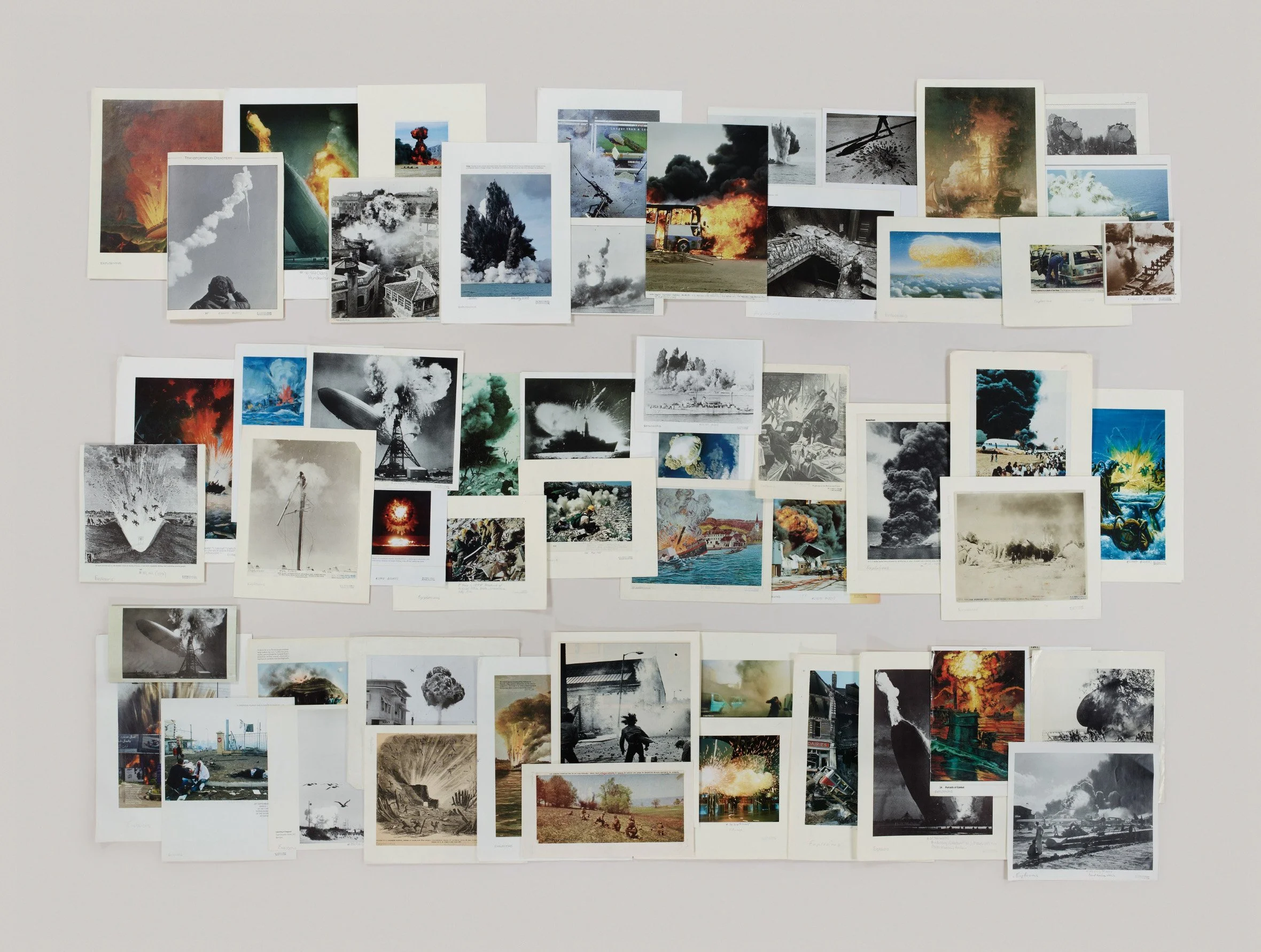
Explosions
Archival inkjet print
47 x 62 inches (119.38 x 157.48 cm)
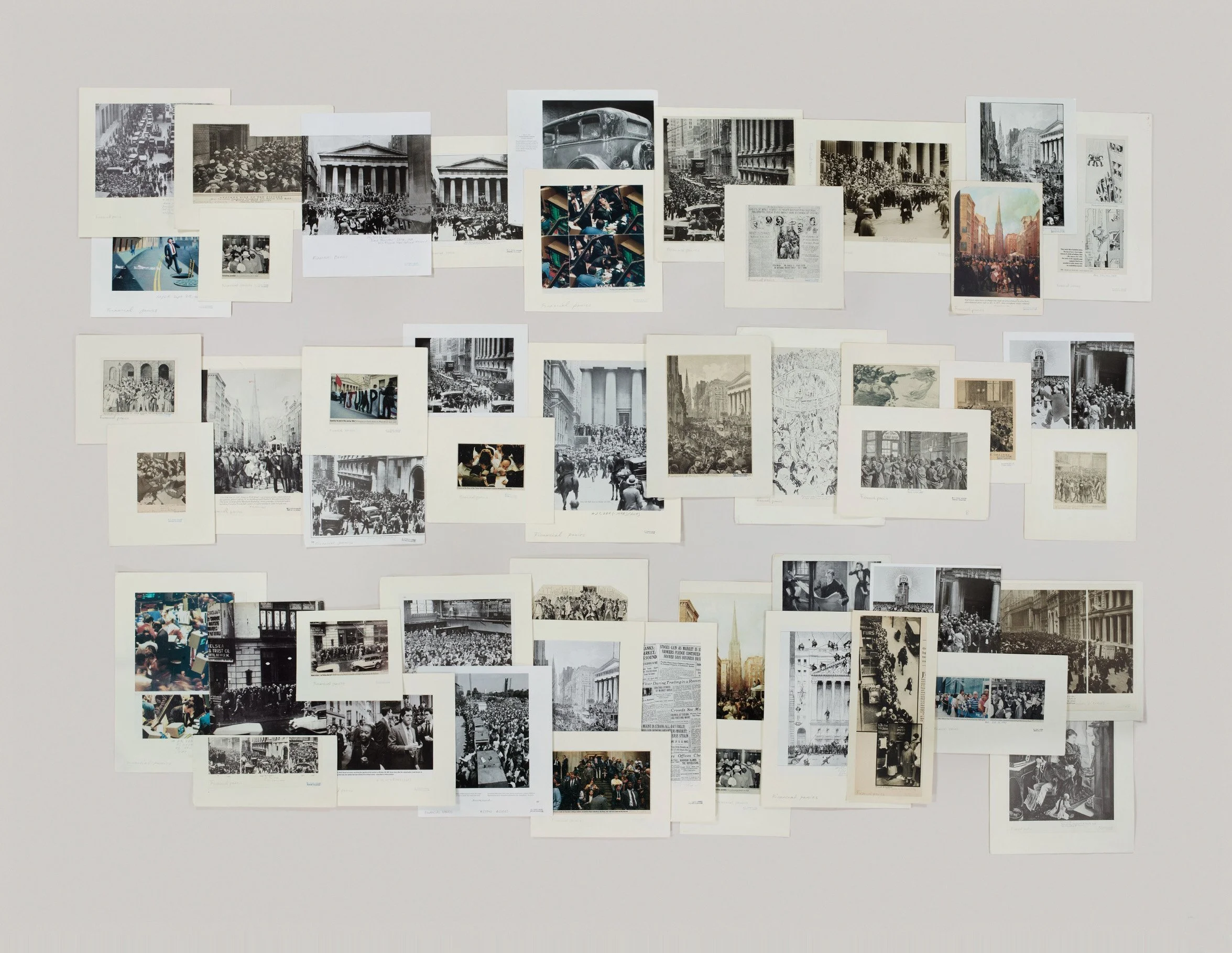
Financial Panics
Archival inkjet print and Letraset on wall
47 x 62 inches (119.38 x 157.48 cm)
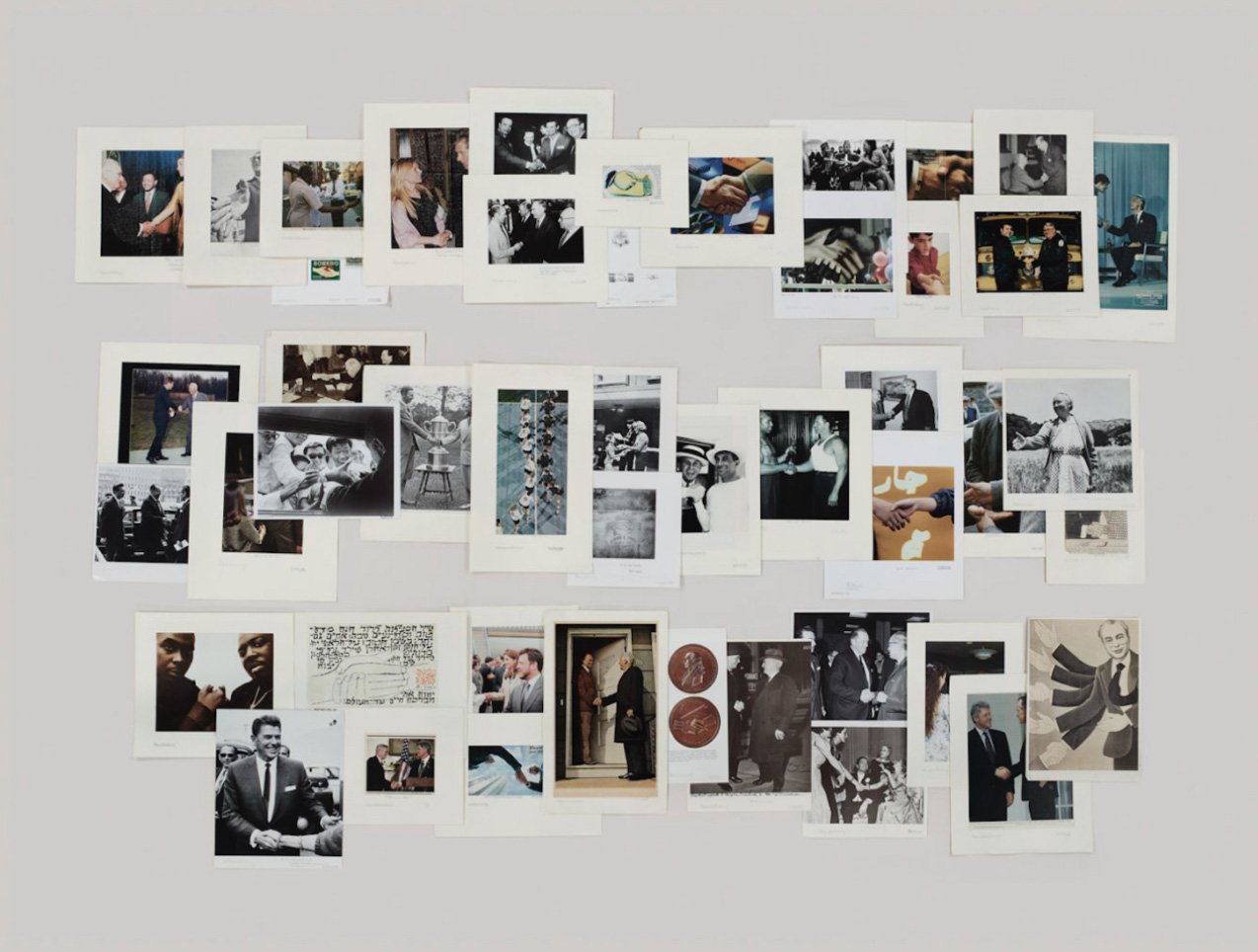
Handshaking
Archival inkjet print
47 x 62 inches (119.38 x 157.48 cm)
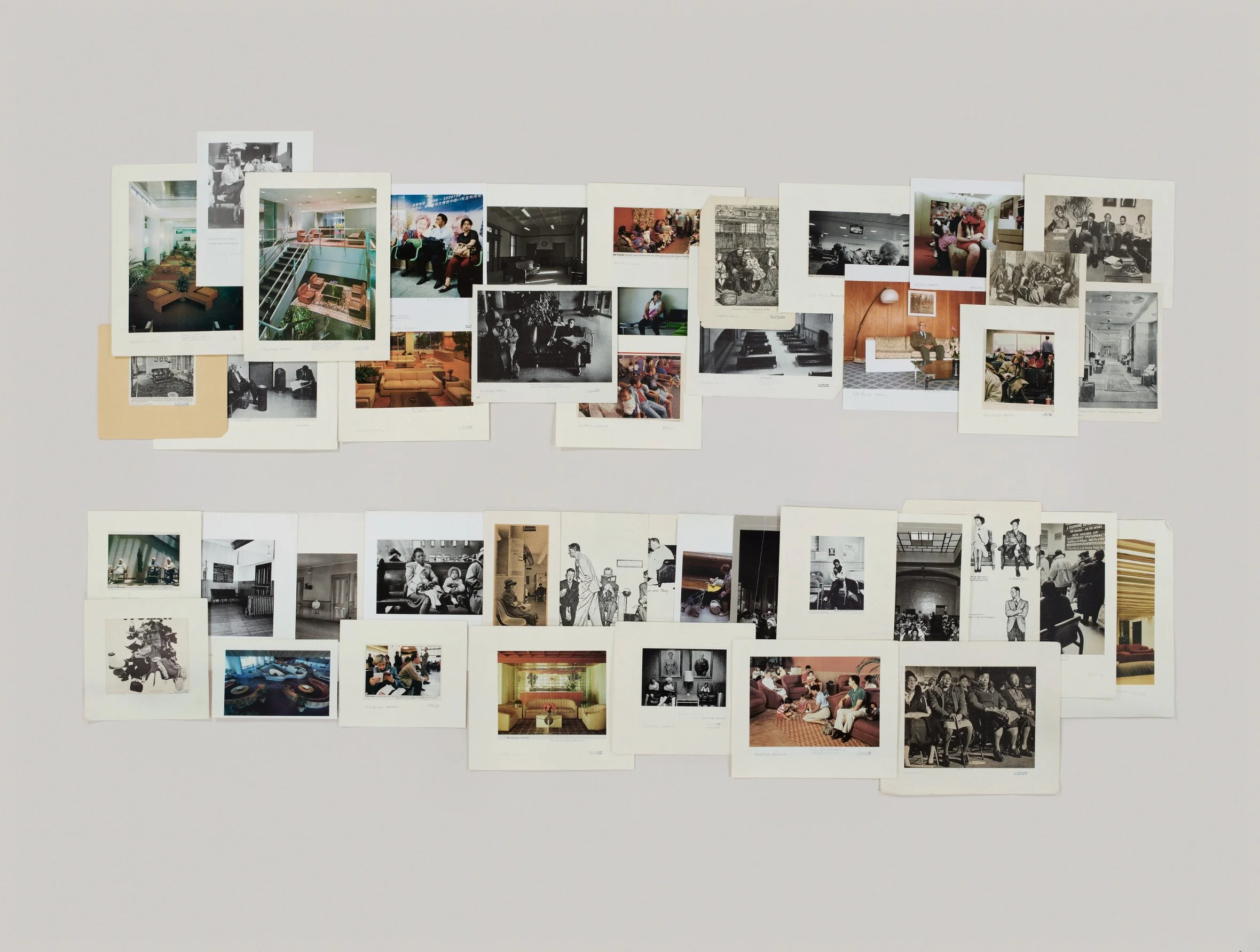
Waiting Rooms
Archival inkjet print
47 x 62 inches (119.38 x 157.48 cm)
© All Works by Taryn Simon
Artists & Writers in This Issue
In alphabetical order by the first name
