La Belle France
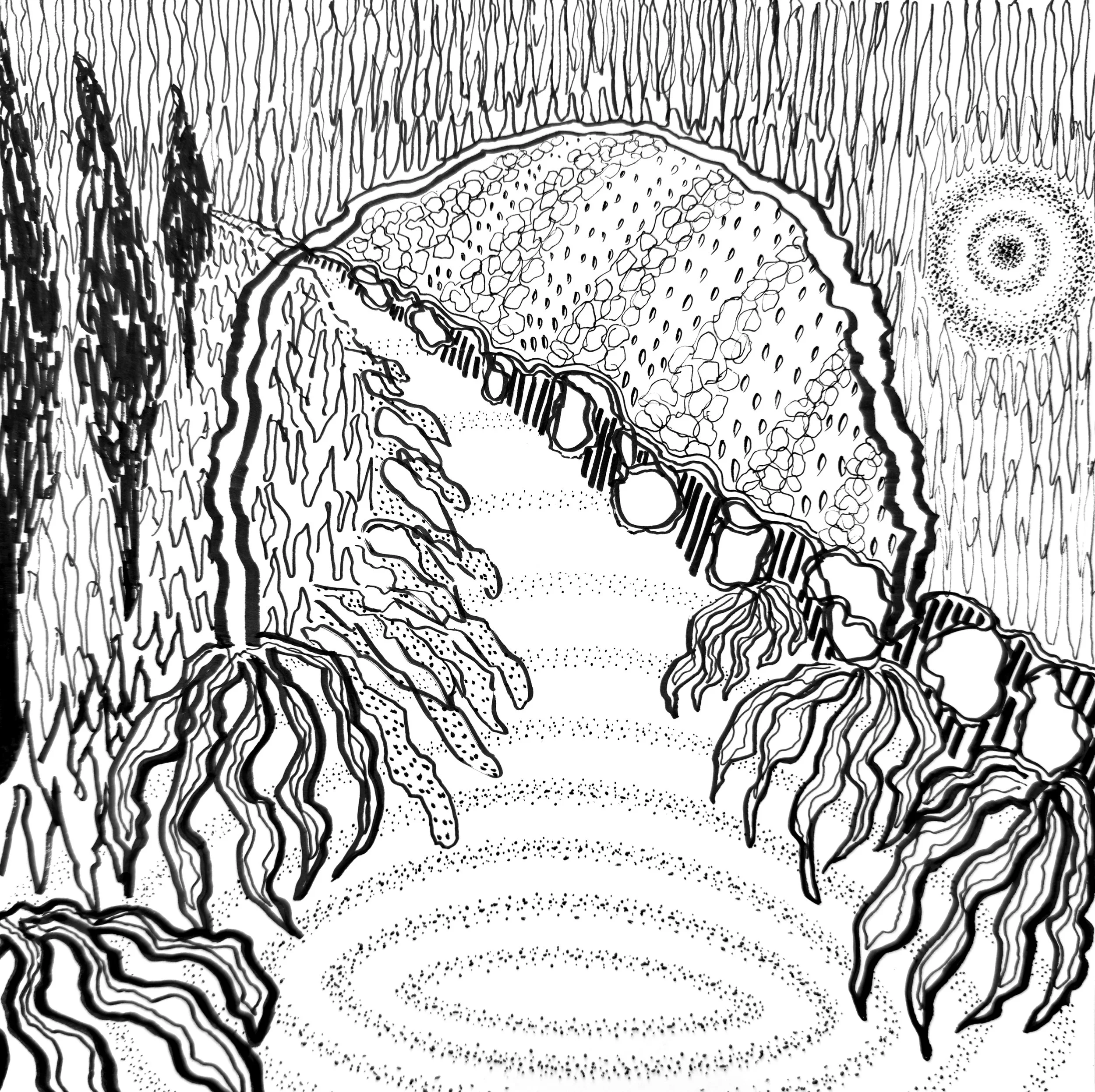
Giverny, 3 — Marker on paper, 11” x 11” (2025)
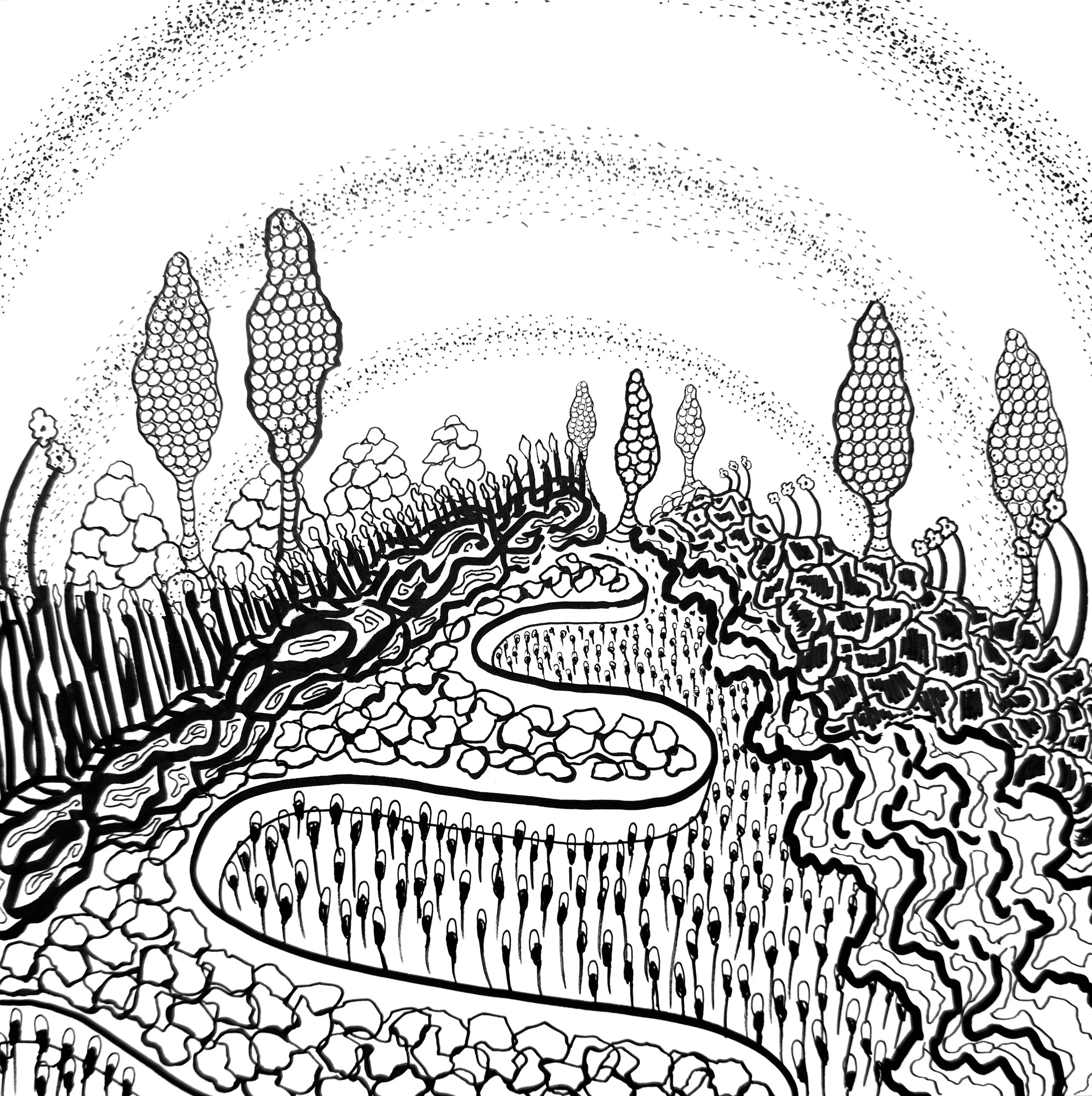
Giverny, 4 — Marker on paper, 11” x 11” (2025)
I.
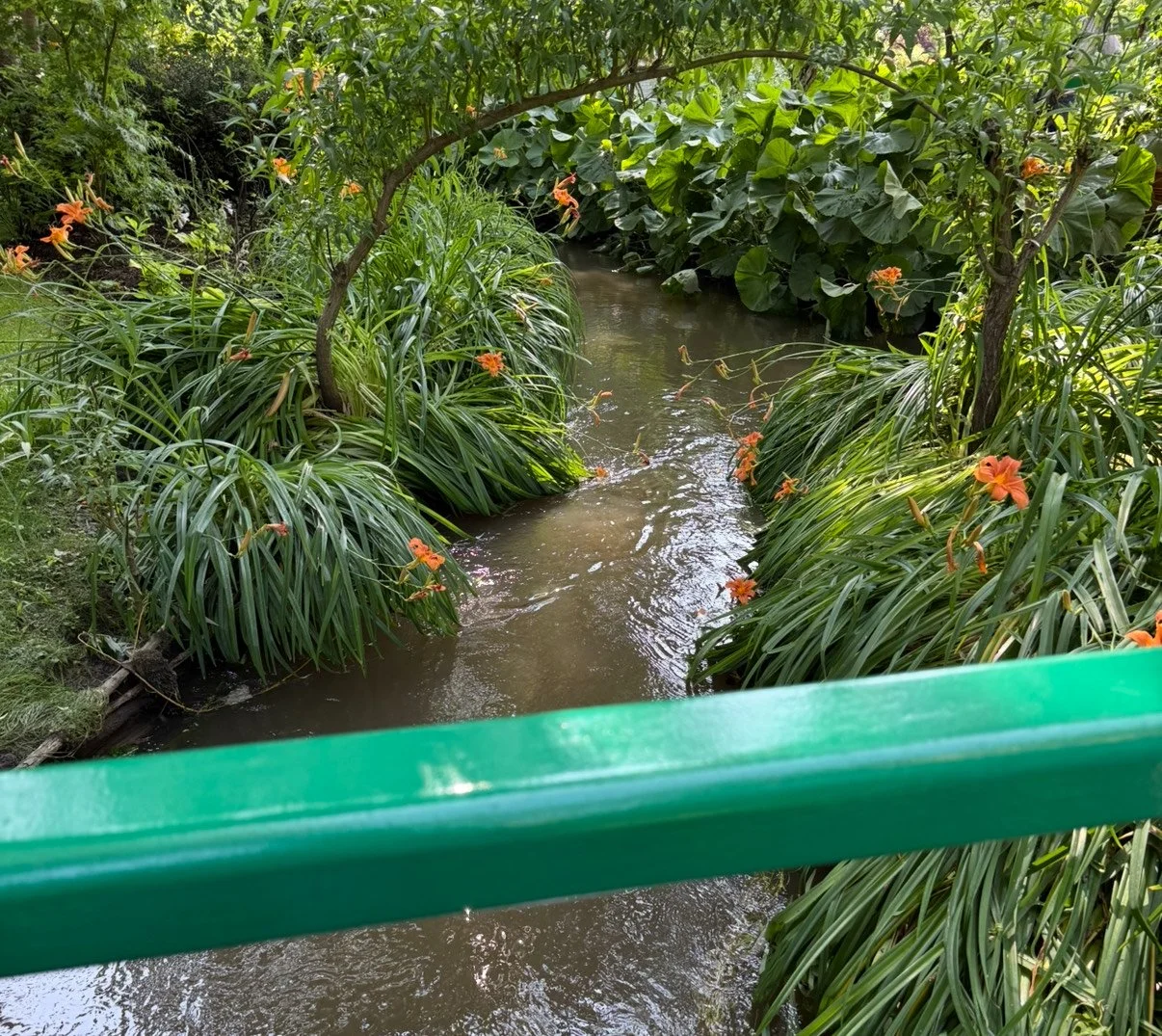
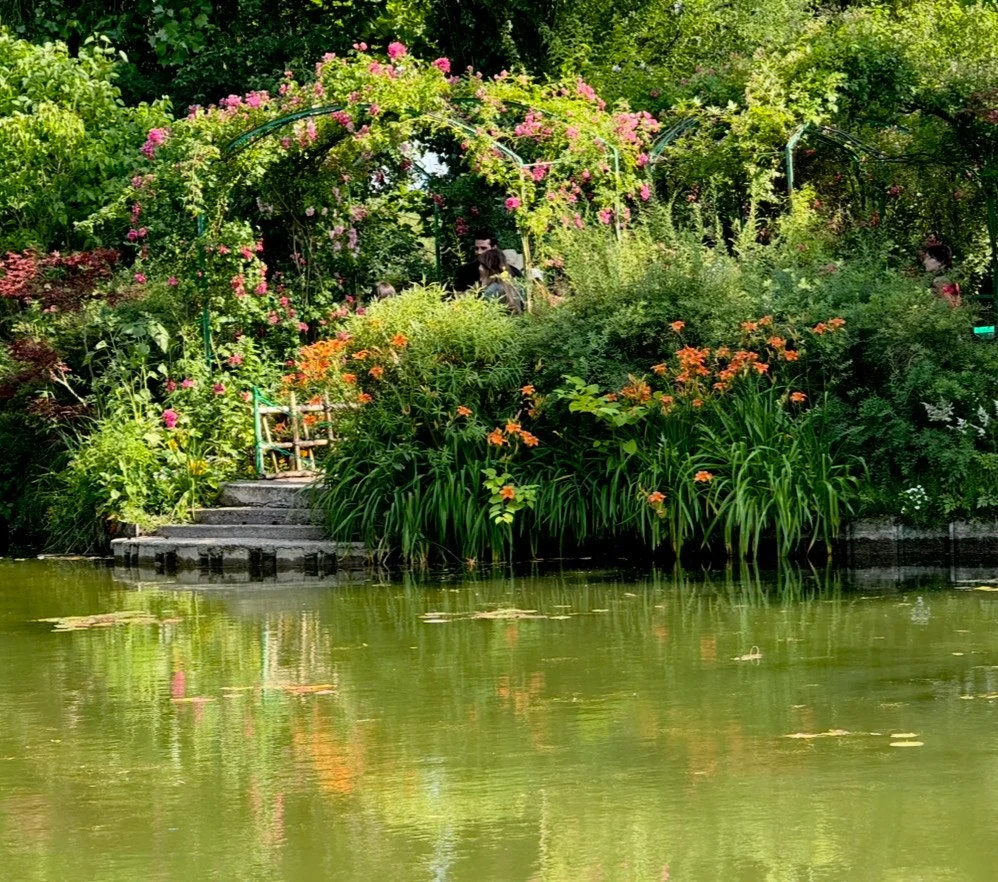
The focus of this trip to France is Normandy--specifically to Giverny, the site of the legendary, vibrant gardens of Claude Monet.
To my mild surprise, the bed-and-breakfast’s crowded French-language bookshelves include a copy of Les Nus et Les Morts by one Norman Mailer: The Naked and the Dead, Mailer’s novel of World War II. When the book was published, its use of the word fuck was expunged, famously replaced by the nonsensical euphemism fug. I was unable to ascertain how the French translator handled the formidable challenge of all these fugs. I was also unaware, hitherto this trip, that prairie—the most quintessential of American words—is of French origin.
Claude Monet, the father of Impressionism, was born in 1840 and died in 1926, having lived through a tumultuous, earth-shaking span of French and European history. Monet lived in Giverny for the last forty years of his life, creating and attending to these gardens. According to the official literature, he uprooted the existing apple orchards and vegetable garden, planting “flowerbeds of irises, day lilies, agapanthus, tulips and Japanese peonies… roses, wisteria.” Irises were a particular favorite.
Not everyone was enthused. “The local farmers had feared Monet’s exotic plants would poison the water and kill their livestock.”
Claude Monet’s gardens, from the vantage point of this bed-and-breakfast, can be traversed by a large path that is flanked on both sides by greenery, rolling hills, the sound of birds—a long, bucolic walk through the Normandy countryside. It is easy to conjure up this land through the eyes of Monet: the allure of peacefulness and beauty. It must have felt akin to a portal that led to a sort of Eden.
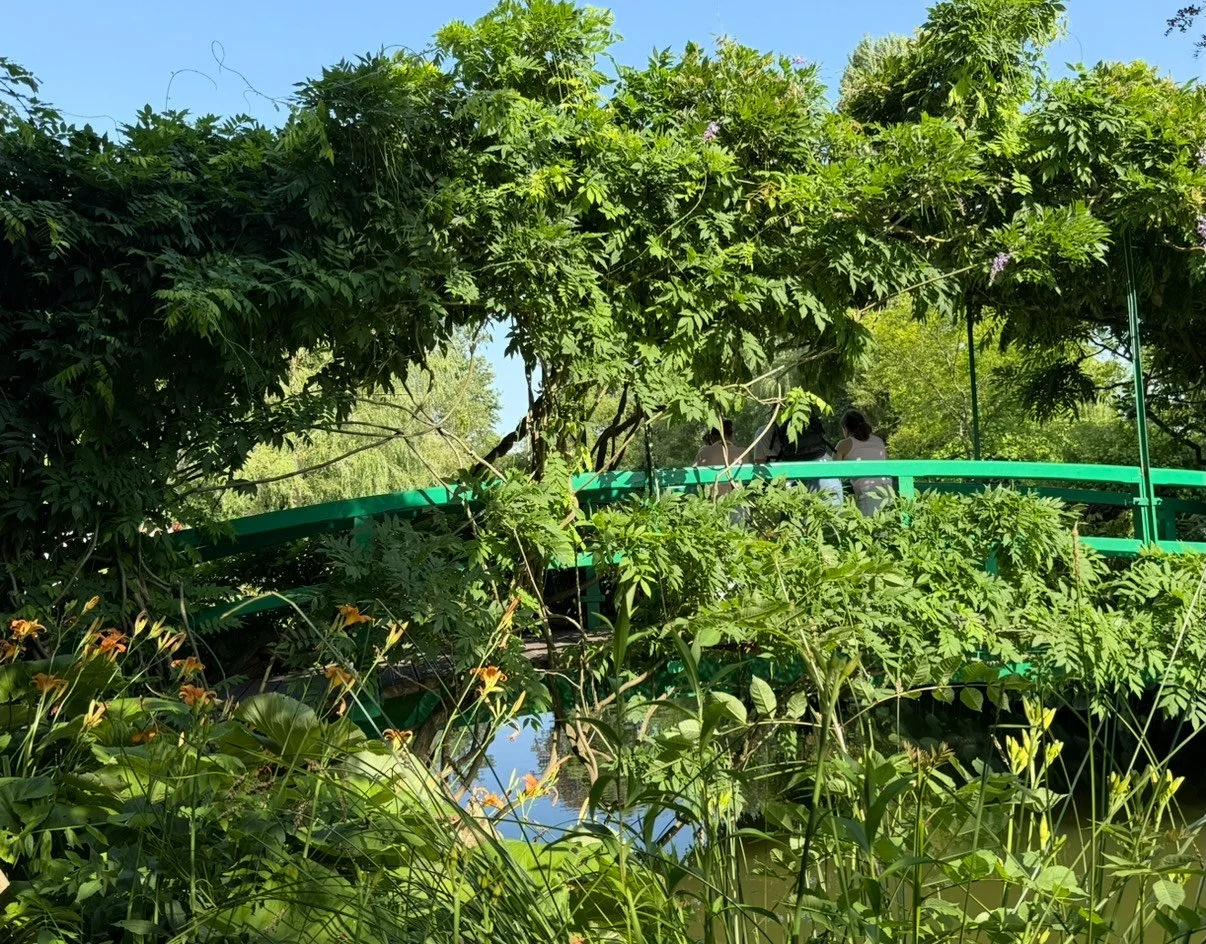
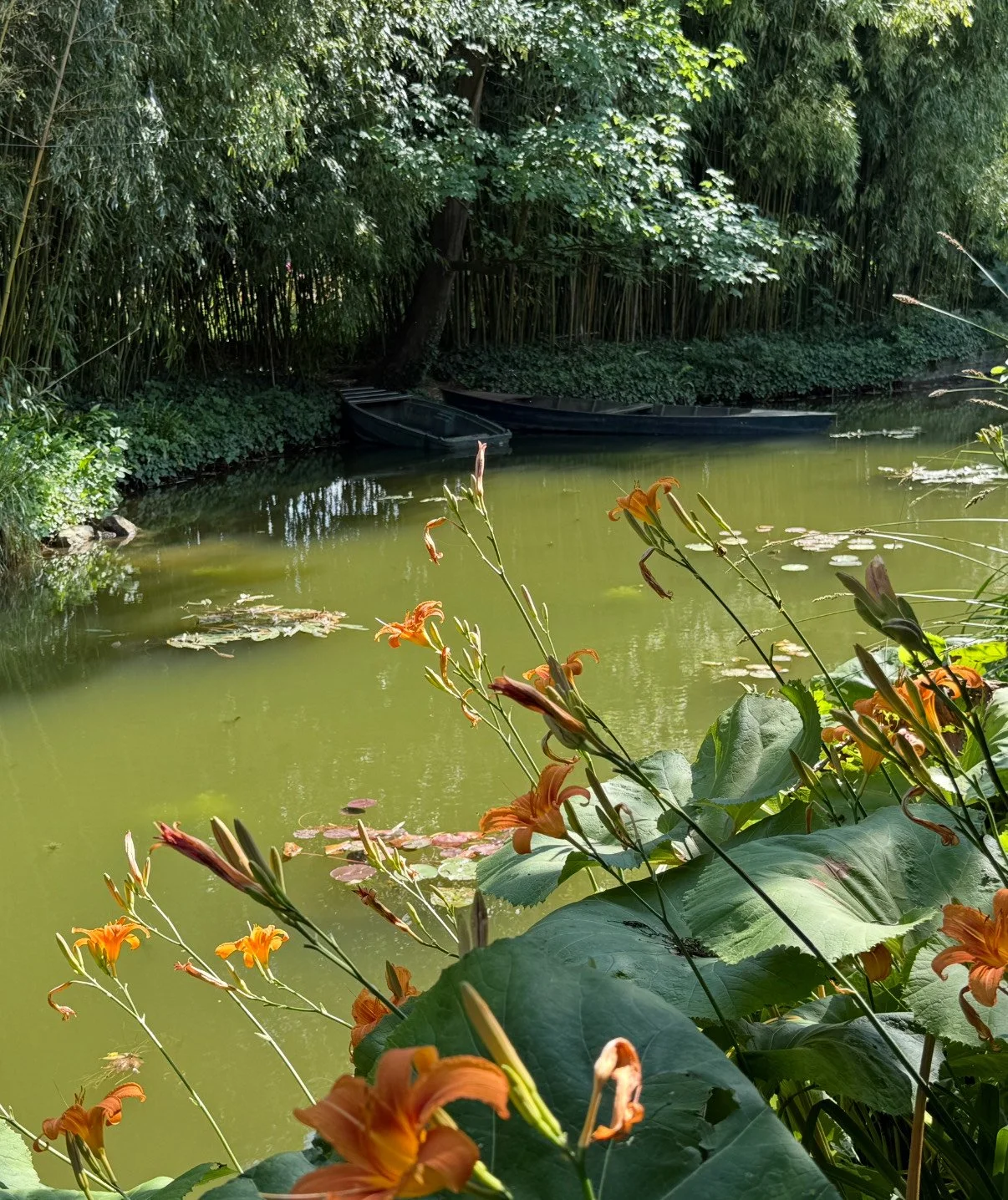
Calling this a “garden” or even employing the plural—gardens--does not adequately convey the verdant expansiveness, the interplay of land and water. The gardens served as an endless source of inspiration for Monet. He constructed a small Japanese bridge that became one of the most famous renderings in his oeuvre. The actual bridge still exists and can be easily traversed. The ponds Monet painted are right here as well, as are the water lilies. One can enter a gigantic painting, an immersion in the very real sense of the word--comparable to replicating the Mary Poppins experience of leaping into a chalk drawing.
Monet’s large home is also open to the public: a domicile of striking elegance and a fitting complement to the nature that surrounds it.
Roaming through the gardens and Monet's home means negotiating with the crush of tourists, who seem drawn from all over the world. The crowds make a contemplative experience difficult. There is also an elaborate gift shop in which all manner of Monet items—reproductions, books, tableware, stationery—can be purchased.
The touristic hubbub and the offerings of the shop can seem a little crass, but all this is generated by a painter’s lovingly reconstructed green space and the legacy of the father of Impressionism. The swarms of tourists are not necessarily devotees of art and culture, but there is a nice, benign overlay to all the proceedings. As hackneyed as this might sound, art and beauty do hold sway here.
II.
It is difficult to convey the texture of pre-internet international travel. One could be at a leisurely remove from the United States in a way that exists no longer. News from the US, mostly gleaned from the venerable International Herald Tribune, was at least a day old. Calling home was not a given: International phone calls were expensive and often laborious to undertake.
Everything now is available by a quick manipulation of one’s phone. In Giverny, I couldn’t help myself from reflexively checking my phone a few times a day: Things are moving so quickly and catastrophically in the United States. Certainly, there is a lot to be said for these innovations. GPS, for one, is a miracle. There are aspects of travel that are now immeasurably easier. Much, though, has sadly disappeared. But I imagine every generation goes through this fondness for a vanished era.
III.
The legacy of visual art that emanated from France is almost beyond comprehension. Also beyond comprehension is the visual art that came out of Europe as a whole. And then there is the legacy of Europe’s contributions to music, literature, cuisine, scientific inquiry, scholarship. The list could go on and on.
In contrast, the United States, for most of its history, was a bit of a cultural backwater. Americans of an expansive bent went to Europe. (As did the wealthy.) The fact that Abstract Expressionism sprang from the United States—not Europe—made the movement intrinsically exceptional. Psychologists, in hoary old comedies, had a German accent. In American media, foreigners popped up as artists, mad scientists, chefs, classical musicians. Snooty waiters were often accented.
Now it feels like a violent reversion: the reemergence of the provincial, isolated United States. This is bad enough, but—as opposed to the provincial US of German psychologists and accented eccentrics—this provincial United States is possessed of unprecedented military strength, is bellicose, and is also dreadfully frightened of perceived enemies all over the world. These combinations bode ill—for us, for the world.
If it is difficult to comprehend Europe’s fount of art and wisdom, so it is difficult to comprehend Europe’s fount of horrors and atrocities. In 1861, Claude Monet was stationed in the French colony of Algeria for his compulsory military service. It is an endless reminder of Europe’s colonial legacy: conquest, subjugation, slaughter, plunder. When the Europeans weren’t laying waste to Africa and Asia, they were endlessly warring with each other. They brutalized and oppressed their own populations.
What does this say about human nature, about the human species itself? What conclusions can be drawn?
I wish I knew.
IV.
After all this, am I permitted a reverie?
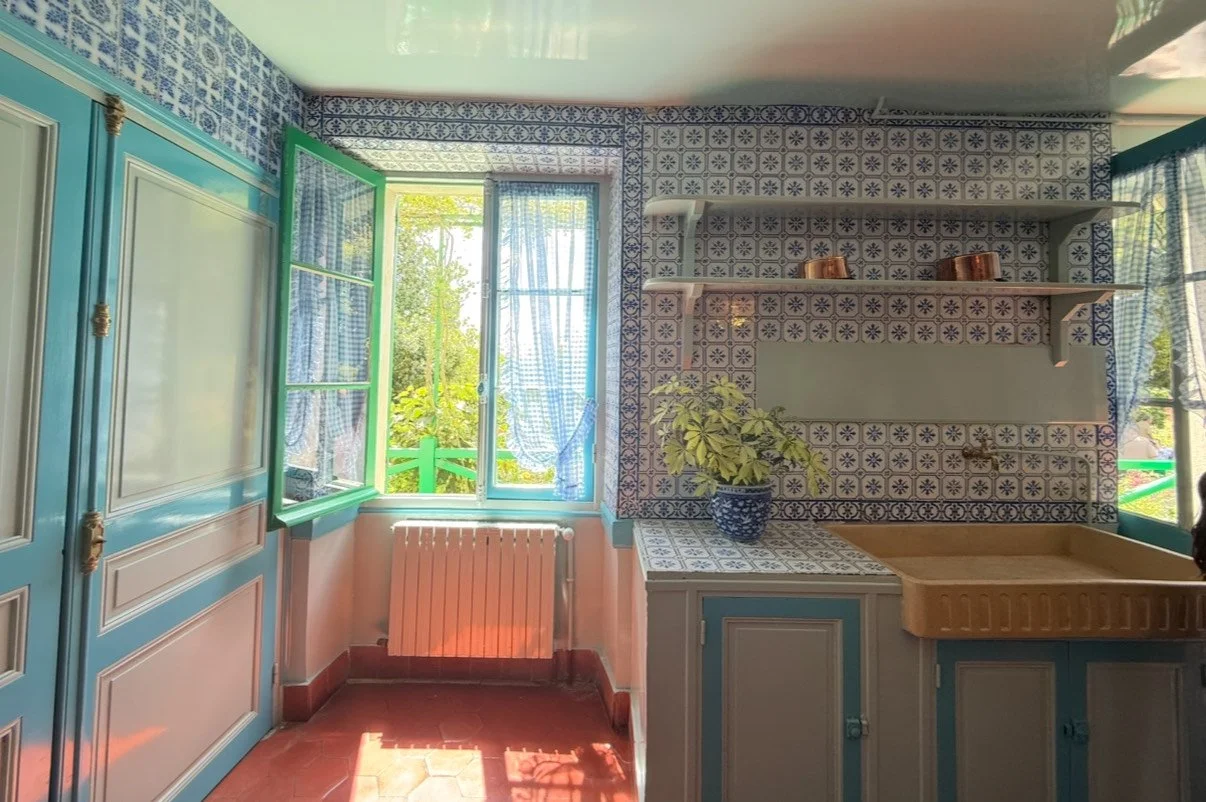
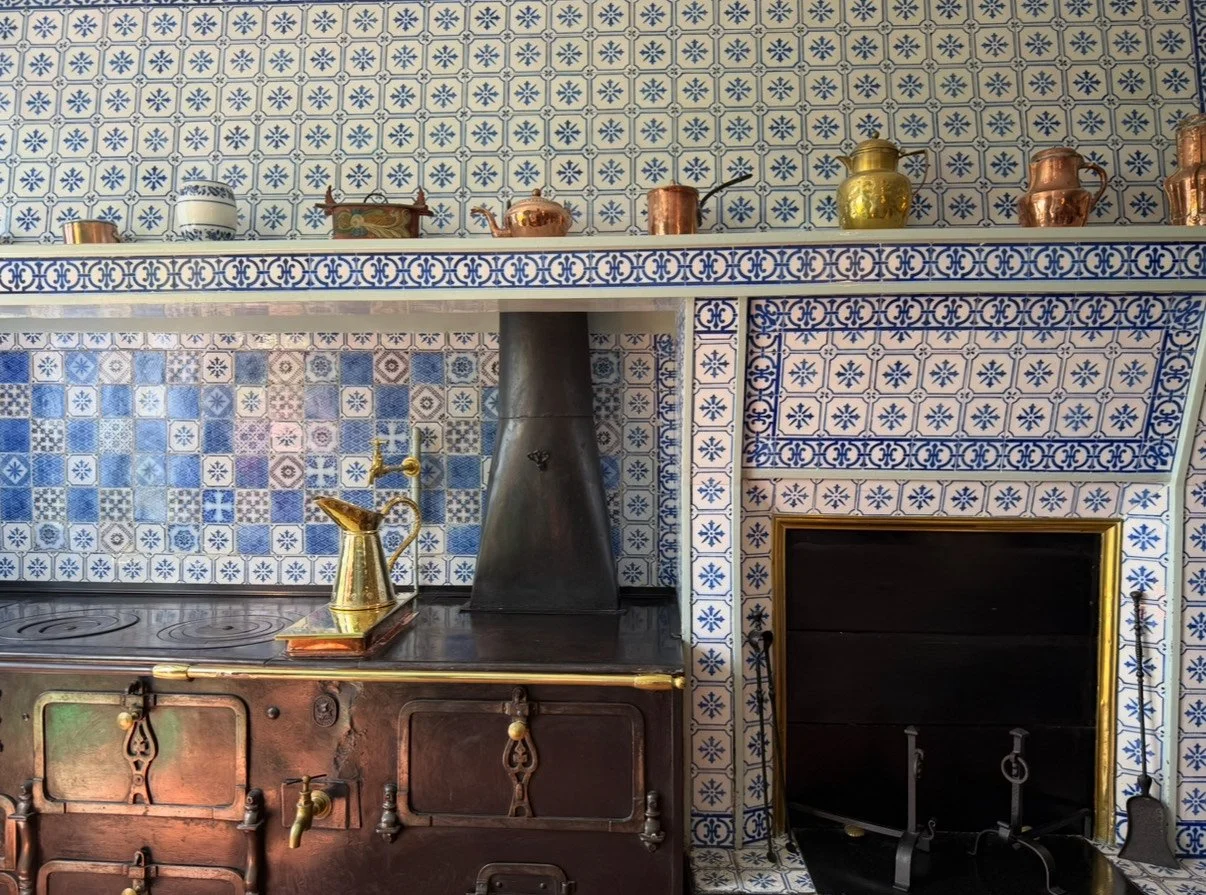
Monet’s commodious kitchen is an immersion into eye-pleasing, evocative blue, including the blue wall tiles. Gleaming copper pots, urns ring the walls. A utilitarian blue table, startling in its modesty, unobtrusively occupies a position of prominence in the center of the room. The entire schema seems to be conceived to bring about the release of pleasurable endorphins.
In this reverie, Monet sits at his kitchen table for a breakfast of thick peasant bread, still hot from the oven. He applies country butter. There is some fruit on the table. He drinks strong, flavorful coffee out of a sturdy earthenware mug. In the distance is a faint, momentary trill of a musical instrument, which quickly falls silent. There is birdsong outside the windows. Throughout the house, curtains rustle amid the cooling breezes.
© All work by Richard Klin and Lily Prince
Artists & Writers in This Issue
In alphabetical order by the first name
