Editor’s Note
There is a quiet insistence in Helena Georgiou's work: not that we look, but that we stay.
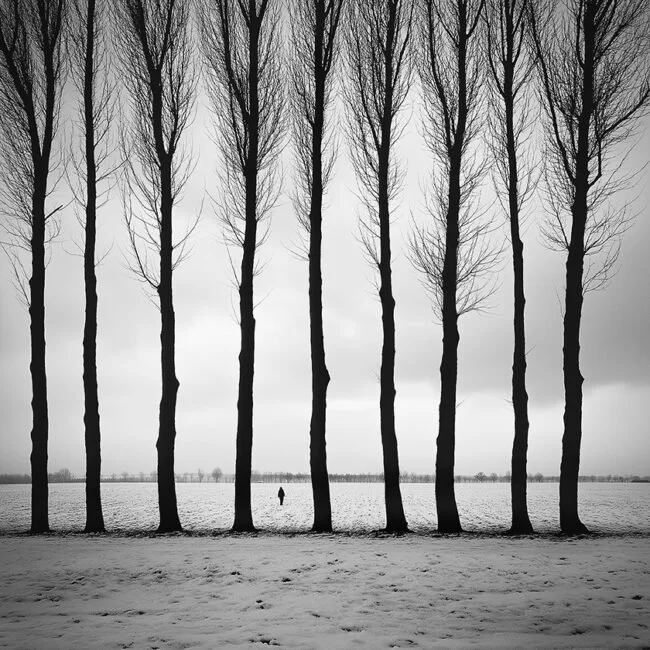
What appears, at first, is simple. A tree. A road. A figure moving away. The familiar syntax of landscape photography, stripped of distraction. But the longer one remains, the more something unsettles. These are not images of places. They are images of time. Of what it feels like to be held in a moment that doesn't resolve.
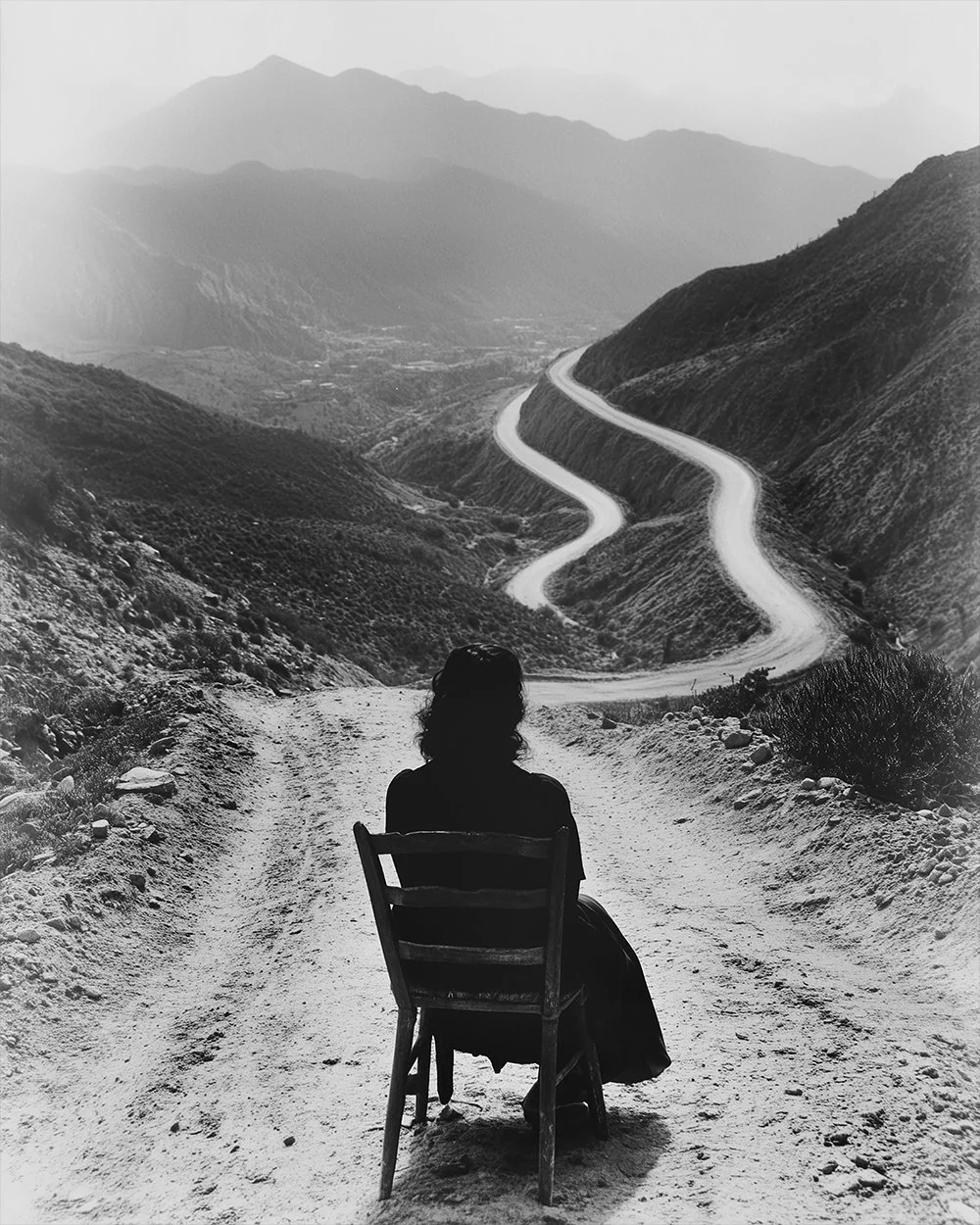
Georgiou often speaks of storytelling, of capturing "human stories" through light, texture, and composition. And yet, in this selection, the story resists narration. No event. No arc. No resolution. Instead, we encounter something closer to a threshold. A figure walking, but not arriving. A chair placed in the middle of a road, but no one to claim it. A suitcase beside a seated man, as if time had paused mid-departure.
What she calls story becomes, here, something more elemental: the persistence of being in space.
Her background in interior architecture and archaeology quietly reveals itself. Not as reference, but as structure. These images are built. Composed with the rigor of someone who understands that space is never neutral. The horizon is not a line but a limit. The road is not a path but a question. Not where it leads, but what it does to whoever follows.
And always, the tree.
It bends, stands, fractures, doubles itself in reflection. It appears as witness, as companion, as echo. But it is never symbolic in any stable way. It doesn't "mean" endurance or solitude or time, though it carries all of these. Instead, it occupies the image the way a body occupies space: as presence. As something that insists without explaining itself.
In an interview, Georgiou describes working with a 50mm lens because it "resembles how we naturally see". The claim is modest, almost technical. But the images suggest otherwise. What we see here is not natural vision. It is clarified vision. Reduced. Distilled. A world where excess has been removed so that relation can begin.
Between figure and landscape. Between movement and stillness. Between what stays and what is already leaving.
Black and white, in this context, is not aesthetic choice but condition. It suspends the image outside of the immediate. It removes the urgency of color, the pull of the present, and places us in a different temporal register. Not the past, exactly. Something more unstable. A time that feels remembered even as it unfolds.
It doesn't seek to capture the decisive moment. It doesn't depend on spectacle or surprise. Instead, it lingers in what might be called the indecisive moment. The moment that could tip in any direction but doesn't.
There is also, throughout the series, a subtle displacement of the human. The figures are almost always turned away. Walking, leaving, waiting. And even when present, they refuse full access. We don't meet them. We accompany them. Briefly. At a distance. As if the image itself understood that to fully reveal them would be to lose something essential.
This distance doesn't estrange. It opens space. And I enter it.
Slowly, I begin to feel that these are not images of others. They are images of a position I recognize. The walk with no clear destination. The pause that is not rest. The moment before something changes, though I don't yet know what.
In one of her exhibition experiences, Georgiou recalls a viewer who saw in her photograph a bridge between generations, a personal memory awakened by an image of two figures in separate windows. That encounter matters. Not because it confirms meaning, but because it reveals the way her work operates. It doesn't deliver interpretation. It makes room for it.
But even this may not go far enough.
Because what these images ultimately stage is not memory itself, but the condition of remembering. That peculiar state in which the present feels slightly displaced, as if what we are seeing has already passed through us before.
A road that seems already walked.
A tree that feels already known.
A figure that could be anyone, or oneself.
What remains, after the image, is not an idea.
It is a sensation.
That I have been, briefly, somewhere I can't name.
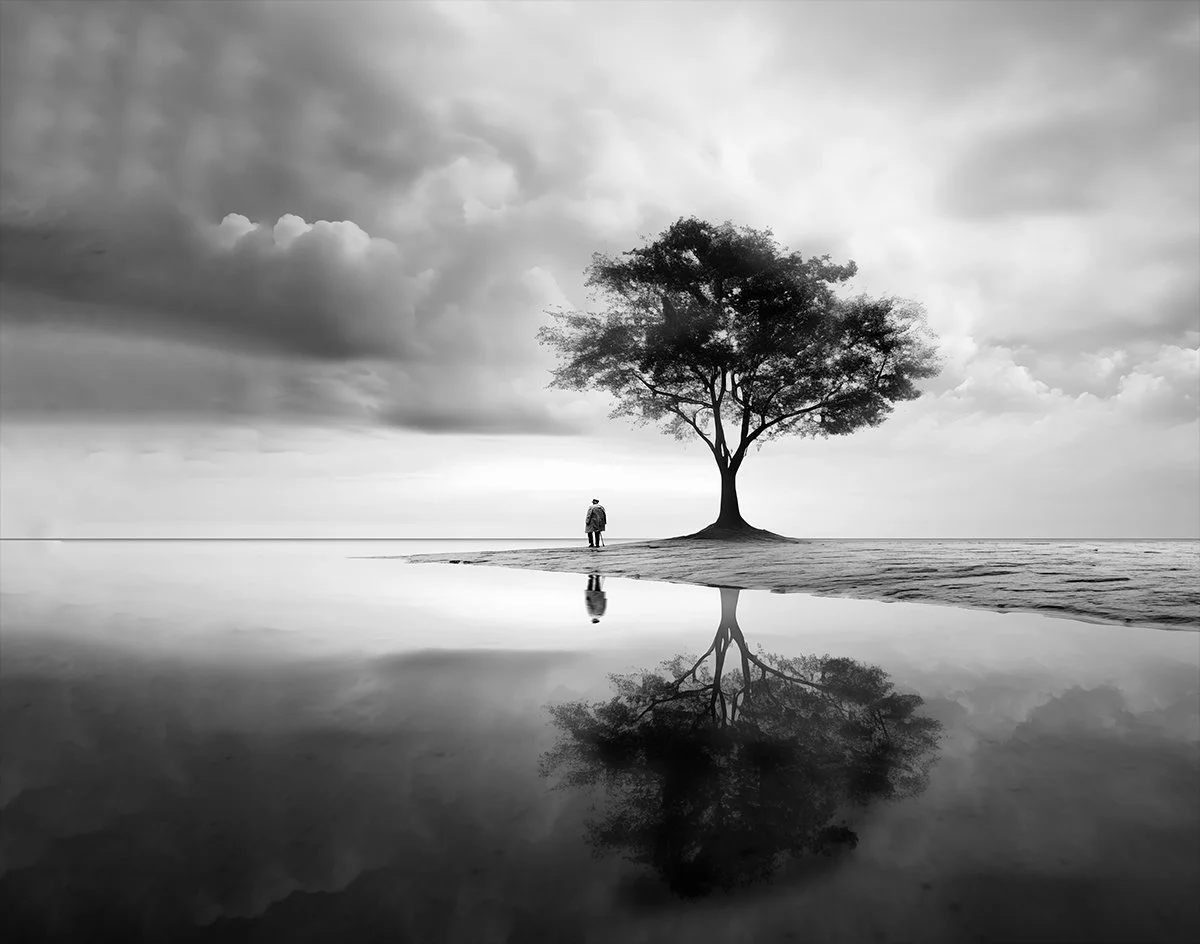
Hesitation
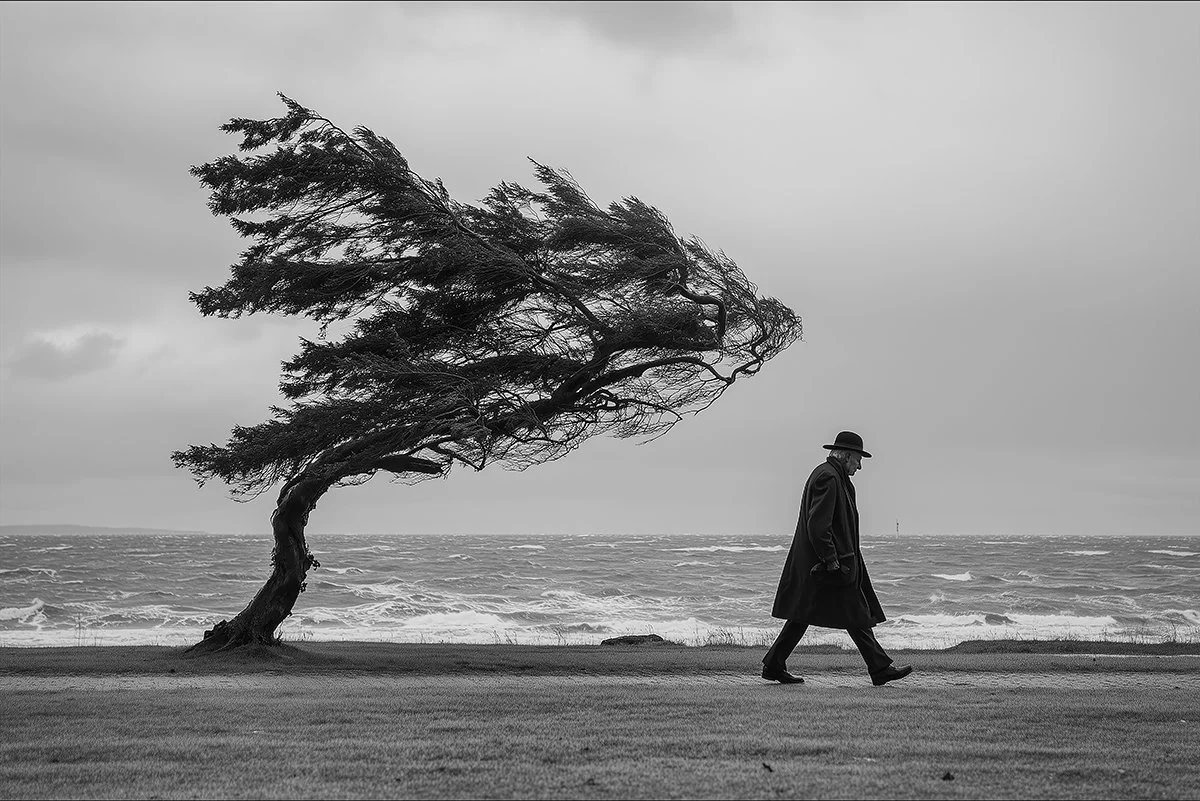
Unyielding
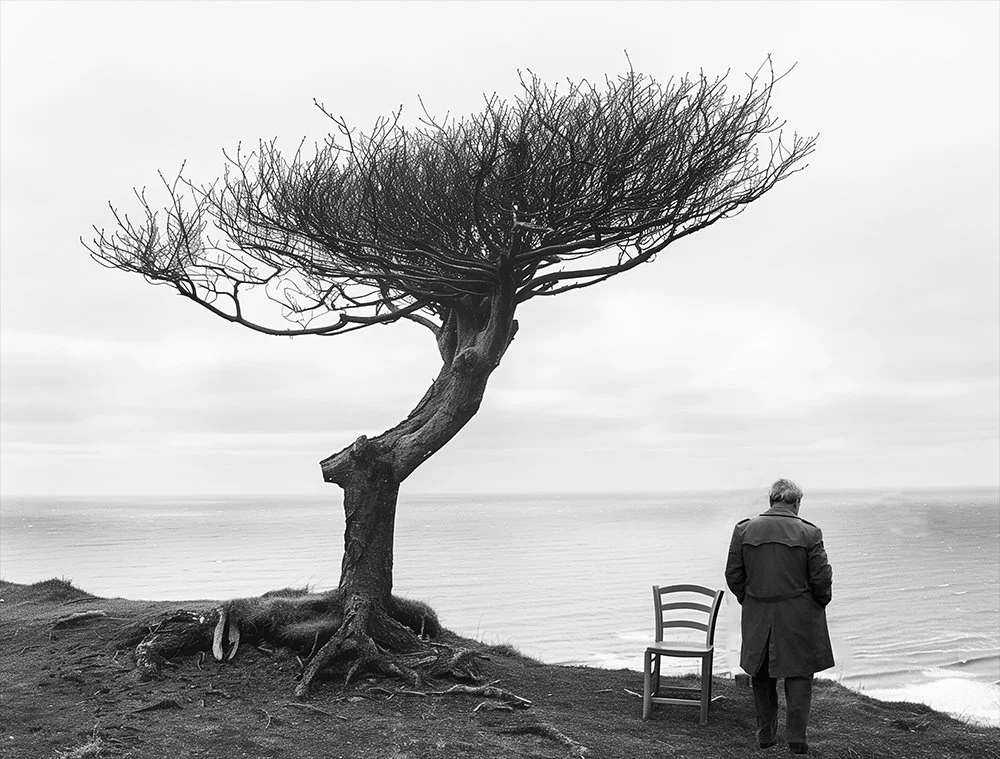
Hush
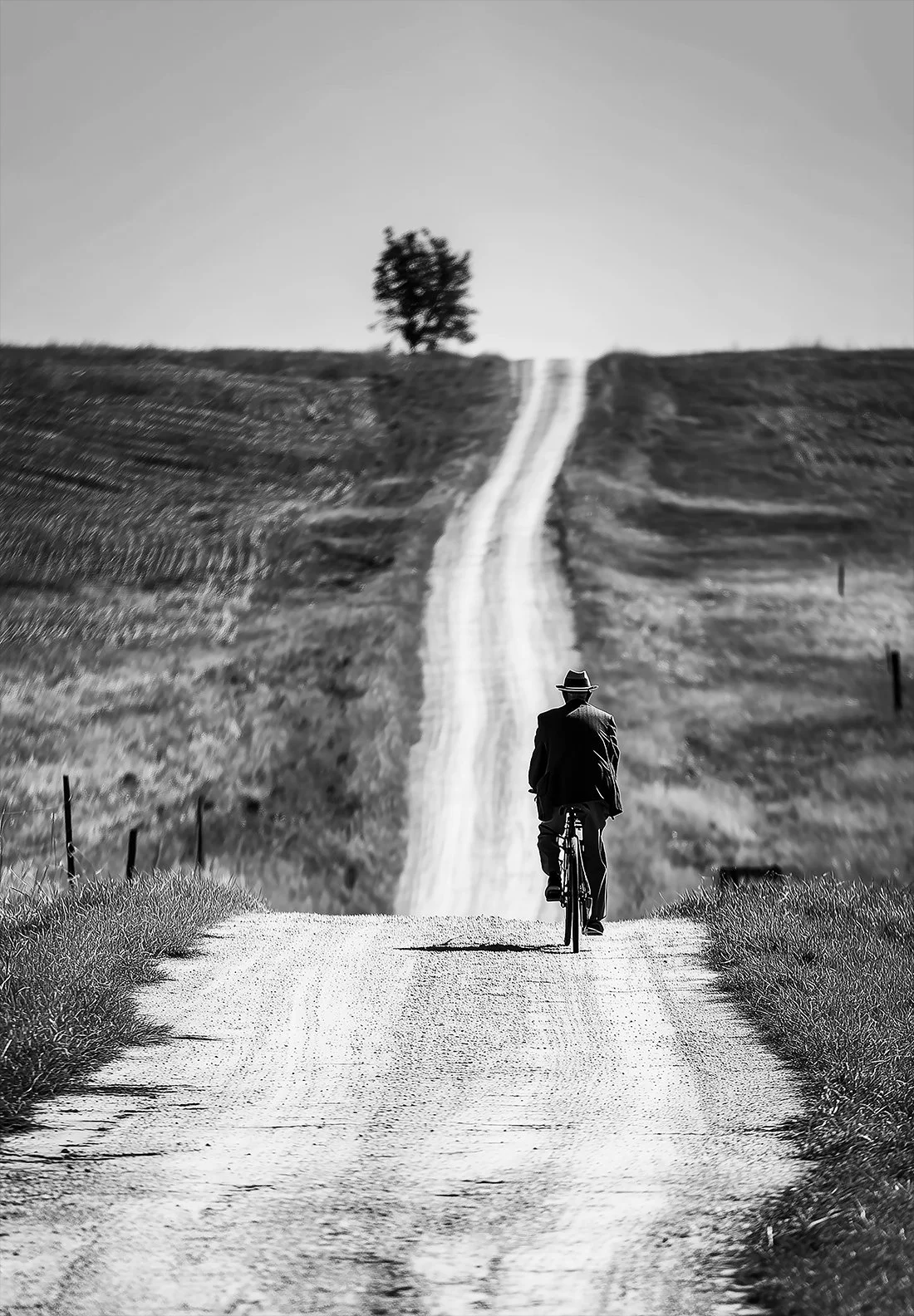
Nostos
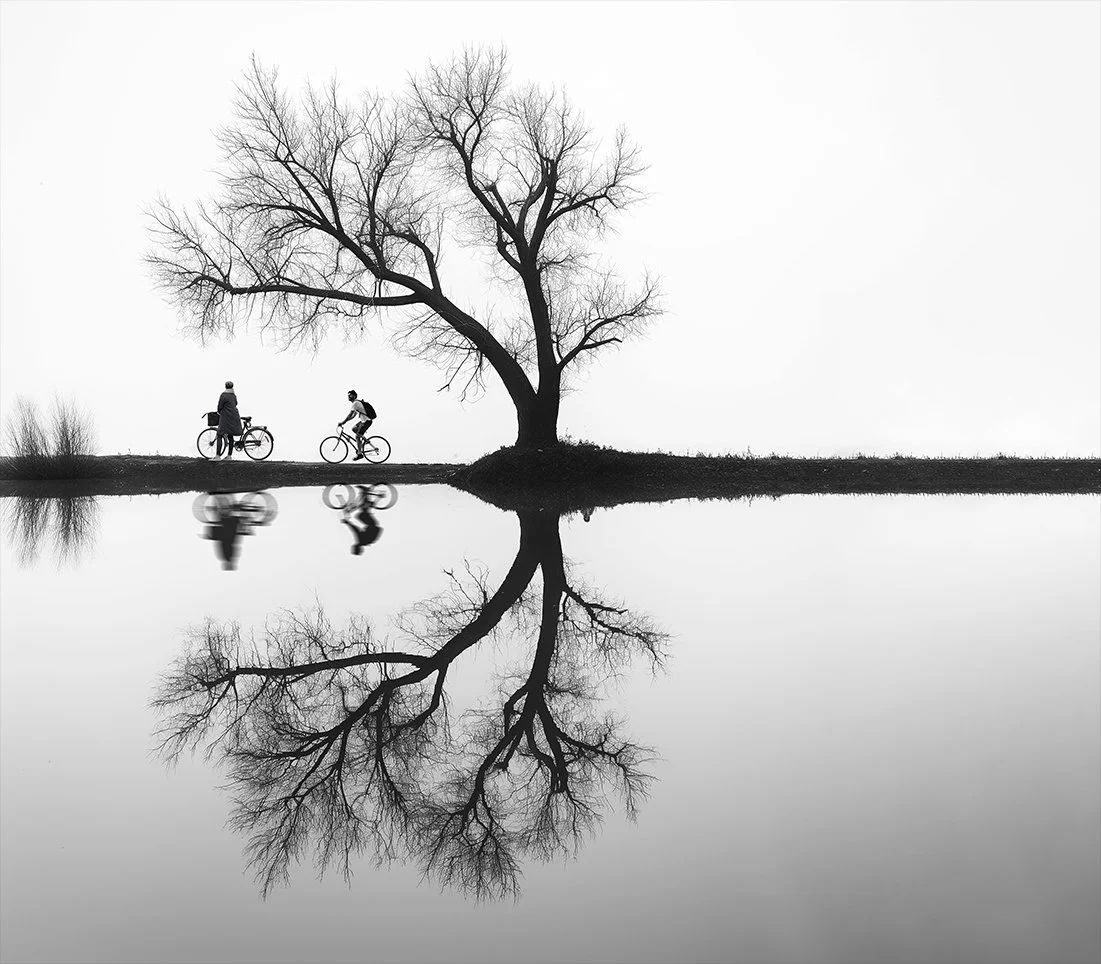
Transient
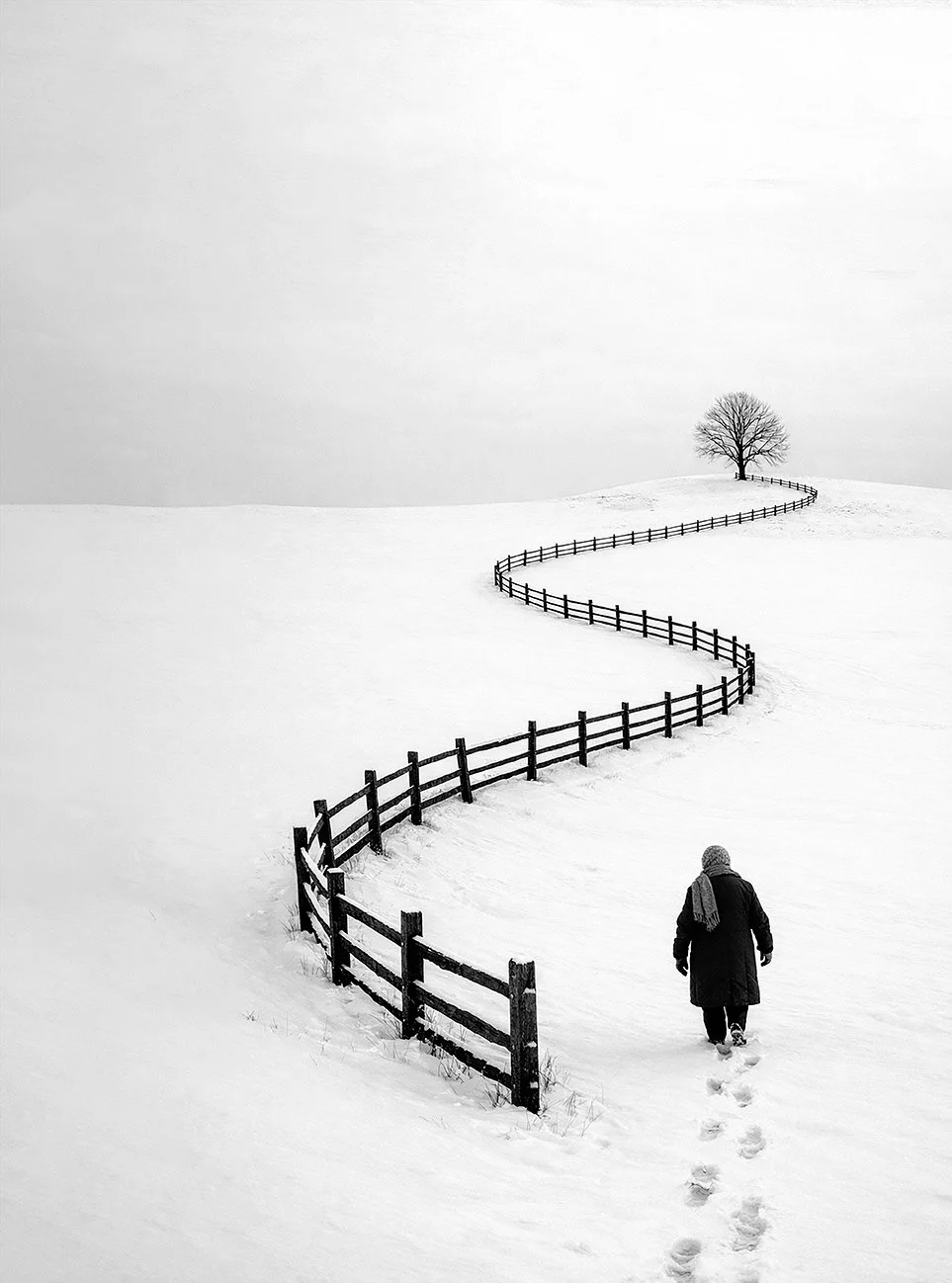
Absence
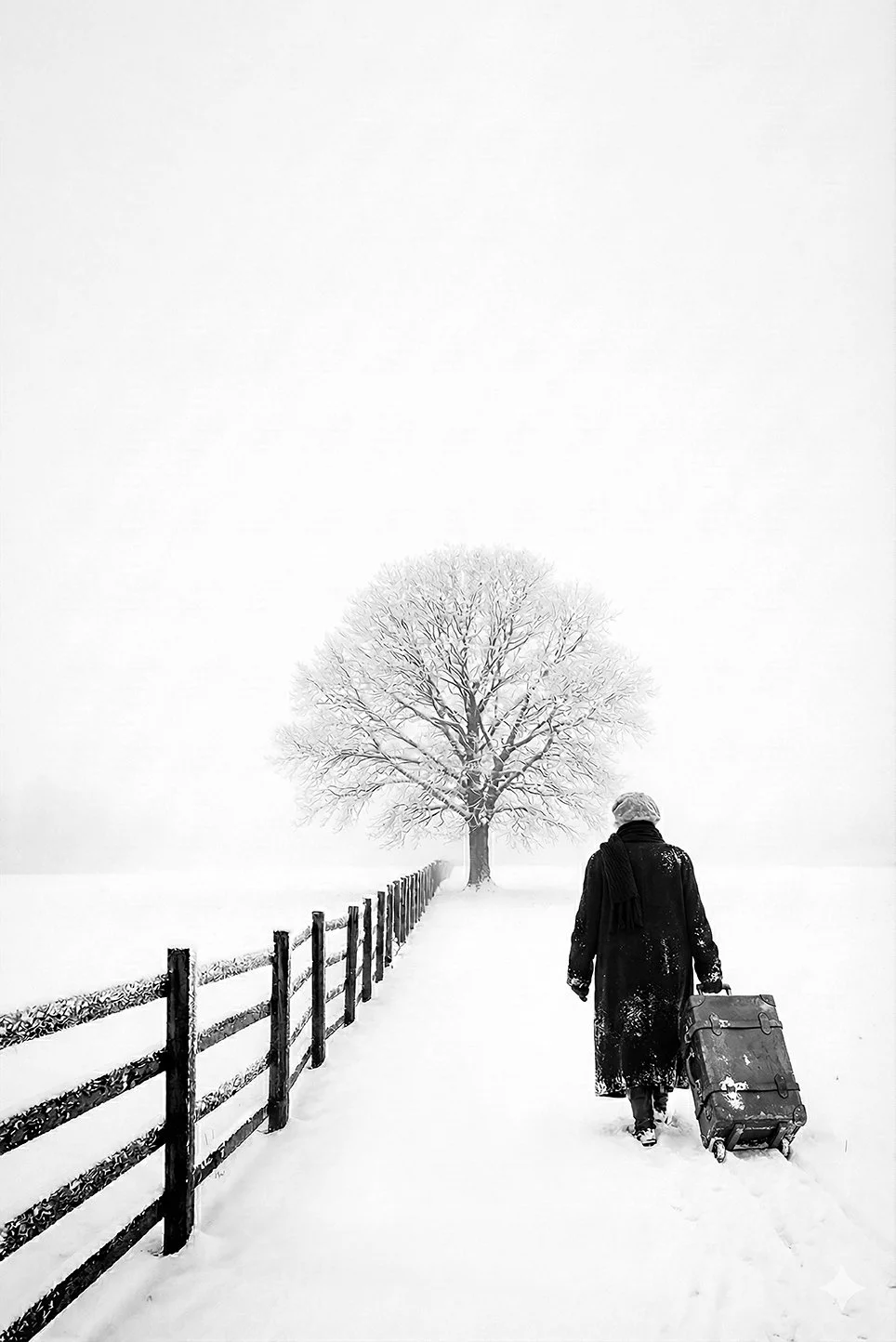
Remnant
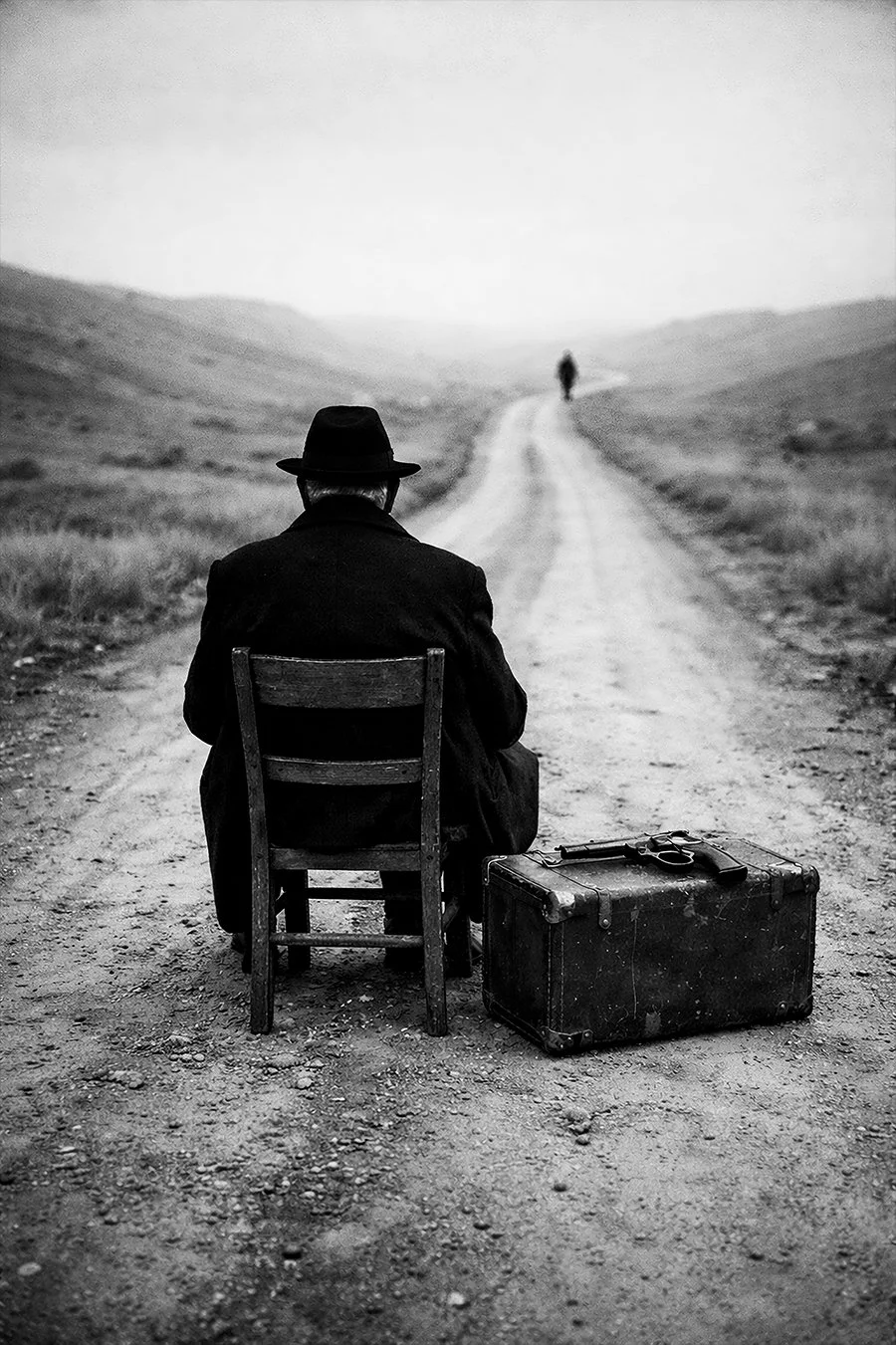
Vigil
Repose
Liminal
Artists & Writers in This Issue
In alphabetical order by the first name
