Laura Zalenga: The Self That Writes Itself
There is a myth at the center of self-portraiture. The myth says that somewhere inside us a true image waits to be revealed. An essence, a stable form, a secret face the world has not yet seen. It's a beautiful myth. It's also false. The self is not an image. The self is a language.
No one teaches us this more gently than Laura Zalenga.
She can't summon inner pictures. Aphantasia has erased the old fantasy of an inner theater where memory and imagination once lived. Yet the absence of that mental screen doesn't leave her in darkness so much as in a different medium. Her images come from the outside inward. They begin in the world, in the body, in the landscape, in the pure abstraction of a concept. They emerge from an idea she has to articulate through gesture, mood, and space, not a vision she carries inside.
Her work reveals a truth philosophy has argued for a century. What we call the inner life is already written in a language we didn't choose. Even our most private feelings take shape in metaphors we inherited long before we learned to speak. The dream of a pure inner identity collapses. Every self-description is a story told in borrowed words. Identity isn't revealed so much as composed.
Zalenga understands this without needing to say it. Each of her self-portraits is a sentence. Each body she bends, hides, multiplies, or distorts is a phrase reaching toward a meaning that hasn't yet settled. Her figures behave like propositions in search of their grammar. She stages herself less as a person displaying who she is than as a protagonist trying out different forms of selfhood. These characters aren't Laura. They're versions of a self that has decided to write itself into being, one attempt at a time.
This is why her minimalist style feels so charged. She pares the world down to light, line, and gesture. A single figure inside a spare space becomes expansive because the conceptual pressure is so concentrated. The body becomes a clause, the landscape becomes a verb, and the photograph becomes a speculative definition of the self.
Aphantasia becomes the hinge. The photograph works less as a reflection than as a site of invention. What she creates outside herself is what she could not find within. The work becomes companion, witness, revision of the self she thought she knew.
Her image Period sharpens this invention through uncertainty rather than declaration. A body curled on a luminous white plane. A pale sky. A desert behind her. And a thin line of red trailing from the heel. The eye is drawn there immediately, yet what it sees refuses to settle. Is the body wounded, or is it marking its cycle? The image holds that hesitation deliberately, asking the viewer to linger inside the question.
This ambiguity is not incidental. The work stages a precise tension between vulnerability and embodiment, injury pressed against rhythm. The menstrual cycle appears here less as spectacle than as what Laura has described to me as an Achilles' heel: a site where strength and exposure coincide. The body writes itself in its own material language, but that language resists a single translation. Blood becomes sign and interruption, fact and metaphor, without settling into either.
In Period, self-portraiture cannot retreat into inwardness alone. The image insists on the body as a condition that shapes thought, perception, and identity. Yet it does so without closing meaning. What's offered is a charged suspension, not certainty, a moment where the self sits in the uneasy clarity of what can't be explained away, neither purified nor reduced.
The self doesn't exist before the description. It arrives with the description, and then has to be described again. In this sense, every portrait is provisional. Every narrative about oneself is a draft. Every photograph is a rehearsal for a sentence that will soon be rewritten.
Zalenga's self-portraits express this contingency with unusual tenderness. They are vulnerable without confession, and raw without spectacle. Loneliness brushes against nostalgia, and stillness touches the edge of surreal desire. Bodies extend or shrink into silence. Faces hide or dissolve through mirrors. These gestures aren't symbols of instability so much as proof that the self can't be fixed in a single frame. To know oneself, if it were possible, would take a thousand revisions and more time than a life allows.
Her protagonists wander through fog, forests, and pale interiors. They move through landscapes as if searching for a place where the self might finally become a noun, yet there is no such rest. These images know that identity lives in movement, in the attempt to express something that changes the moment expression begins. Her self grows by shedding its own descriptions. Her language evolves by rewriting its own metaphors.
In Zalenga's work the self isn't an essence waiting to be unmasked so much as a process, a rhythm, a long act of translation across different surfaces of experience. Photography becomes the place where inward chaos is distilled into outward clarity. Not because the image reveals the truth, but because the image creates it. What she shows us isn't who she is. It's who she's becoming through the image.
She stands inside this idea with unusual clarity. Her work recognizes that we don't find ourselves by looking inward. We find ourselves by describing, revising, and redescribing the person we think we are. Her photographs are forms of thinking, quiet acts of philosophical courage. What they teach is that there's no image underneath the language, waiting. There's only the effort of making an image that feels true for a moment, before the next moment asks for something new.
In that sense, her portraits are not mirrors, but bridges. They connect the unspeakable inner life to the world that demands articulation, holding open the space where a self can be rewritten: to know oneself is not to arrive at a definition, but to accept the beauty of never being finished.
Jorge R. G. Sagastume
I. THE BODY AS LANGUAGE
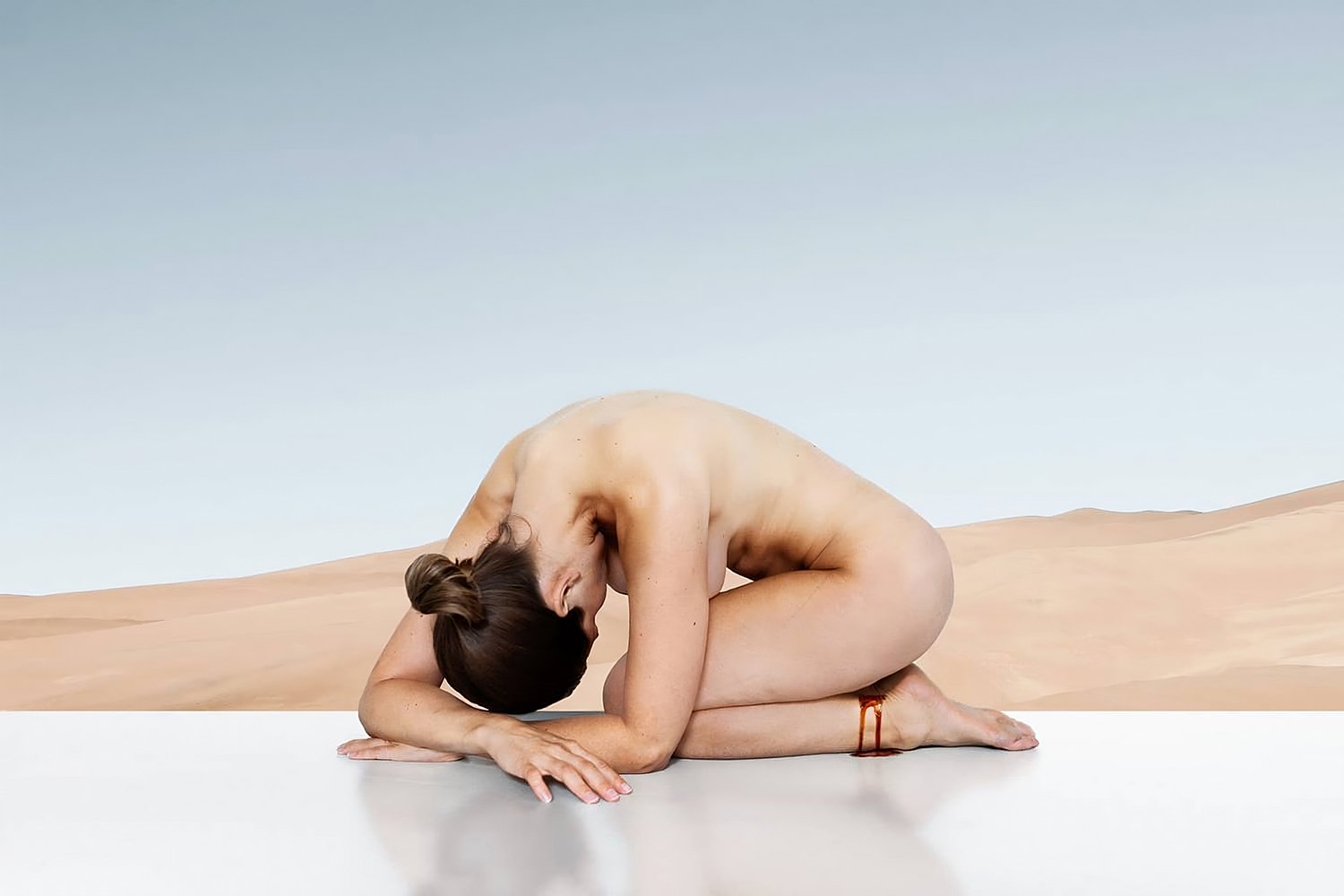
achilles cycle, 2019
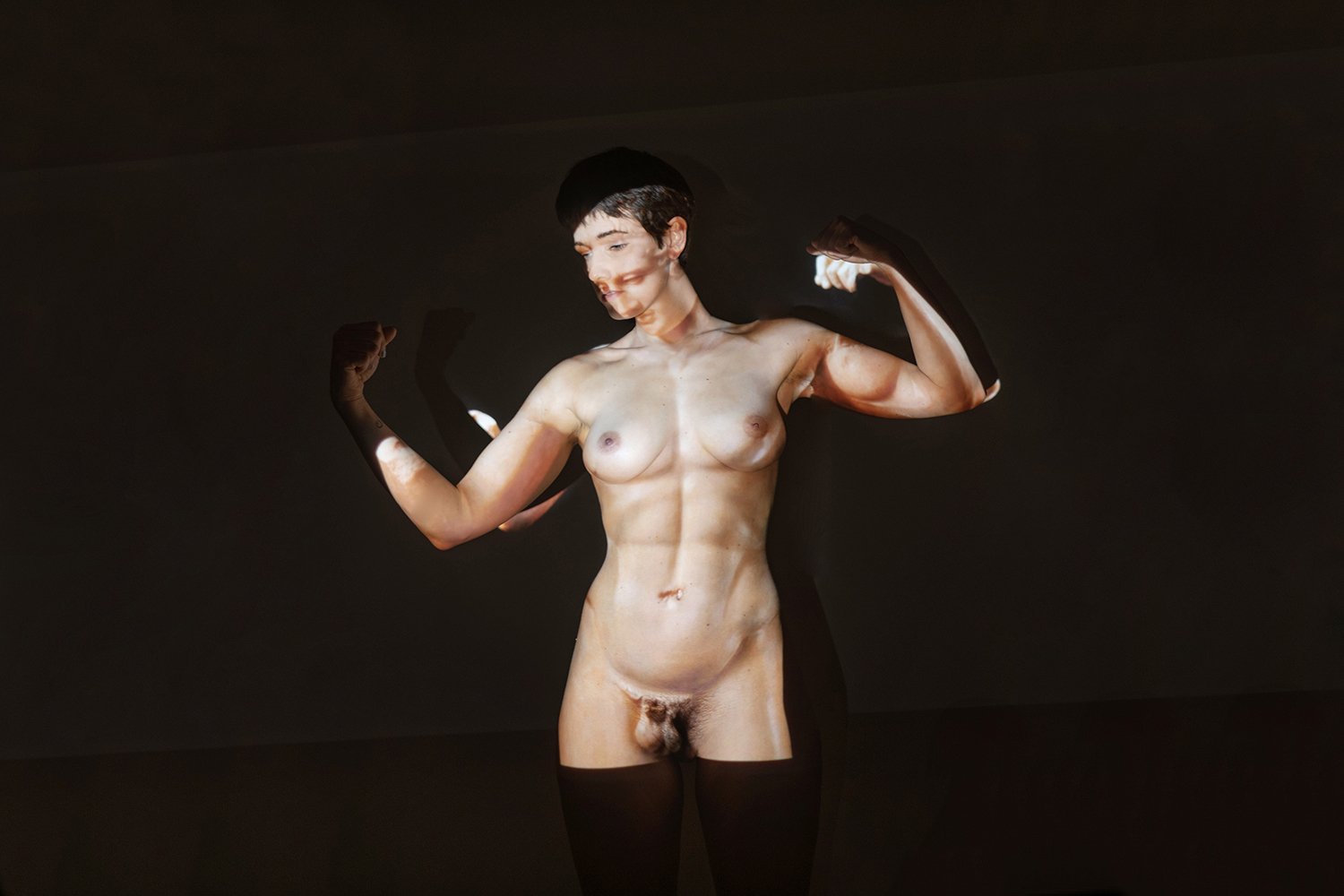
winning features, 2022
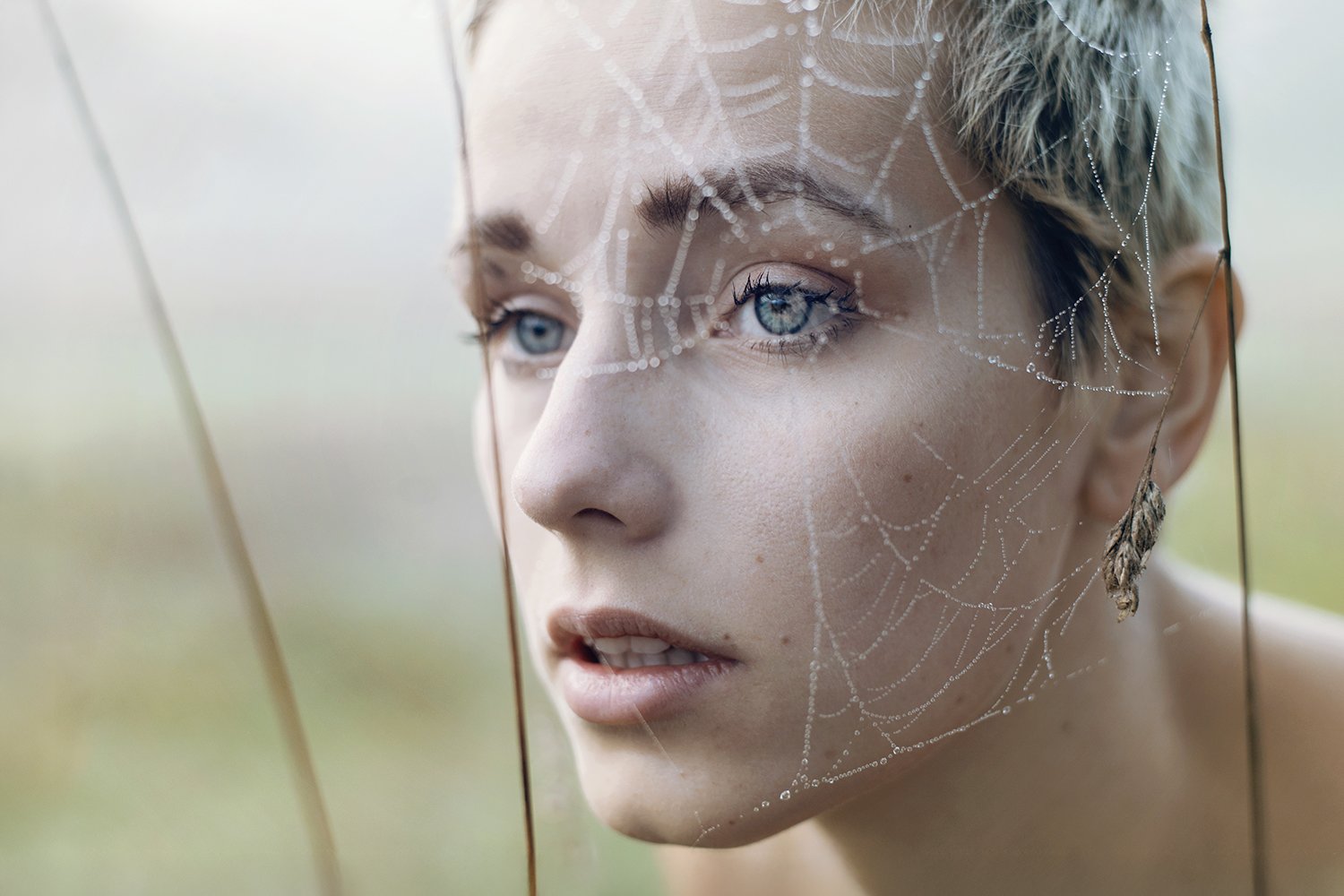
woven, 2015
II. INVENTING THE SELF
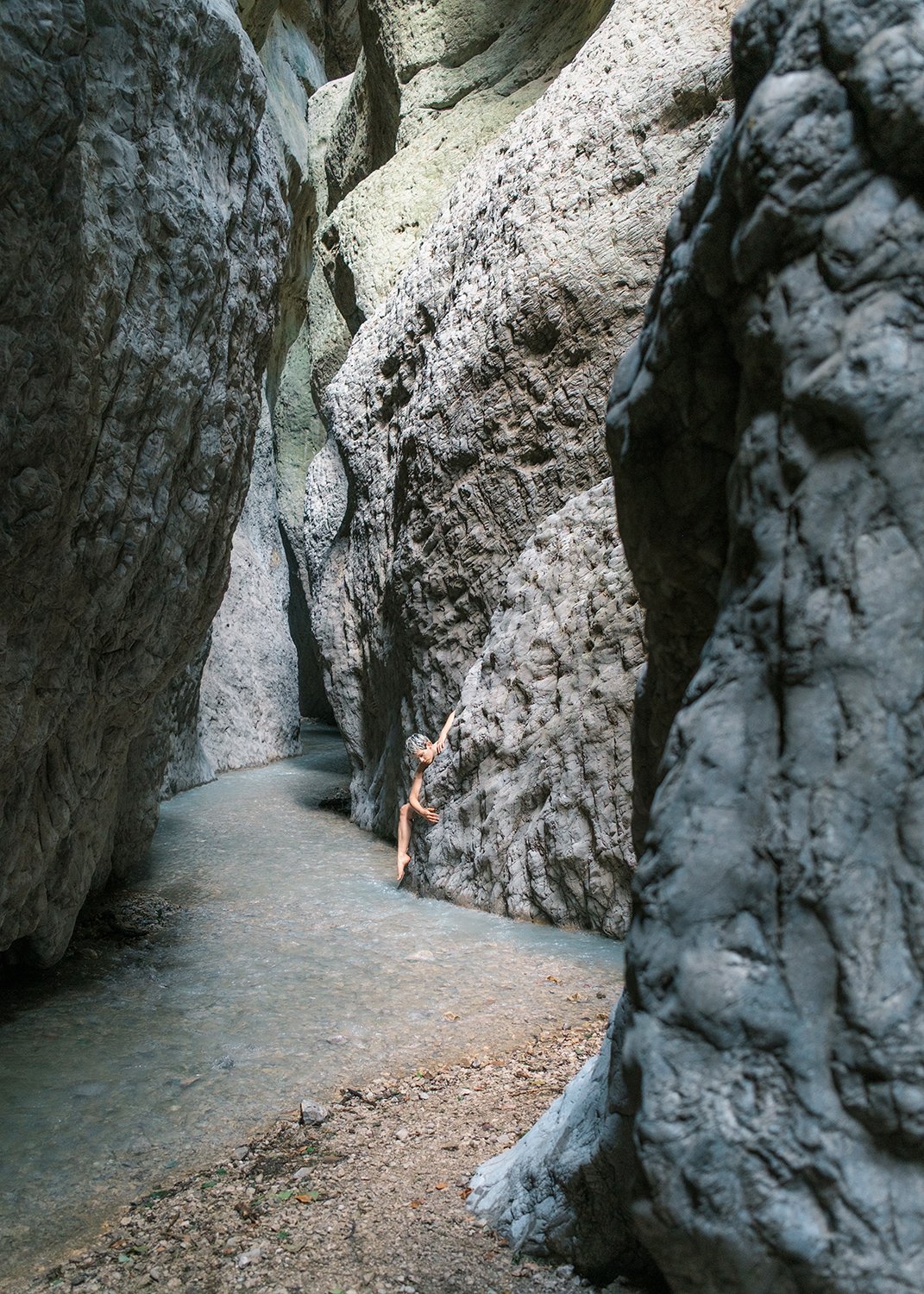
adnate, 2024
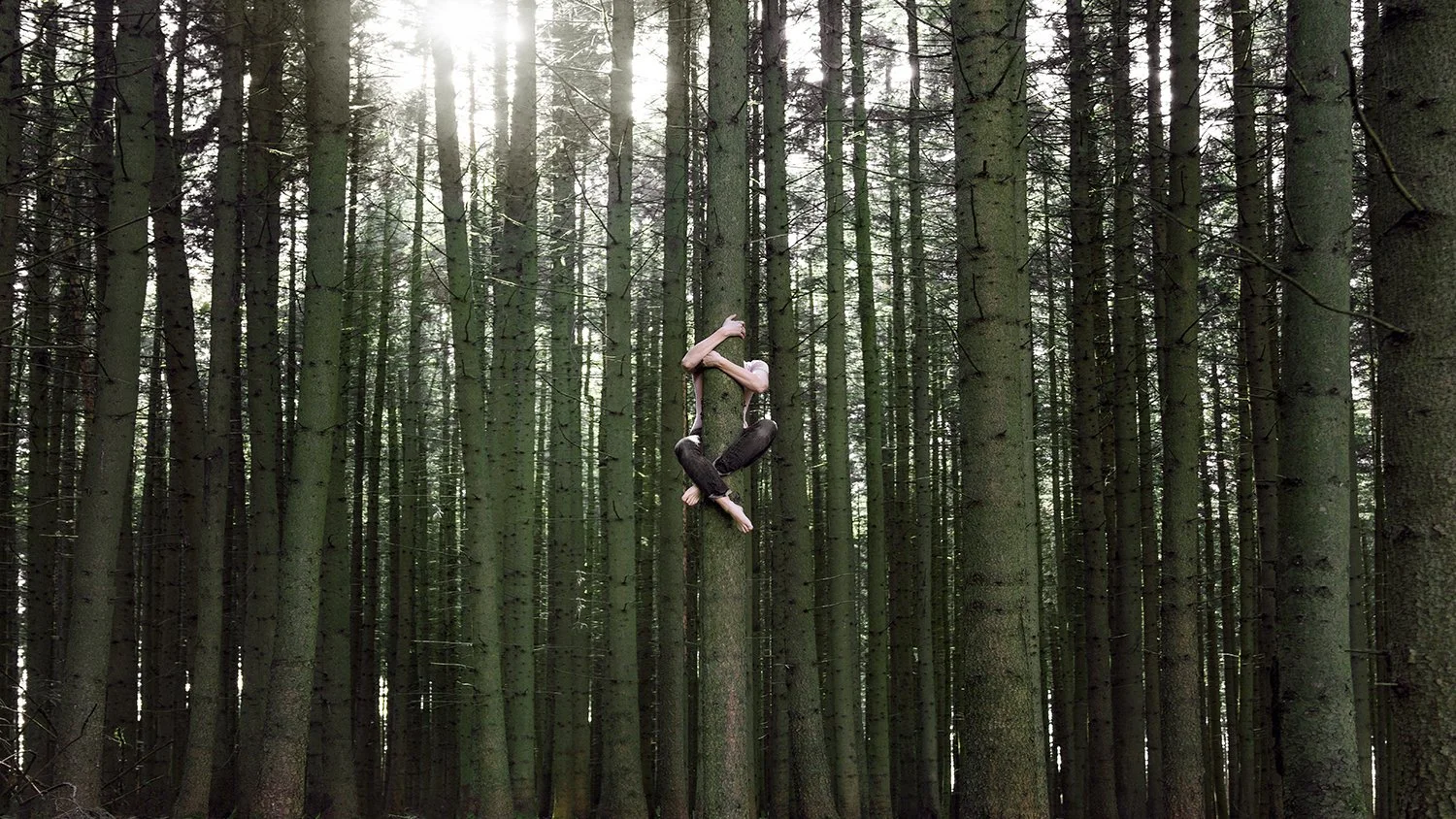
hide & seek, 2018
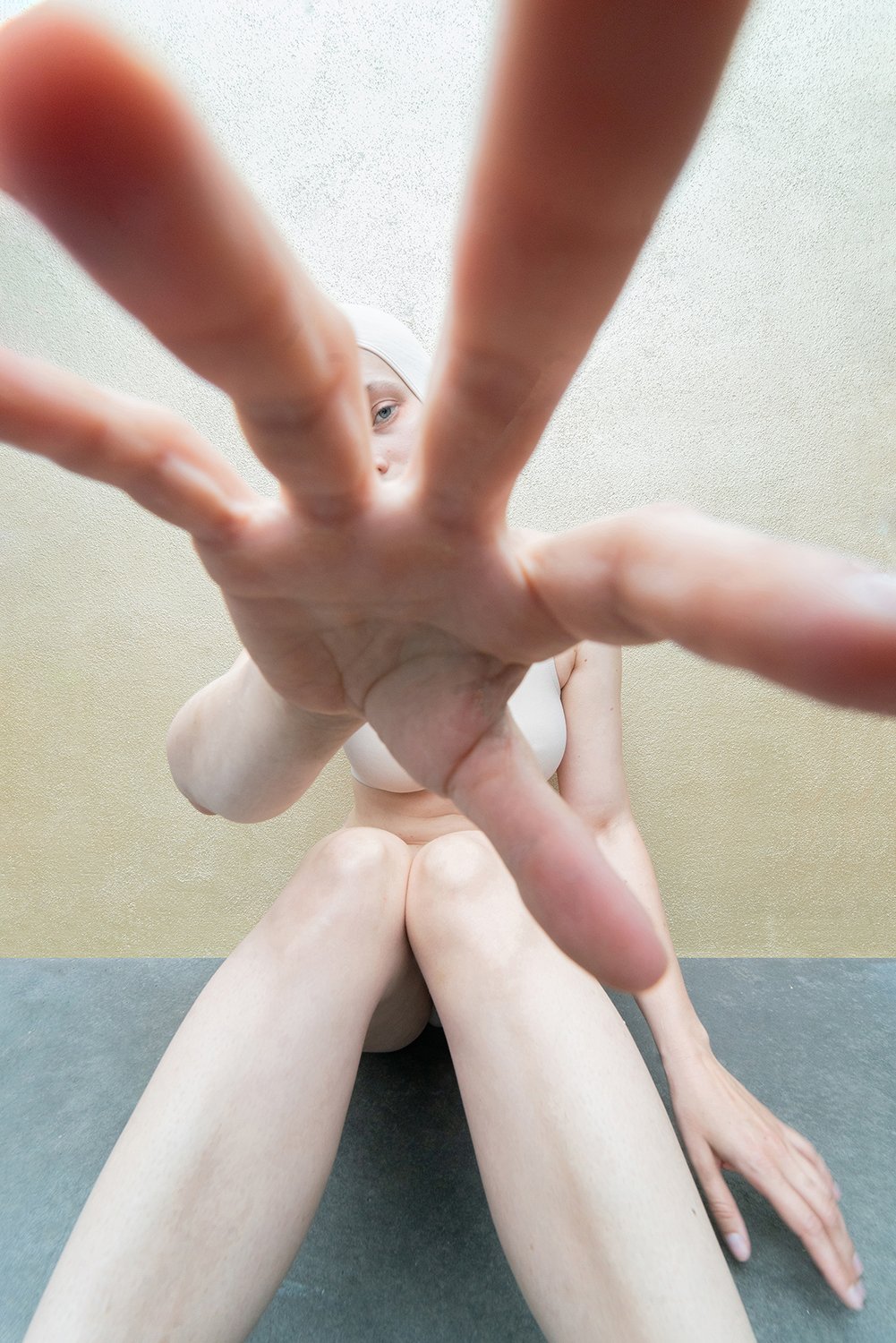
grasp, 2021
III. EXTERNALIZED INWARDNESS
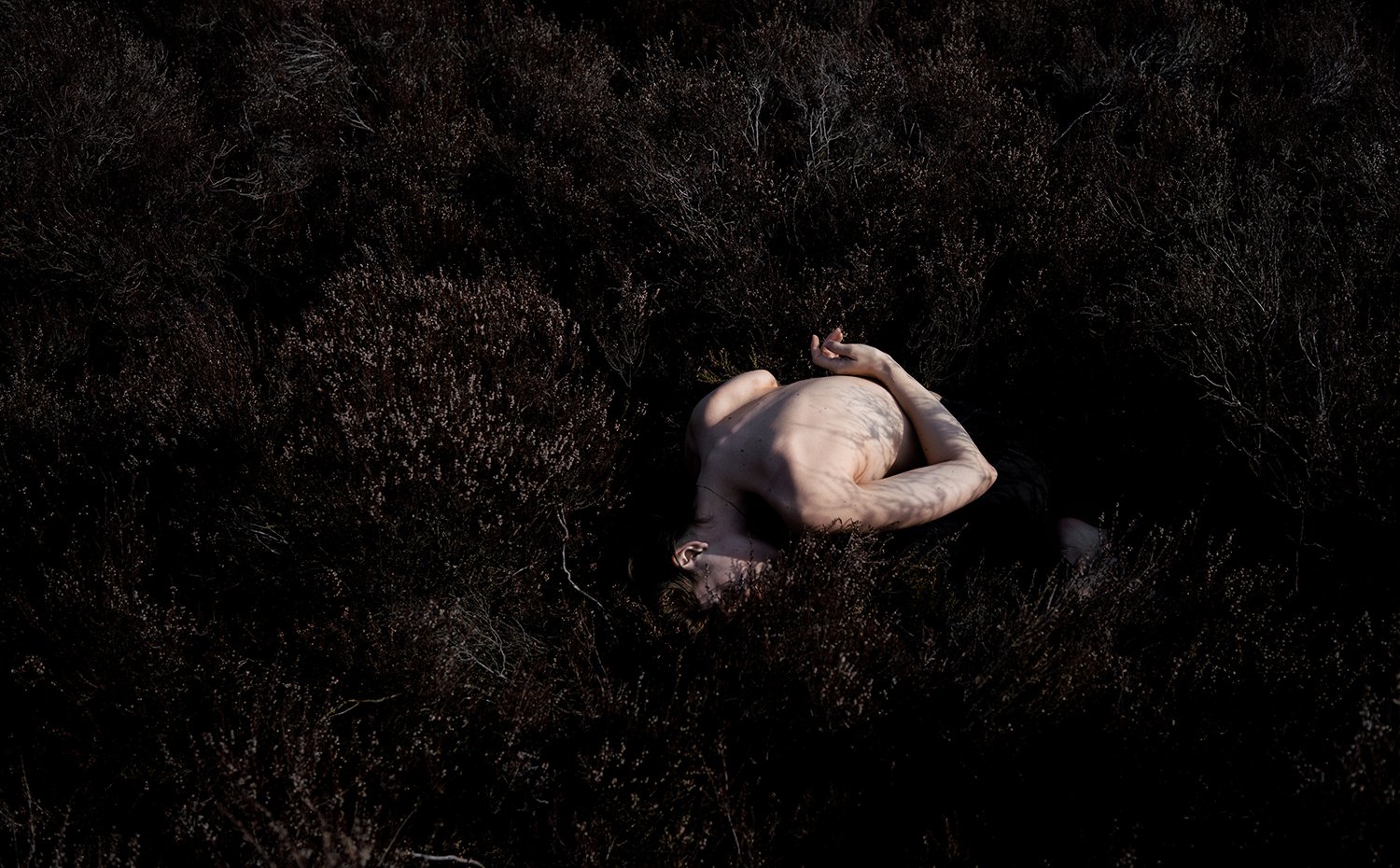
wisp, 2010
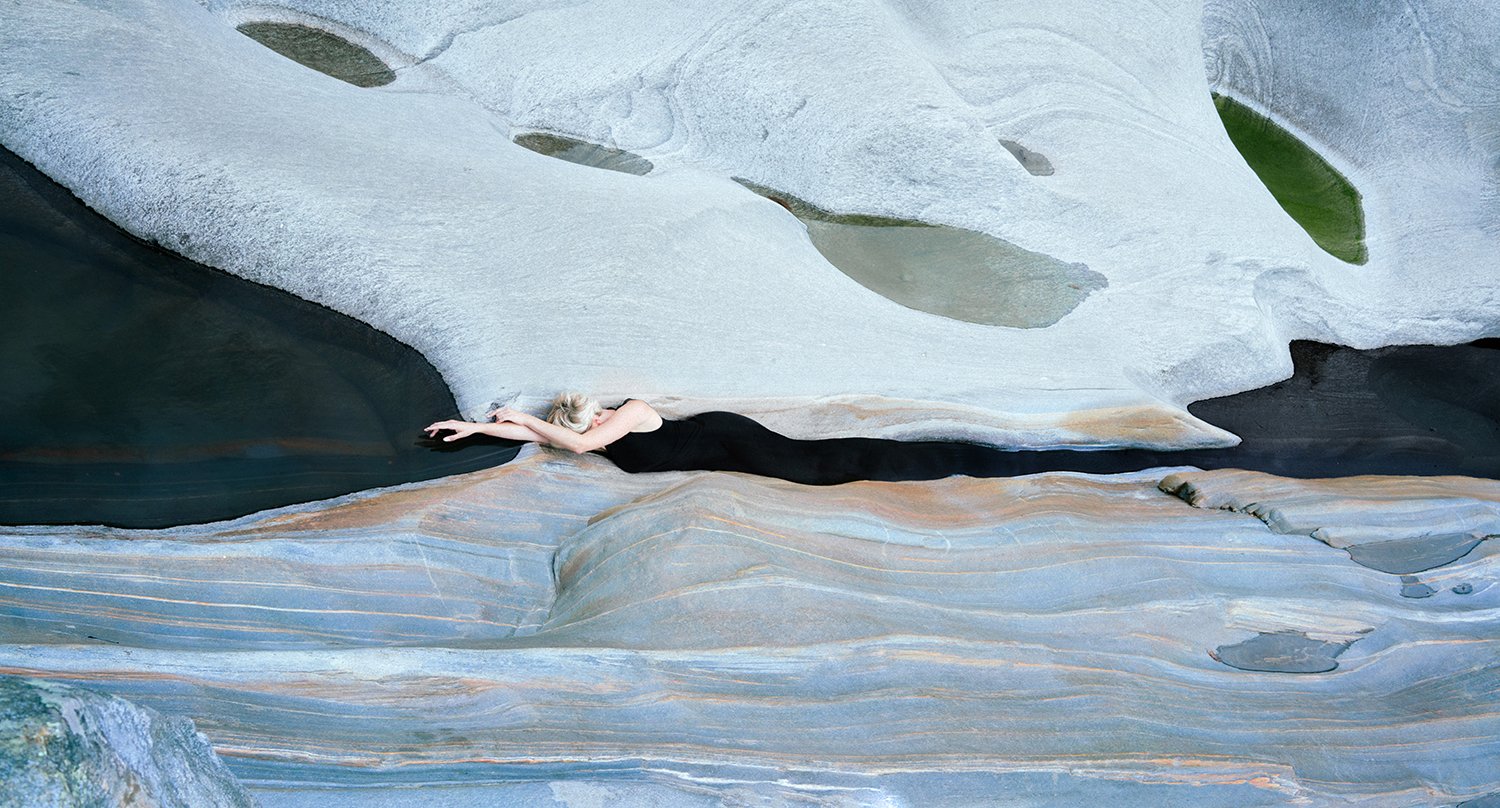
dissolve, 2017
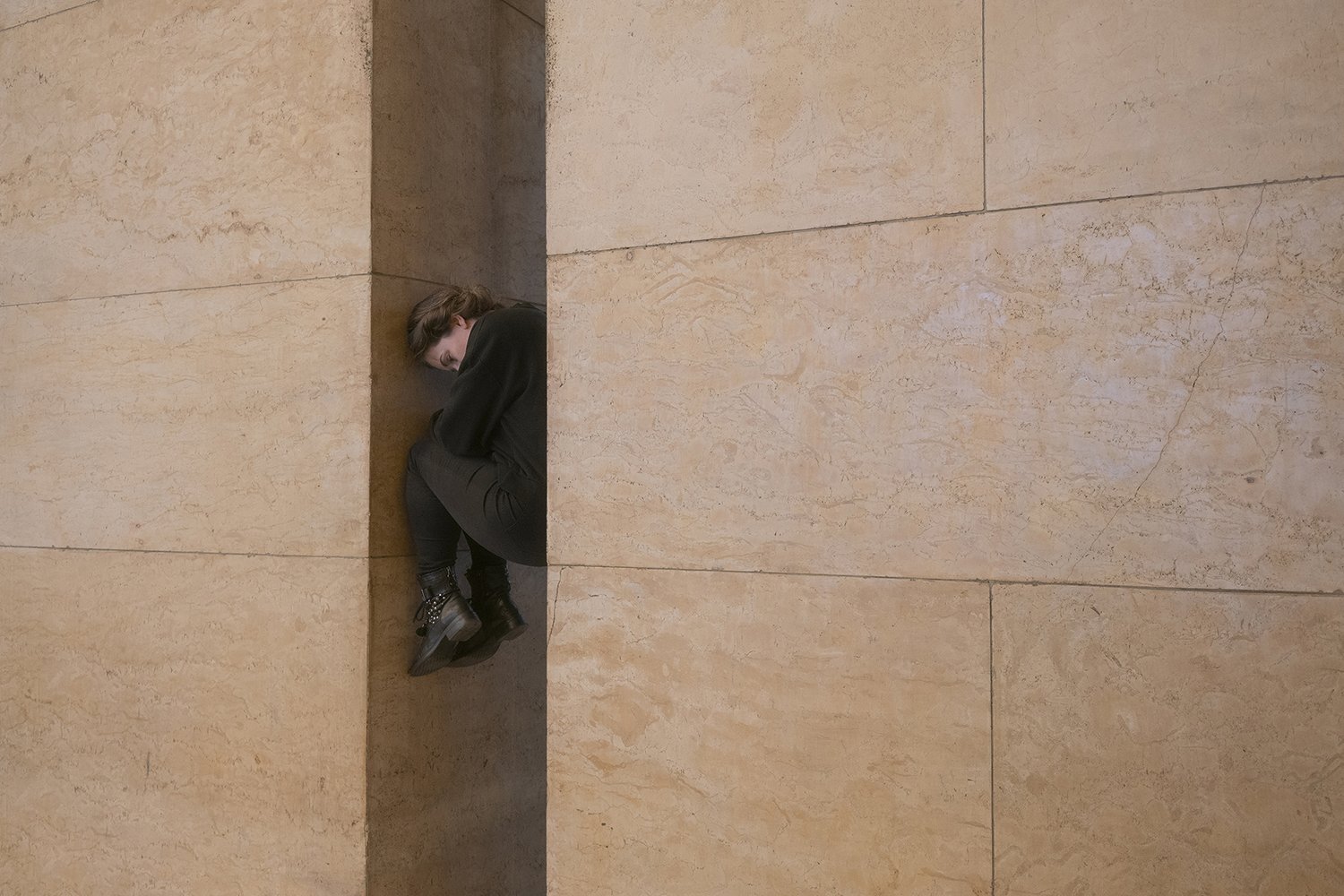
stuck, 2019
IV. THE SELF AS REHEARSAL
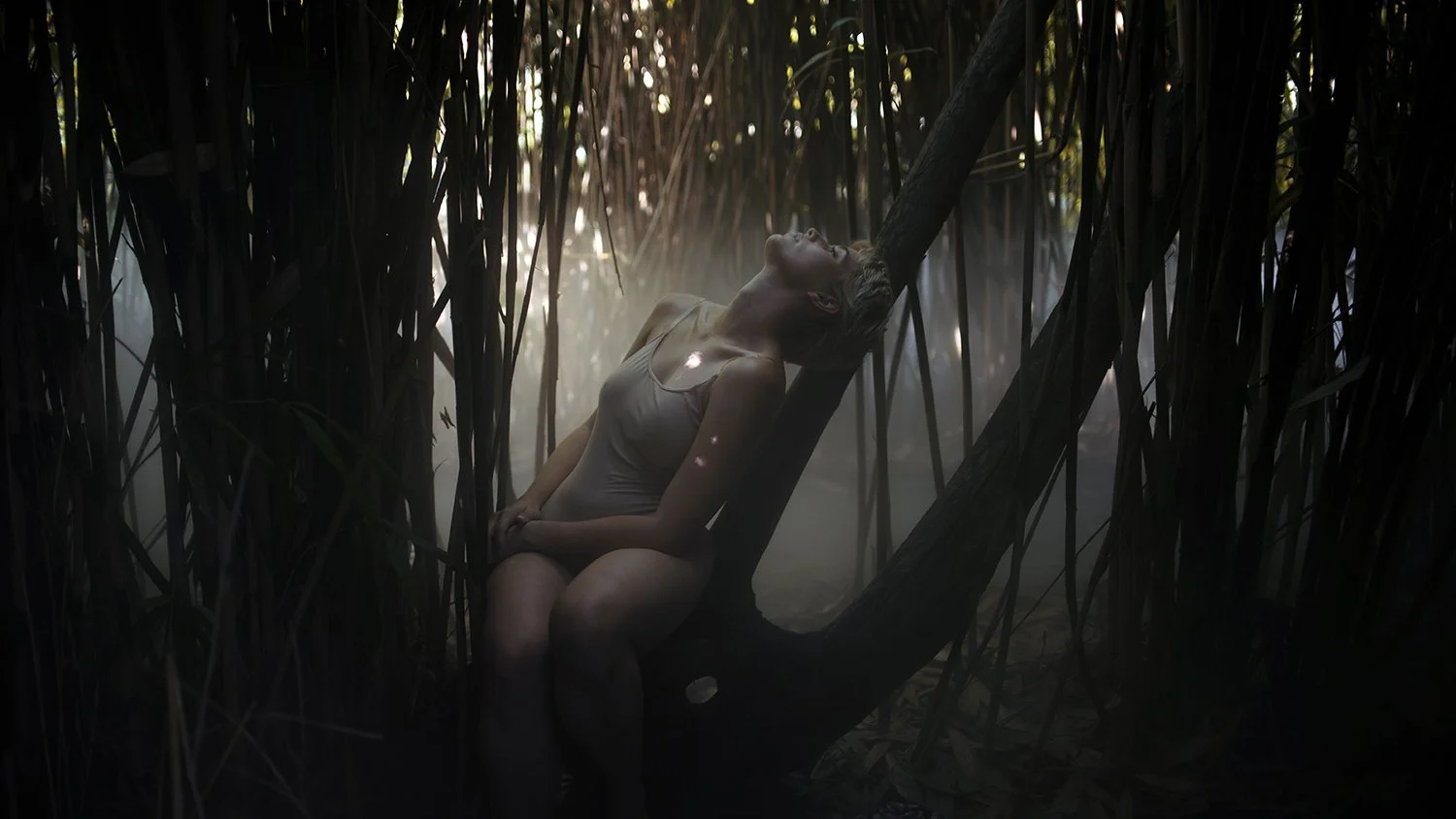
grove, 2016
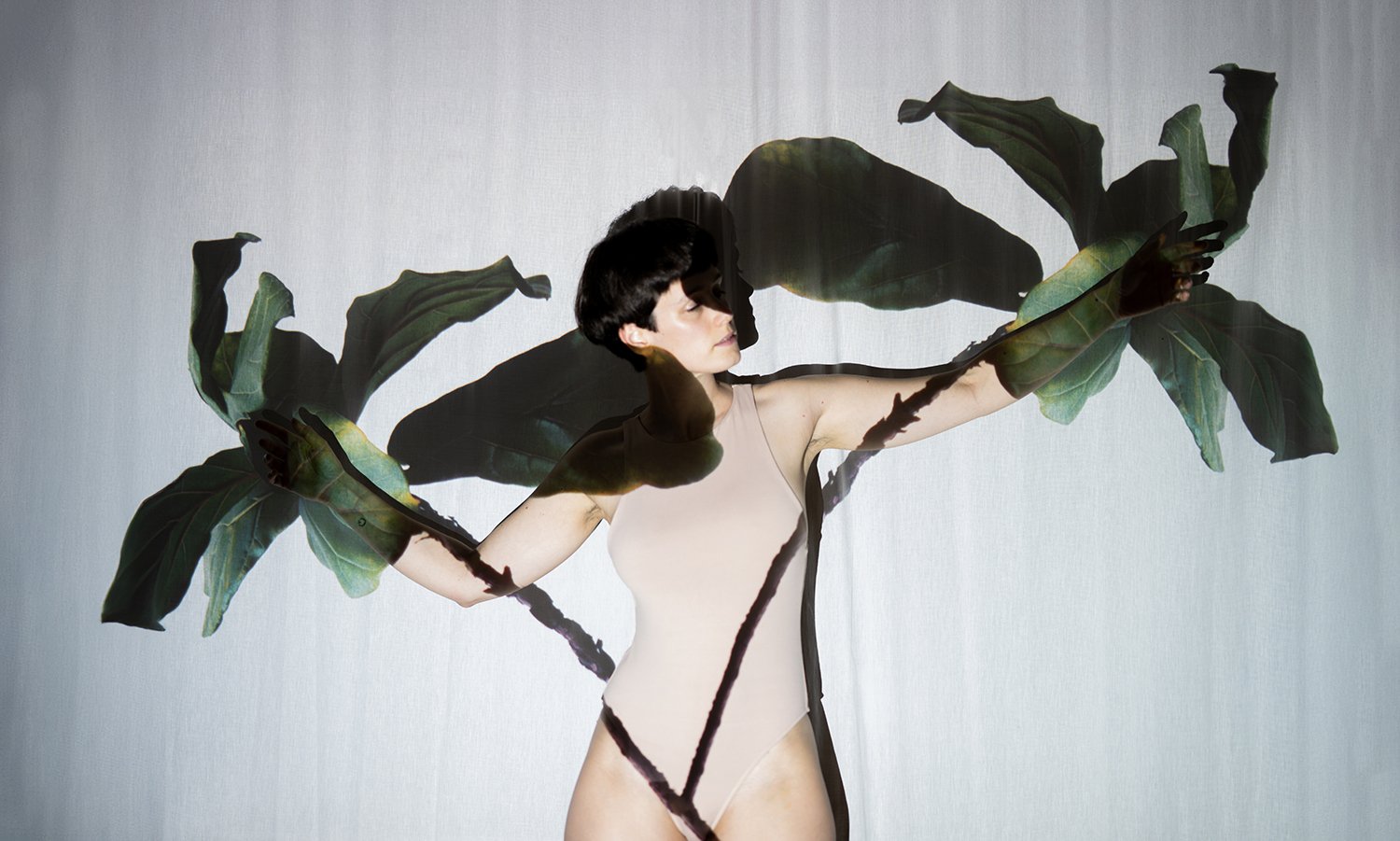
too close to the sun, 2023
V. SELF AS CLAUSE
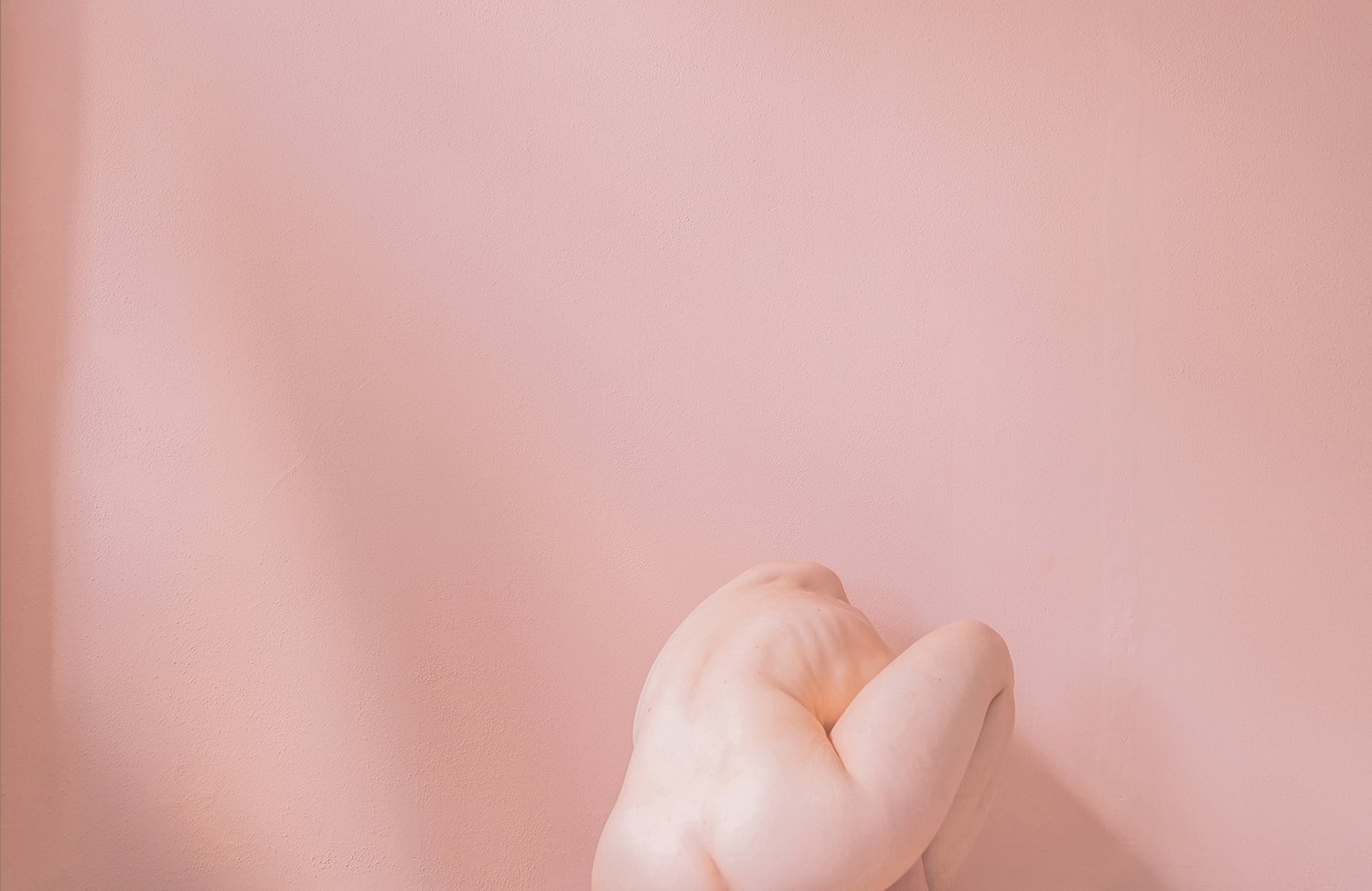
peach, 2020
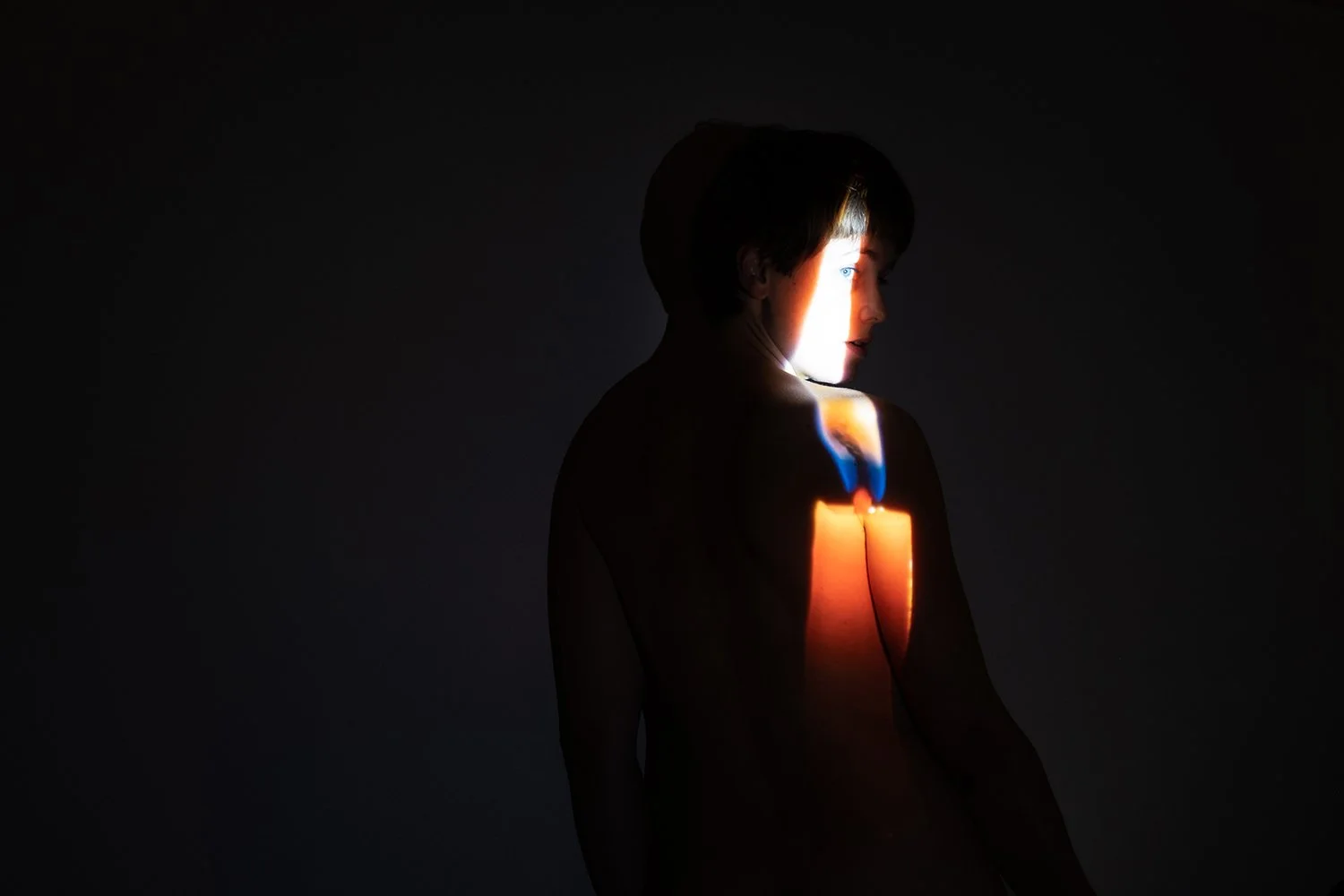
burn, 2022
© All works courtesy of Laura Zalenga
Artists & Writers in This Issue
In alphabetical order by the first name
