Editor’s Introduction
Elina Brotherus: The Image That Thinks
Few living artists embody the work of self-invention as persistently as Elina Brotherus. For more than twenty years she has stood in front of her camera and refused to let the image harden into a single answer. The woman in her photographs is often recognizable. The coats, the hair, the posture, the way her figure translates the weight of a mountain or a strip of sea into a legible mood. Yet each appearance rewrites the question of who is speaking. She has become what she once called a visual calling card, but that card never guarantees identity. It only opens another scene where being can be tested again.
Richard Rorty argued that language doesn't mirror an inner essence. It gives us metaphors that let us redescribe ourselves until a pattern emerges that feels momentarily true. Brotherus works with the same logic, only in images. She doesn't treat the photograph as evidence of what she already is. She treats it as a sentence in a provisional autobiography that might always be revised. When she says that "art follows life," she doesn't mean the camera records events so much as that the image is one of the ways life thinks itself through.
Her early work, born in the turbulence of a first marriage ending and of leaving a scientific career, turned the camera into a therapeutic partner. Autobiography arrived as necessity. Loss, grief, liberation: all these found their first grammar in self-portraits that refused theatrical roles. The young woman in those images didn't pretend to be someone else. She insisted that what she looked like was real. The body, placed in front of the lens, was a guarantee that the feelings were not invented.
Later, when she moved to France and immersed herself in museums and archives, another layer of language entered the work. Romantic painting, Caspar David Friedrich, the iconography of lakes and wanderers and solitary backs looking into distance. Brotherus began to measure herself against art history. She remained her own model, yet she no longer came as a diarist. She came as a reader of images who answers other artists with her body. "An artist makes art, but she is also a spectator of art," she has said. Her self-portraits began to function as footnotes to older scenes. Or better: as rewritings of those scenes in a contemporary tongue.
Rorty writes of the contingency of language, of how each of us inherits a limited repertoire of metaphors and spends a life trying to expand it. Brotherus turns that claim into a visible practice. In works like Der Wanderer 2 she steps into the position made canonical by Friedrich's lone figure above a sea of clouds. Yet the photograph doesn't simply echo the painting. Her coat moves in the wind in a way that paint could never capture. The blur becomes a small rebellion. It insists that this scene doesn't belong to a nineteenth-century man alone. A woman photographer at the beginning of the twenty-first century can occupy the same ridge, yet does so with another body, another history, another set of questions about who gets to contemplate a landscape and call it hers.
Self-portraiture here is not an act of self-worship. It is a way of arguing with inheritance.
This argument extends into Brotherus's long conversation with architecture. In series such as Les Femmes de la Maison Carré, Sanatorium, and In the Architect's House, she enters spaces drawn by others and lets an imagined inhabitant test their meanings. Modernist villas, sanatoria, domestic rooms that once sheltered particular lives. Instead of photographing them empty, as architectural images so often do, she brings in a human figure, most often herself. She doesn't play a stable character. She invents a series of possible selves that might have lived there. The house becomes a device for projecting versions of the "I" that never fully coincides with the artist's biography.
If there is no final vocabulary that captures the nature of the self, then there is also no single true role that the body must perform. Brotherus's women in Aalto's houses, on yellow staircases in Paimio, on the terrace breathing pine-scented air, are experiments in what a person might feel like under certain light, within certain walls, in a certain historical memory. They are conjectures. They answer the question "who is that" with a counterquestion: who could one be in such a place.
Her recent work makes this play with identity even more explicit. In Walking Beuys she puts on a hat and steps into the silhouette of Joseph Beuys, not to reenact his actions but to wander through sites associated with his life, and through others he never touched. The resulting figure is neither Beuys nor Brotherus. It is a third thing, an androgynous being that questions what it means to inhabit the role of "artist" in the long shadow of a male avant-garde. Her images let us see how thin the line is between homage and resistance. They perform a redescription of the artist myth. Instead of exposing Beuys's "true" nature, Brotherus imagines a different way the legend could live, one that carries the colors of contemporary struggles around gender and authority.
In her collaborative projects with Hannele Rantala, the self becomes even more distributed. Their ongoing "assignments" sent across distance are a form of written score, almost Fluxus in spirit. One instructs the other to find the water's edge. Both respond with images. The self-portrait dissolves into dialogue. Two artists inhabit the same task and find different solutions. The result confirms what this issue proposes. Self-portraiture is never only about self. It is about the ways we read each other, echo each other, and invent ourselves through the presence of another gaze, even when that gaze is a friend's note on a postcard.
Throughout these many bodies of work, a small yet significant motif recurs. The turned back. Brotherus often shows herself facing away from the viewer. The neck, the shoulders, the stance bear the emotional weight that another artist might reserve for the eyes. She has said that this posture invites a shared contemplation. We stand, metaphorically, where she stands. We look where she looks. The self-portrait refuses to meet our gaze, yet pulls us into its horizon. It denies us the illusion that we can read an essence in someone's face. We encounter instead a position in the world that we might inhabit ourselves.
There is also the question of time. Brotherus, who began self-portraits as a young student and has said she hopes to place an image of herself in her eighties next to those early works, offers us a rare chance to watch a life write itself across decades. Not a straight line, not a narrative that discovers a hidden core: a succession of visual languages answering changing circumstances instead. Autobiography appears, withdraws, returns by the back door. Architecture takes over. Then literature, Sebald's Corsica, forgotten women photographers whose archives she reanimates. Each new project doesn't deny past pain or joy so much as redescribe it in another idiom, so that the person who looks back is not quite the same as the one who lived them.
Brotherus gives us the pleasure of composition, of color, of a careful dialogue between human presence and setting. At the same time she gives us a quiet disturbance. Are we looking at the artist, at a fiction of the artist, at a stand-in for our own longings? Is this a record of an emotion, or a scene crafted so that we might recognize an emotion we didn't know how to name? The photographs refuse to settle.
Her images offer no final revelation. They do something more valuable. They help us practice the art of seeing ourselves as contingent and yet intensely real, composed and recomposed in relation to art, architecture, and the landscape stretching out in front of our shared backs.
In this issue of The Pasticheur, we invite you to remain with that practice. Look at Brotherus's photographs less as mirrors, or icons of a fixed person, than as propositions about how a life might be read. Let her wandering figure, sometimes blurred by wind, sometimes resting in a beam of sanatorium light, show you that to ask "who is that" is to enter a space where the answer is always in motion. After hours and days living in the presence of these images and our email exchanges, I have become, in some small way, a bit Elina Brotherus.
-Jorge R. G. Sagastume
I. The Self as Inquiry
The works are presented with their original titles.
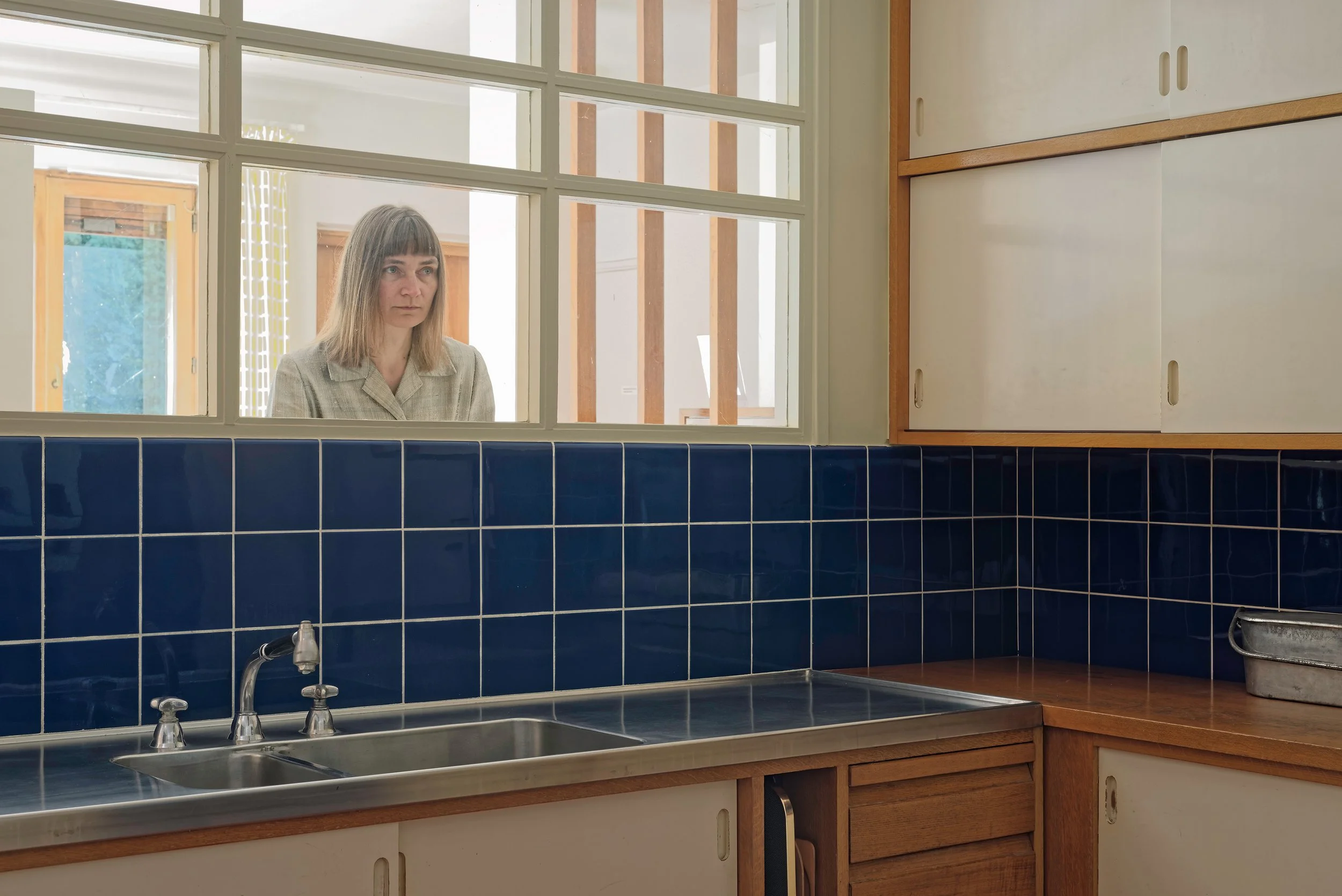
Arrière-cuisine, 2015
From Les Femmes de la Maison Carré
60 × 90 cm
II. Recognition Without Identity
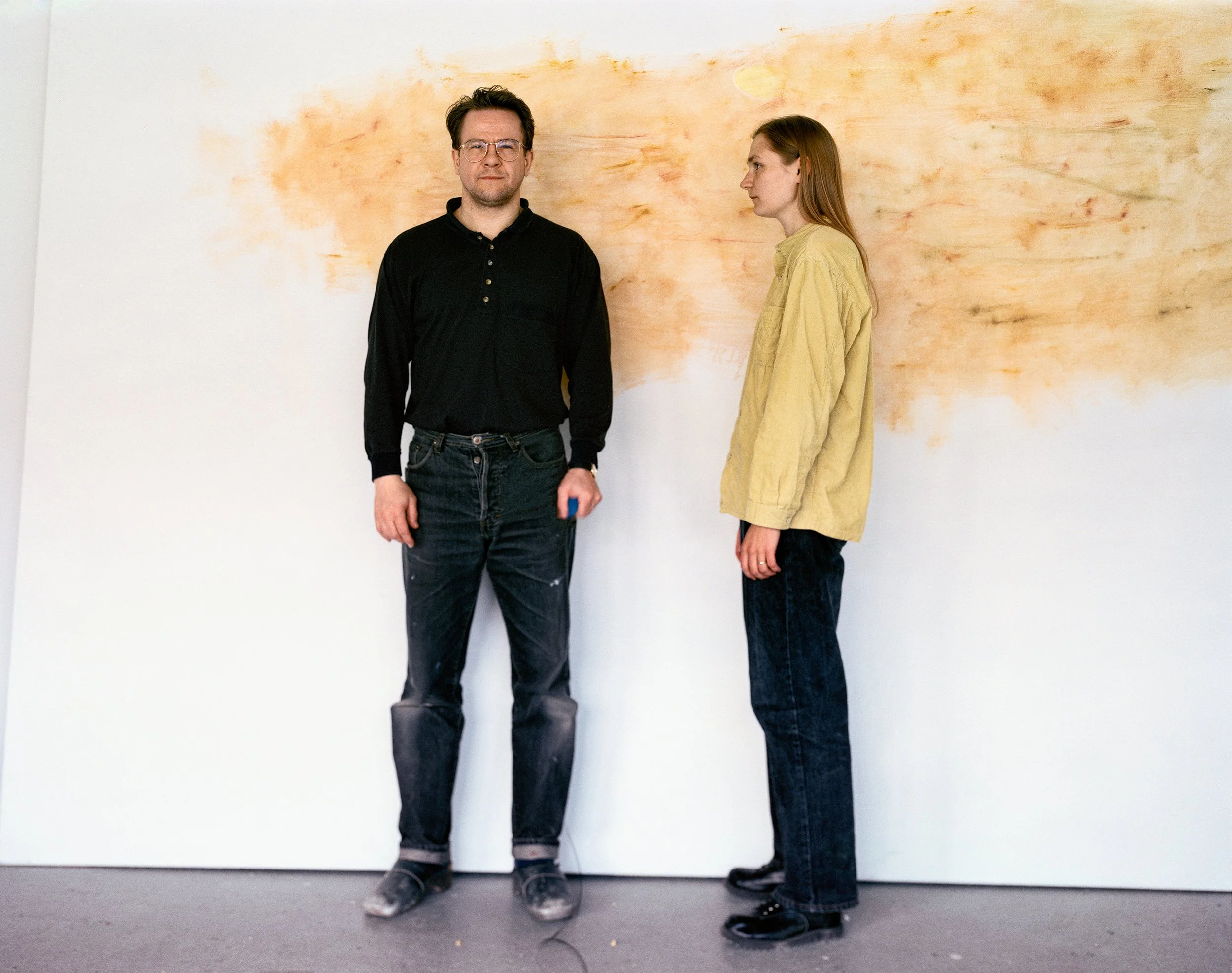
Painter with His Student I, 1997
From Das Mädchen sprach von Liebe
III. Autobiography as Necessity

This Is the First Day of the Rest of Your Life, Part 1, 1999
From Das Mädchen sprach von Liebe
50 × 70 cm

This Is the First Day of the Rest of Your Life, Part 2, 1999
From Das Mädchen sprach von Liebe
50 × 70 cm
IV. Arguing with Inheritance
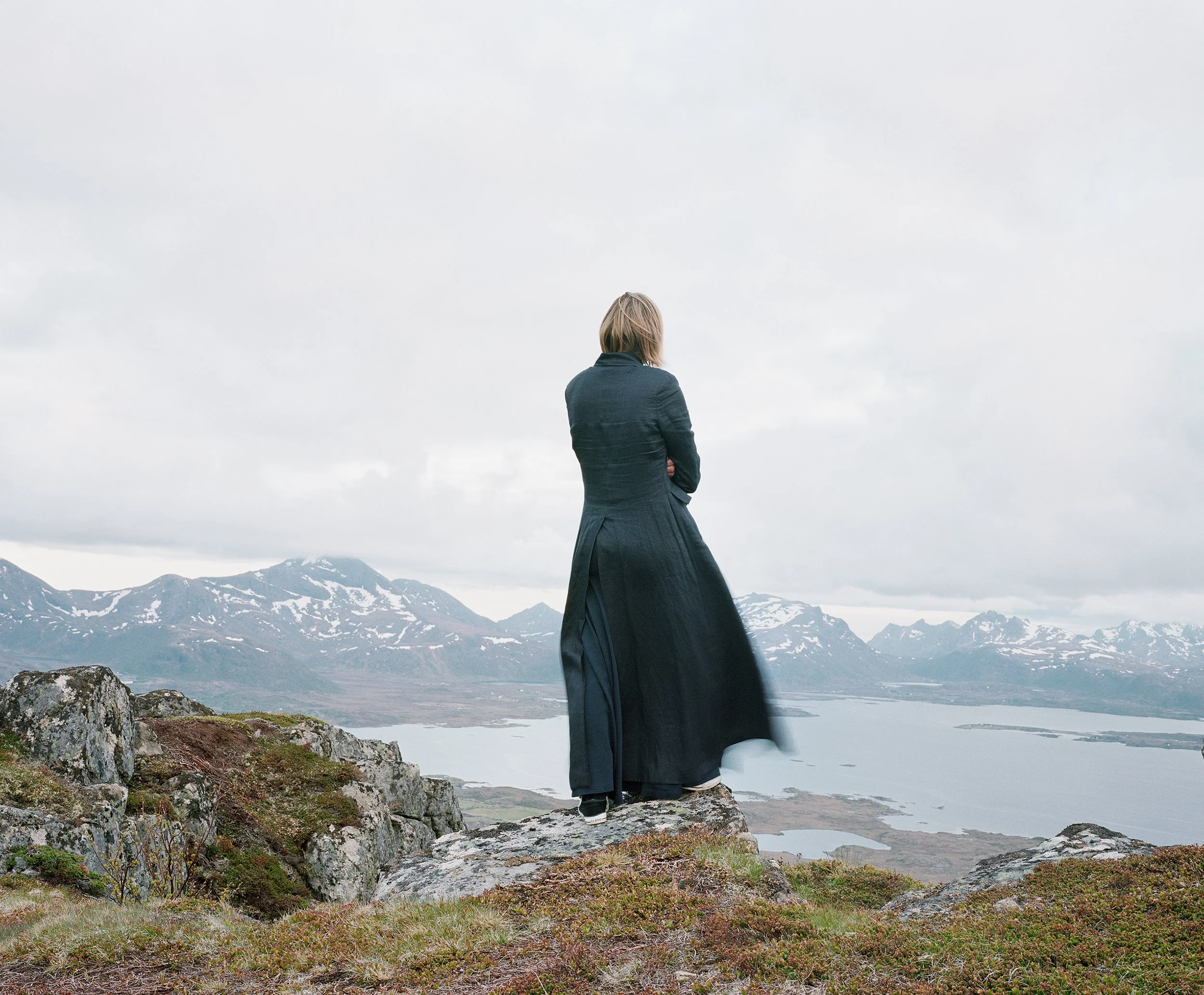
Der Wanderer 1, 2004
From The New Painting
50 × 70 cm
V. The Turned Back
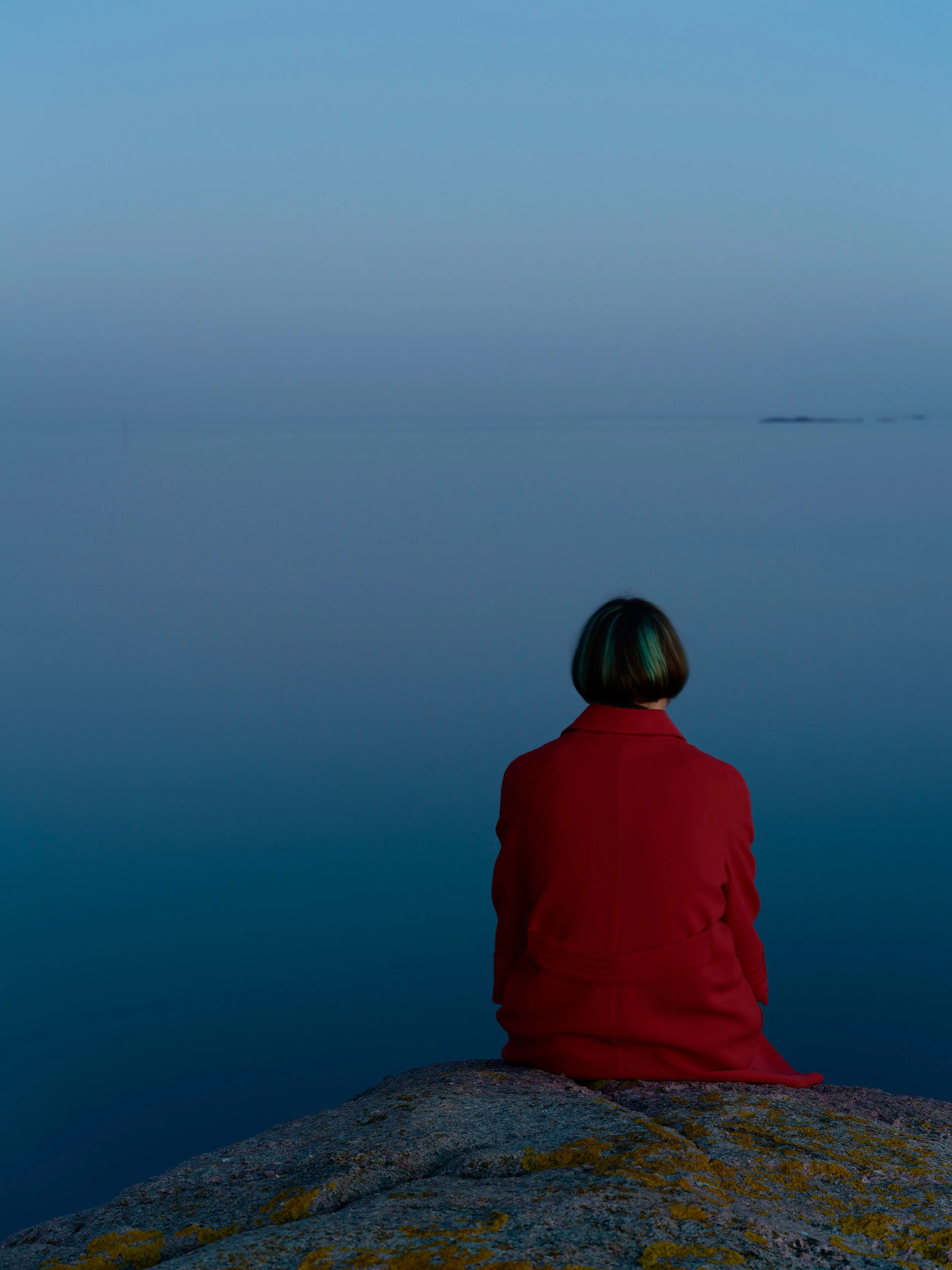
Seabound Two Nights in a Row, 2018, After Kunst Johannesen, Havbunnen to netter på rad, 1988
From Seabound
120x90cm
VI. Architecture as Conjecture
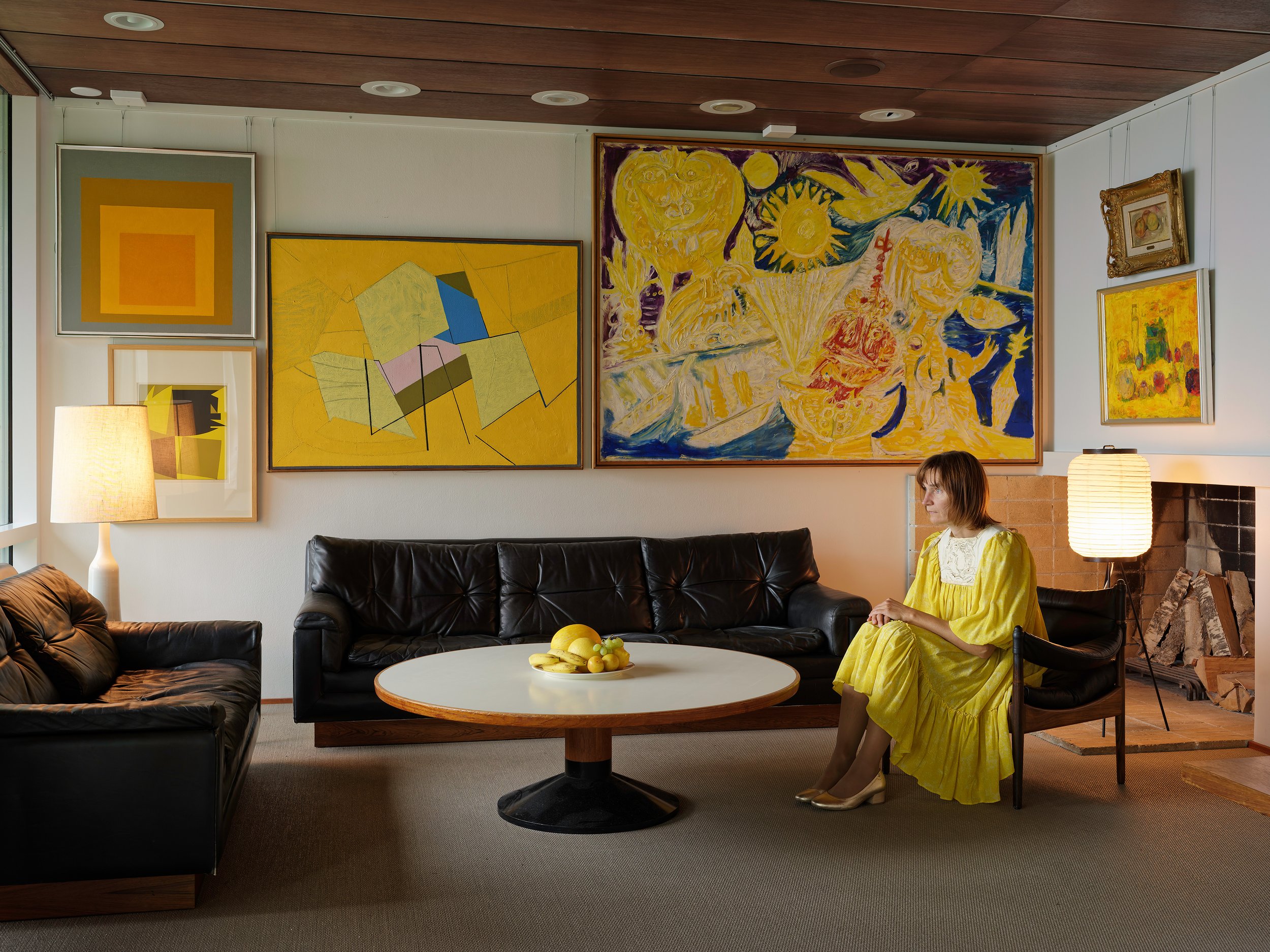
Yellow Still Life
(with Josef Albers, Homage to the Square - Autumnal Call, 1963 / Victor Vasarely, Zaira, 1950 / Richard Mortensen, Jaune, 1951 / Carl-Henning Pedersen, Gult solbillede, 1950 / Auguste Renoir, Nature morte aux trois pommes, undated / Rafael Wardi, Yellow still life (The Yellow bottle ), 1968)
From Les Femmes de la Maison Carré
2021, 105 x 140 cm
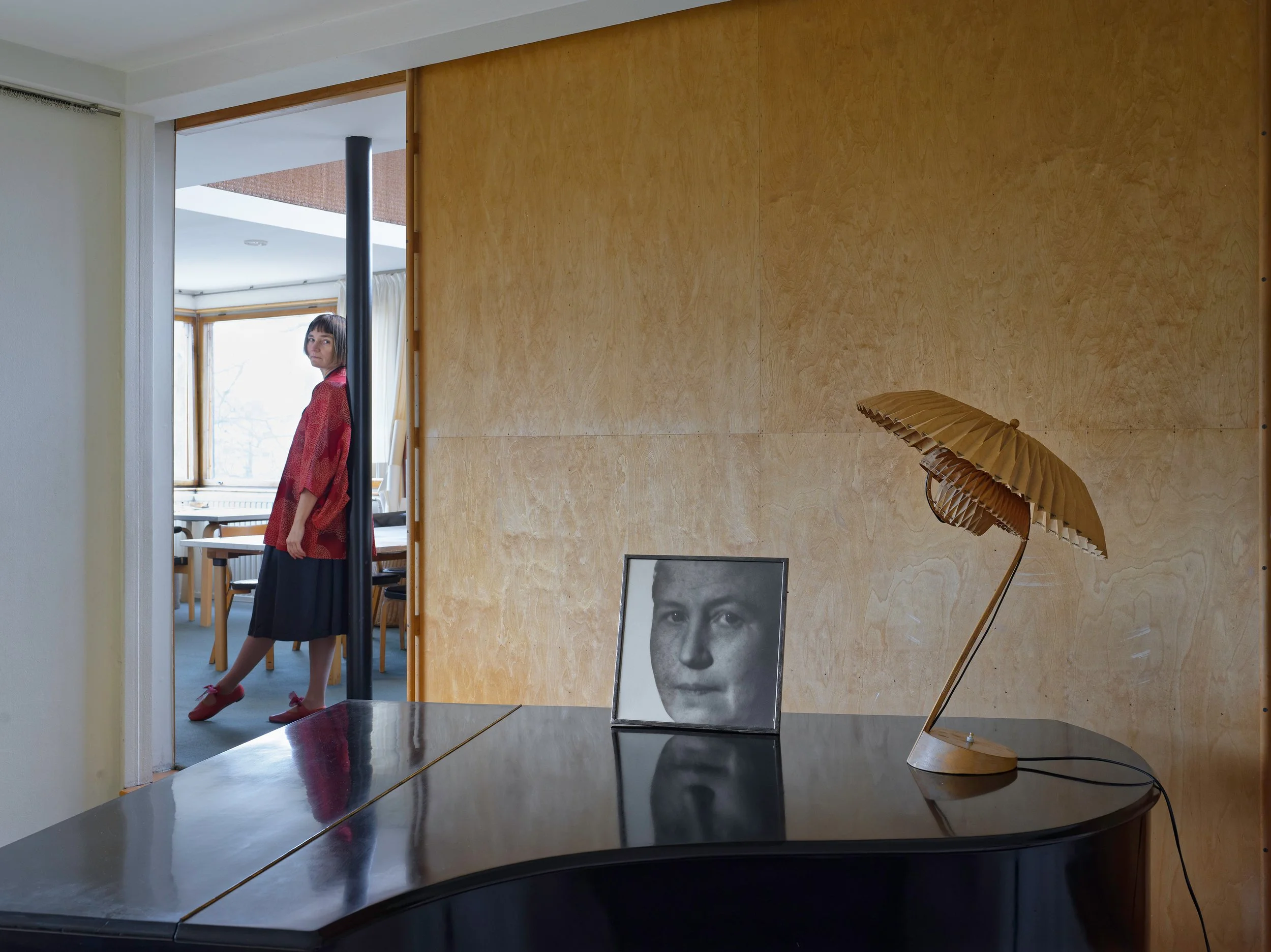
Piano (Aino's Portrait), 2020
From In the Architect’s House
70 x 93 cm
VII. Redescription of the Artist
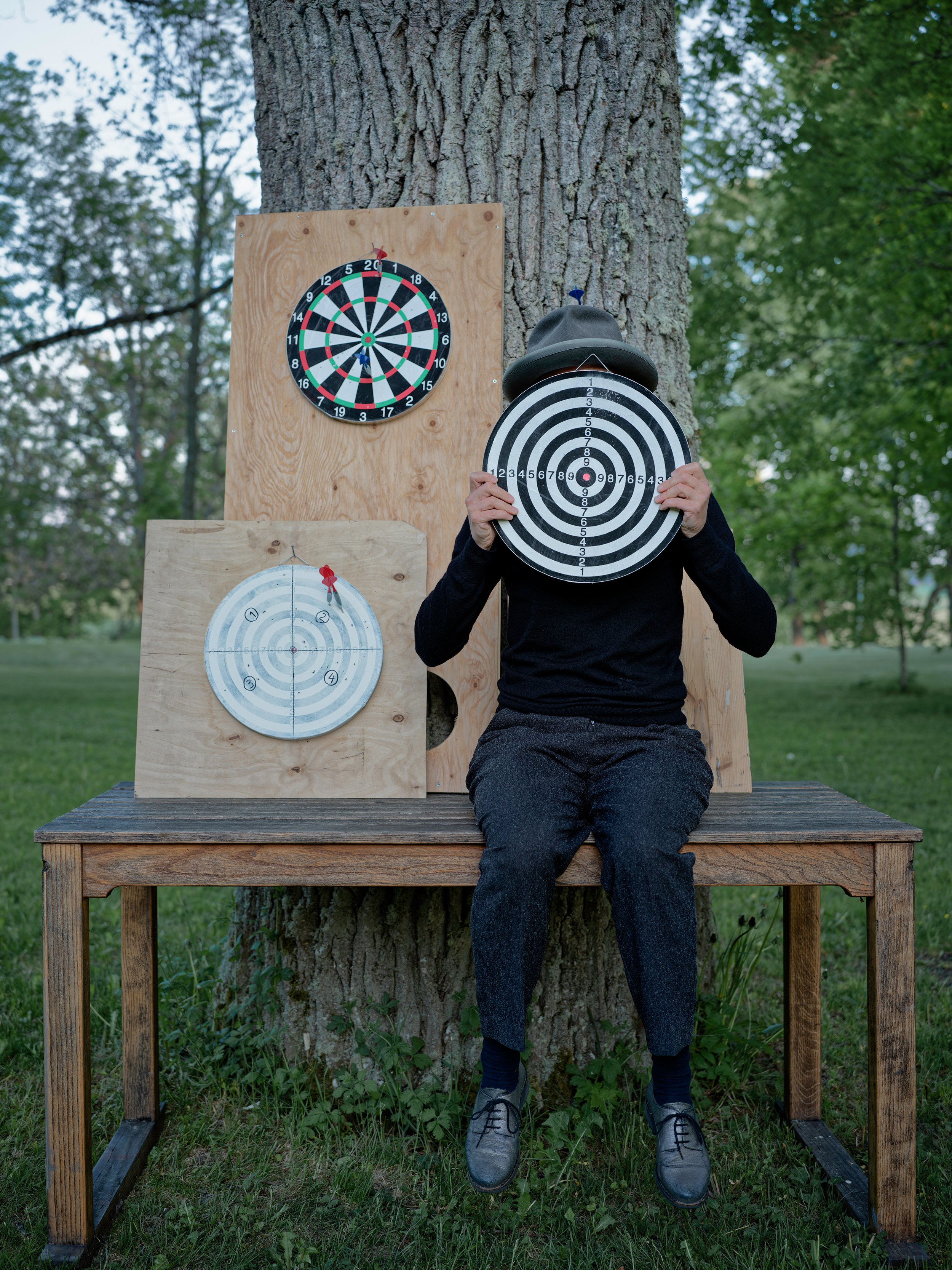
Beuys as Target, 2023
From Walking Beuys
120 × 90 cm
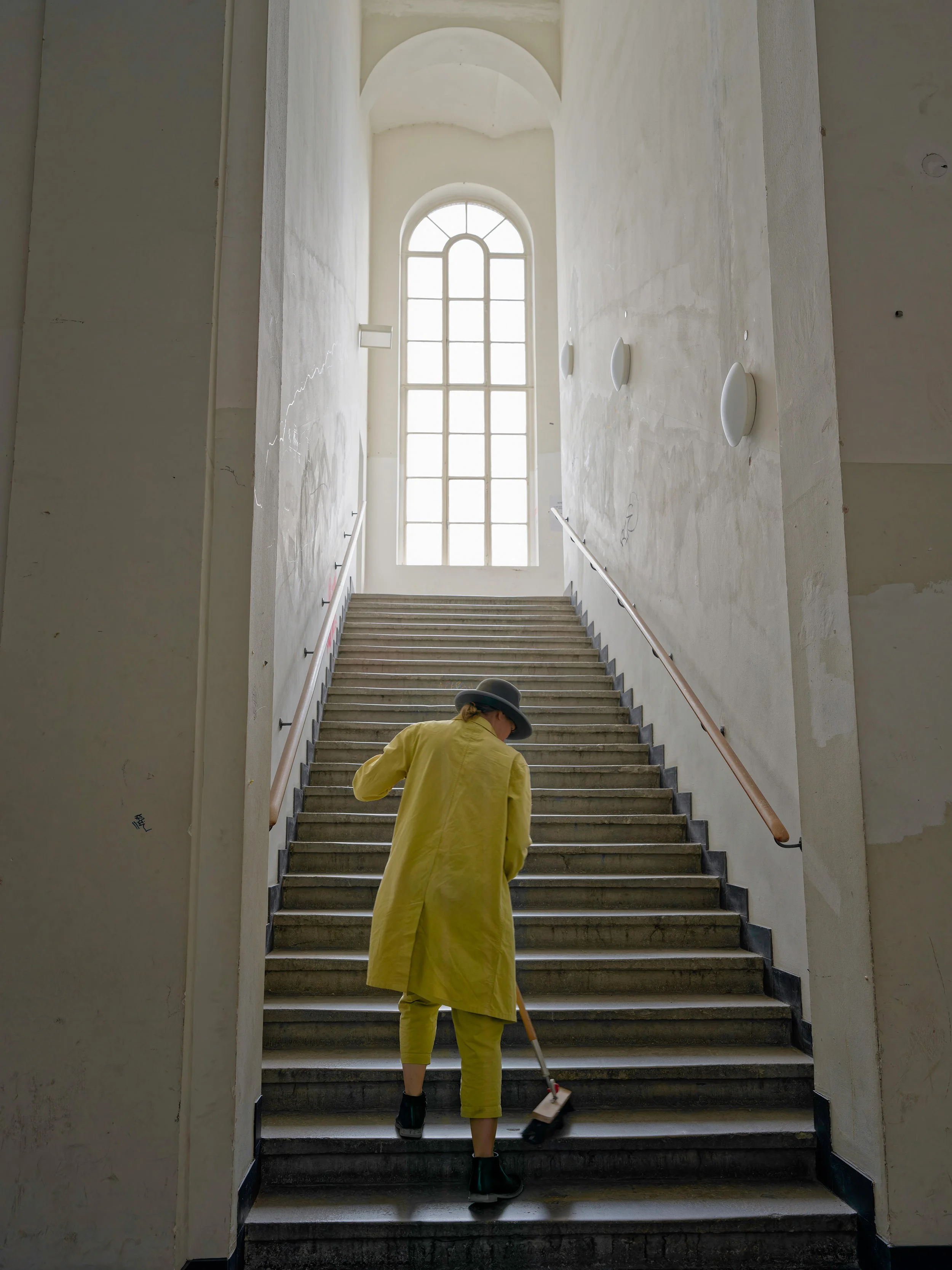
Beuys Sweeping Stairs, 2023
From Walking Beuys
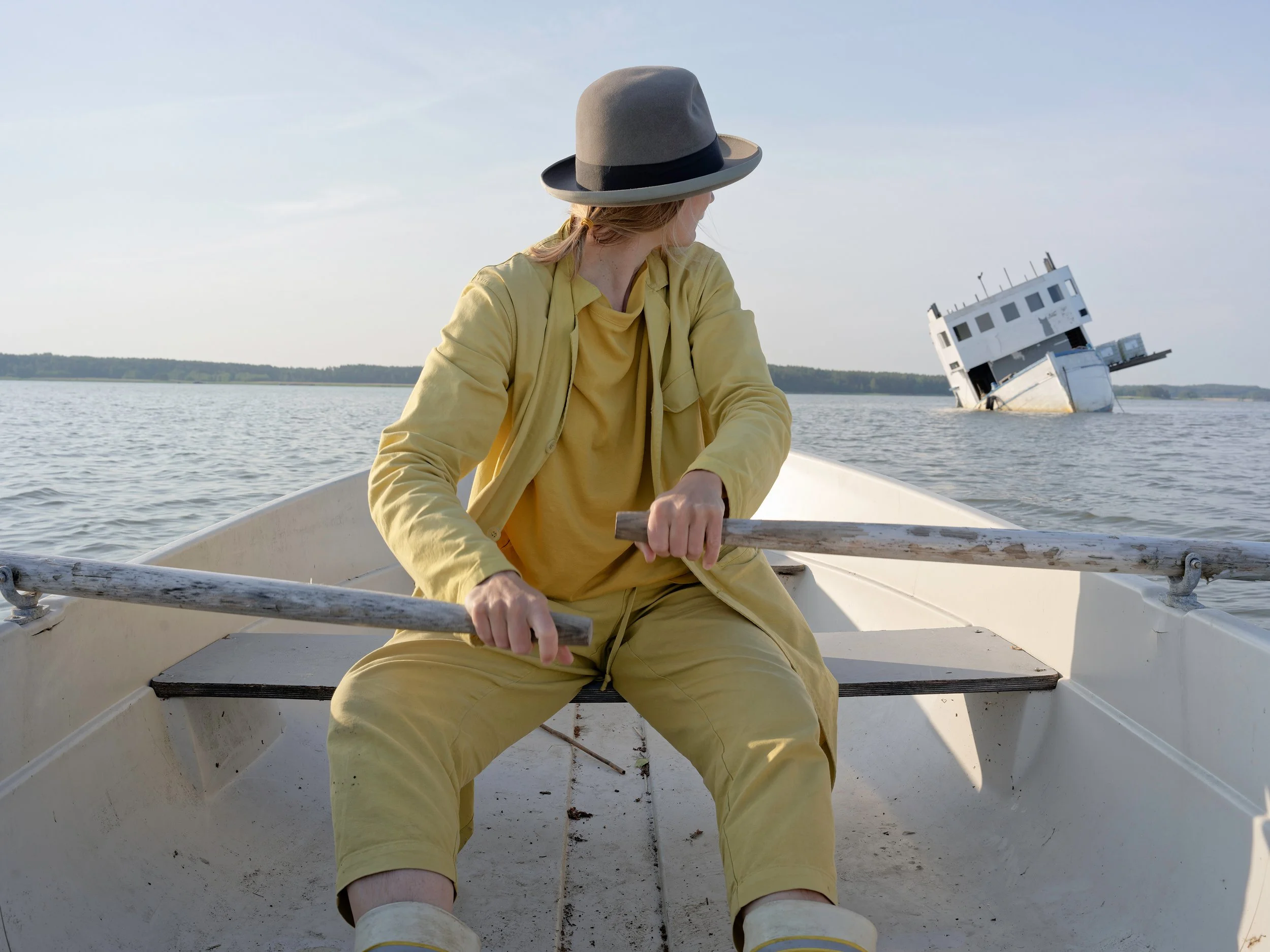
Beuys with Shipwreck, 2023
From Walking Beuys
70 × 93 cm
IX. The Self as Relation

Artist and Model Reflected in a Mirror 1, 2007
From Artist and Her Model
130x104 cm
X. Time, Literature, Return
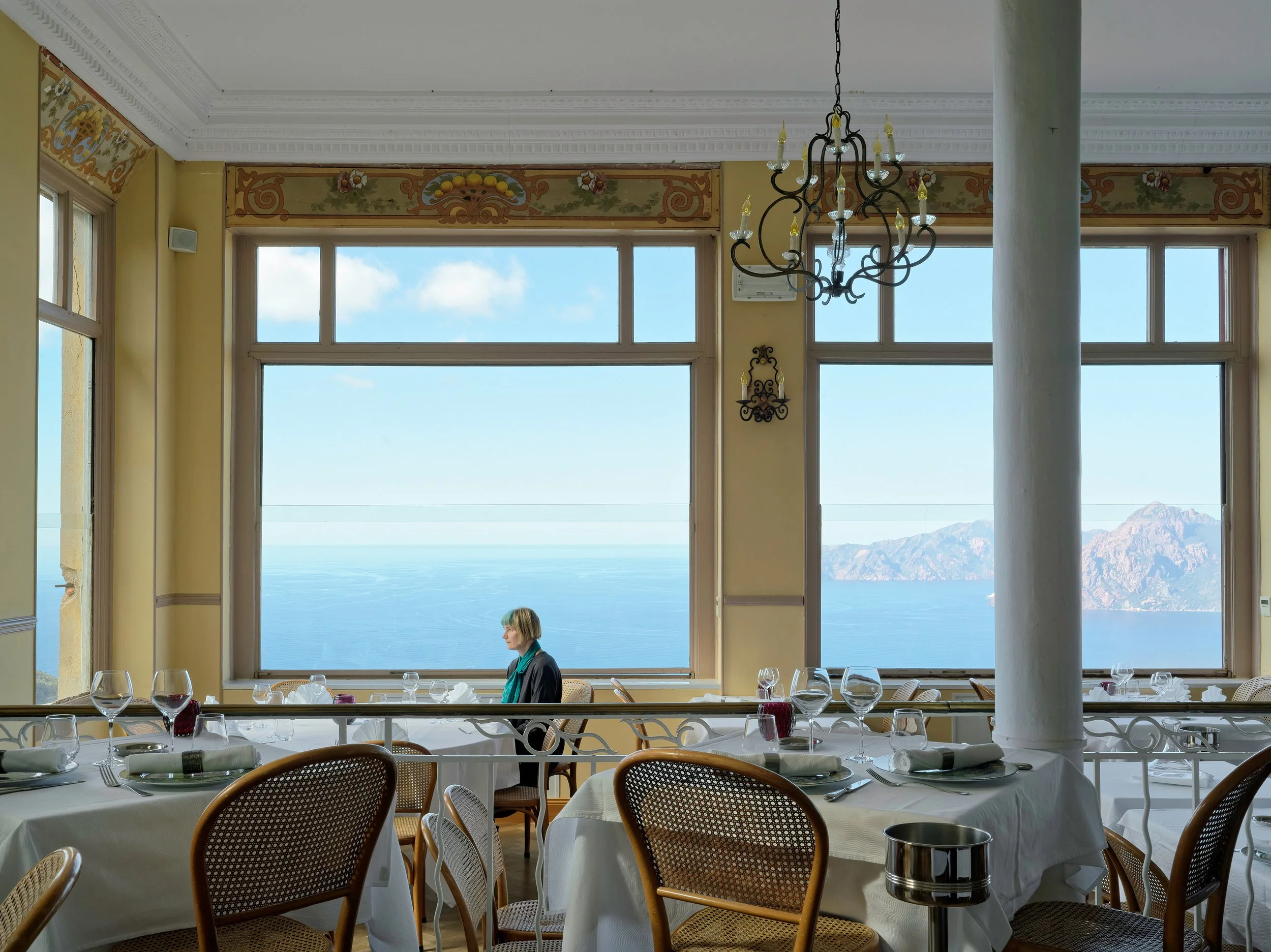
Hôtel de Sebald 3, 2019
From Sebaldiana. Memento mori
80 x 106 cm
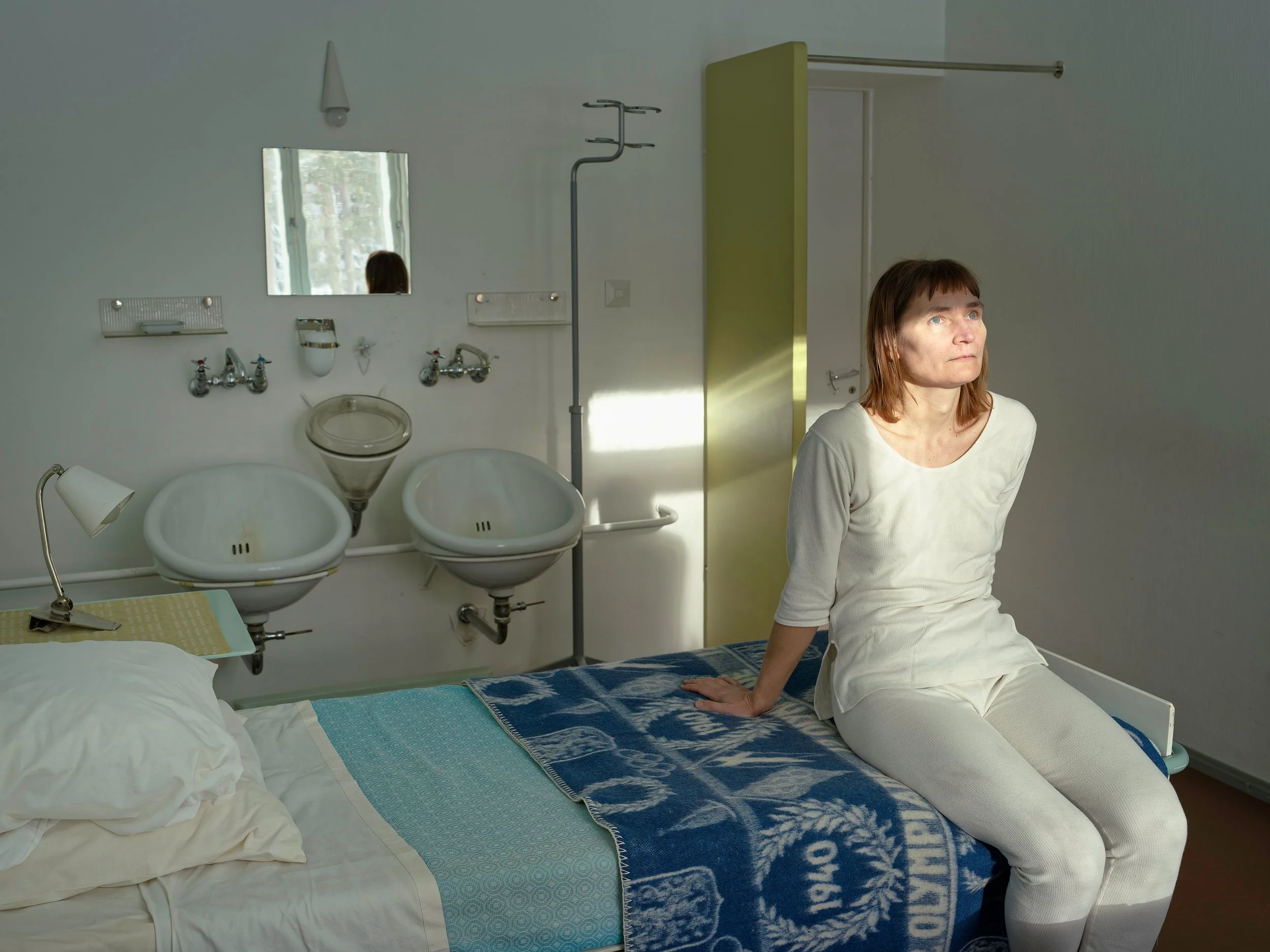
Patient Room 2, 2022
From Sanatorium
70 x 93 cm
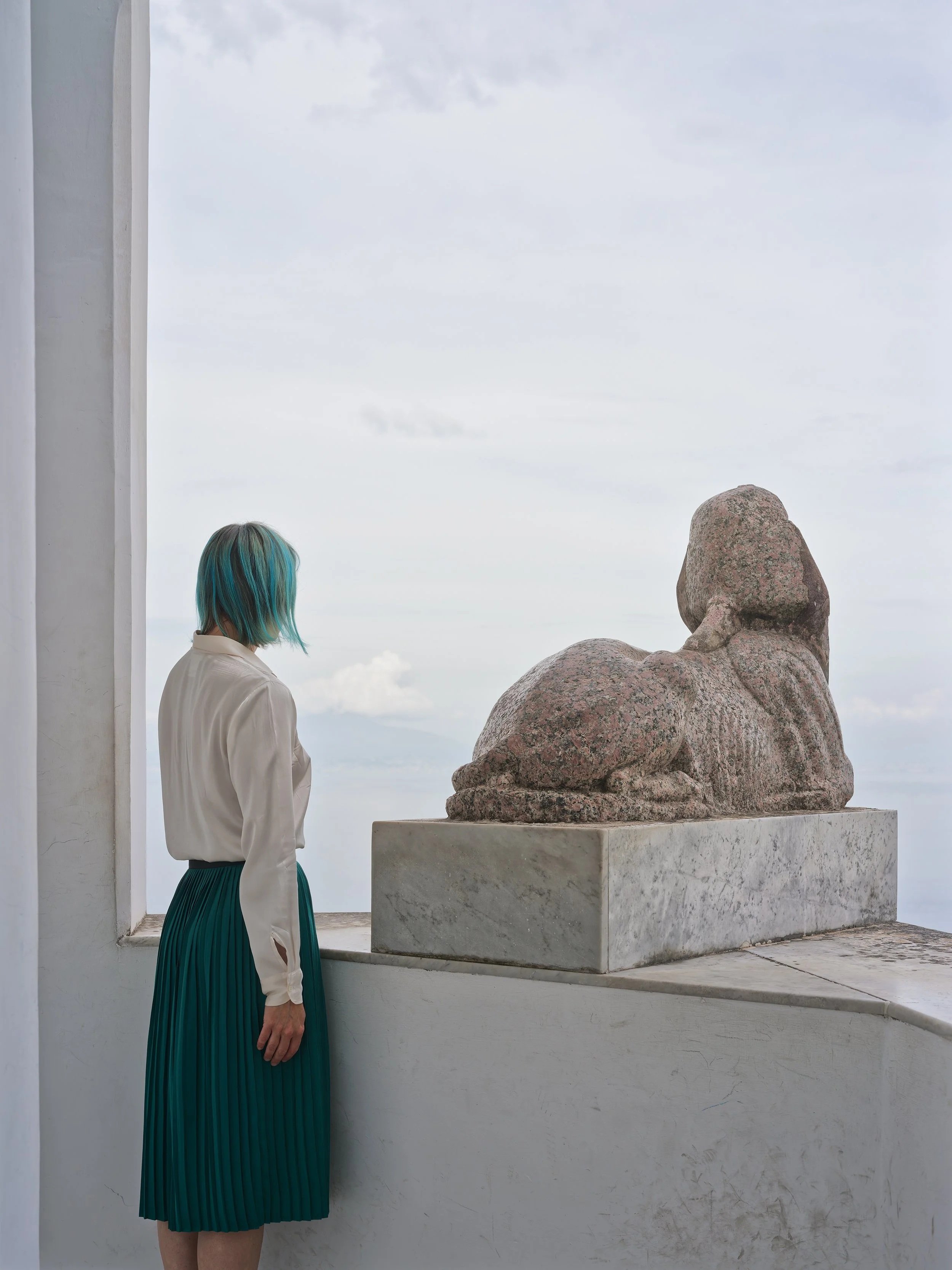
Axel Munthe’s Dream 1, 2025
From Capri
120 x 90 cm
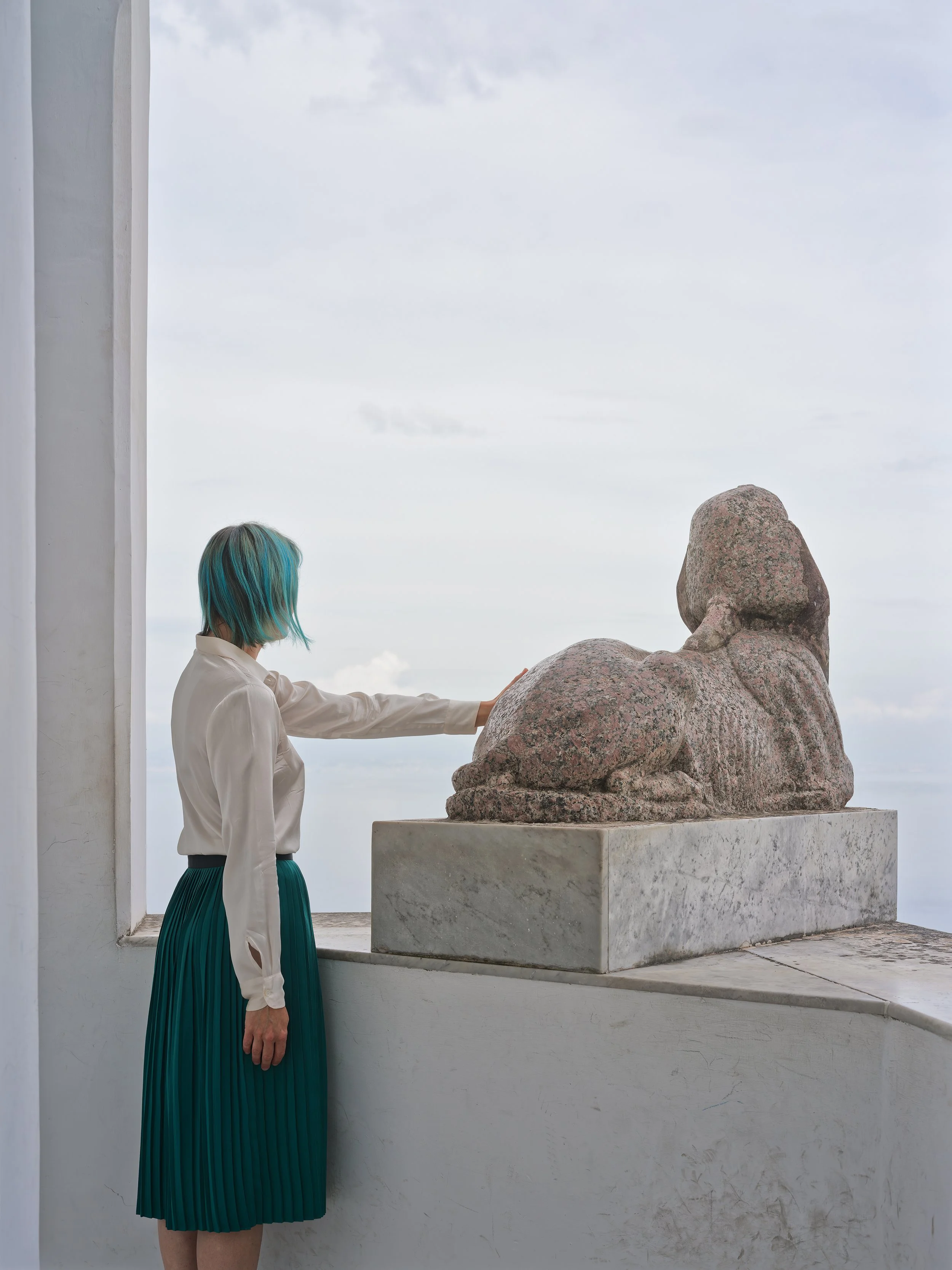
Axel Munthe’s Dream 2, 2025
From Capri
120 x 90 cm
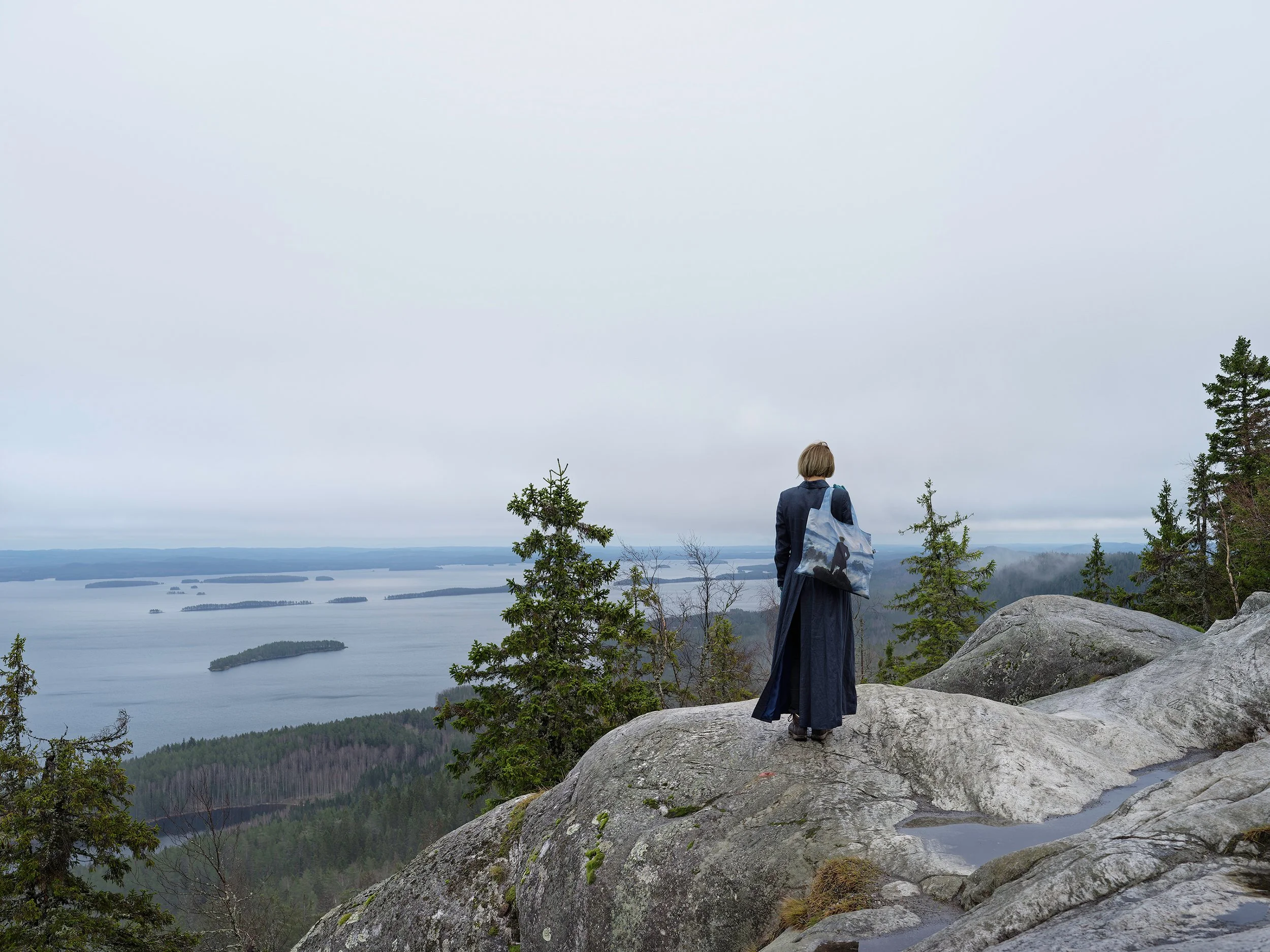
Der Wanderer 2, 2004
From The New Painting
50 × 70 cm
© All works courtesu of Elina Brotherus
Artists & Writers in This Issue
In alphabetical order by the first name
