Aneta Grzeszykowska: A Self That Refuses to Hold Still
There are artists who offer the self as revelation, and there are artists who offer the self as a question. Aneta Grzeszykowska belongs to the second group. Her work steps into the long philosophical argument about identity and does something rare. It treats the self less as a core waiting to be uncovered than as a field of forces, a shifting surface, presence always giving way to its own disappearance.
In this sense her work feels perfectly tuned to the ambition of this February issue: the self as process, repetition, a long act of invention, rather than essence.
The Film Stills series announces this logic from the start. Grzeszykowska appears in wigs, costumes, and borrowed postures that recall the visual grammar of cinema. The images evoke Cindy Sherman's foundational work, yet they press further into the uncanny. These read less like parodies of femininity than like rehearsals, attempts to inhabit roles that never quite fit. The woman in the frame looks like someone we should recognize, yet recognition keeps slipping. Identity here is already performance, already a script someone else wrote first.
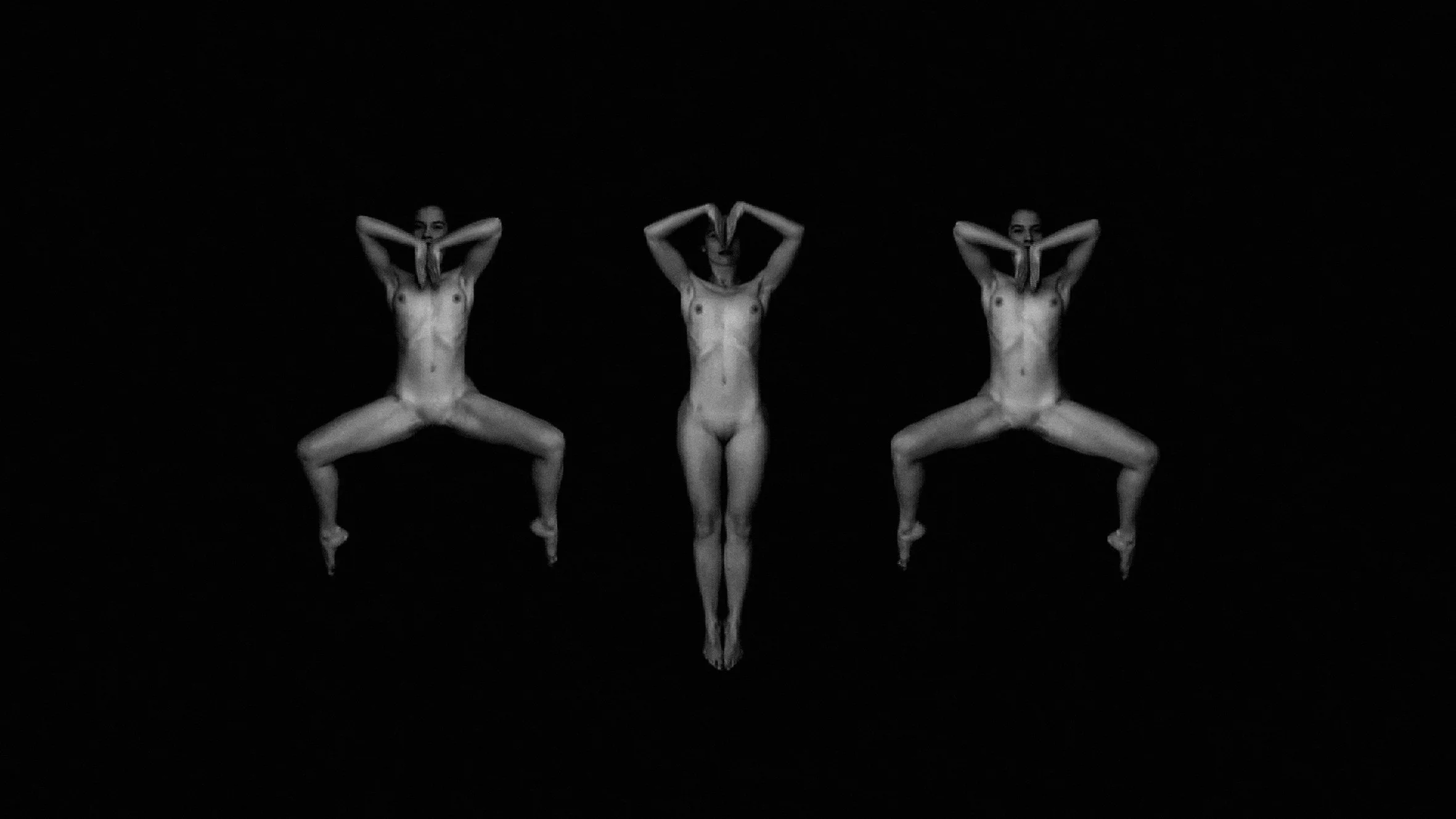
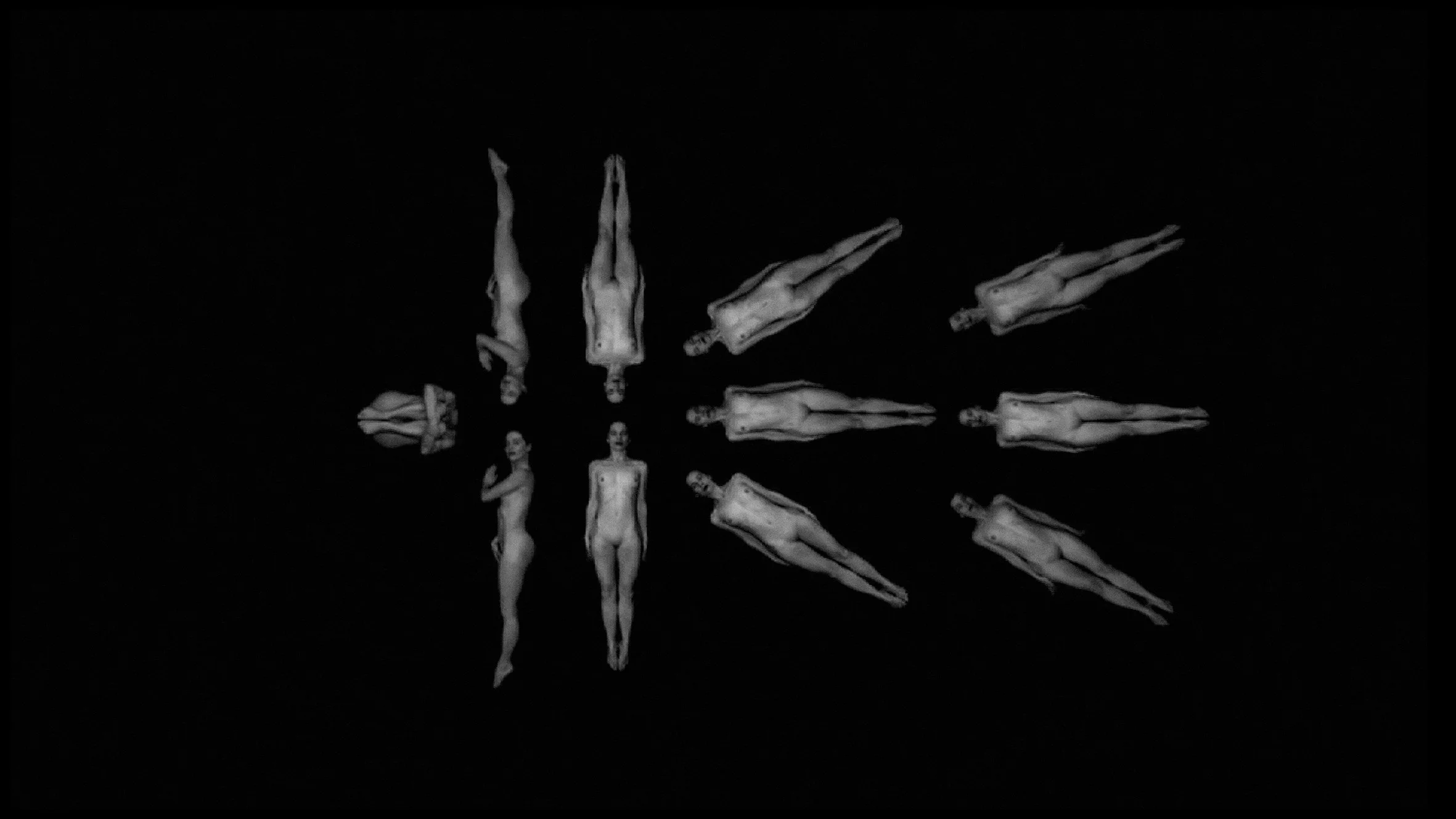
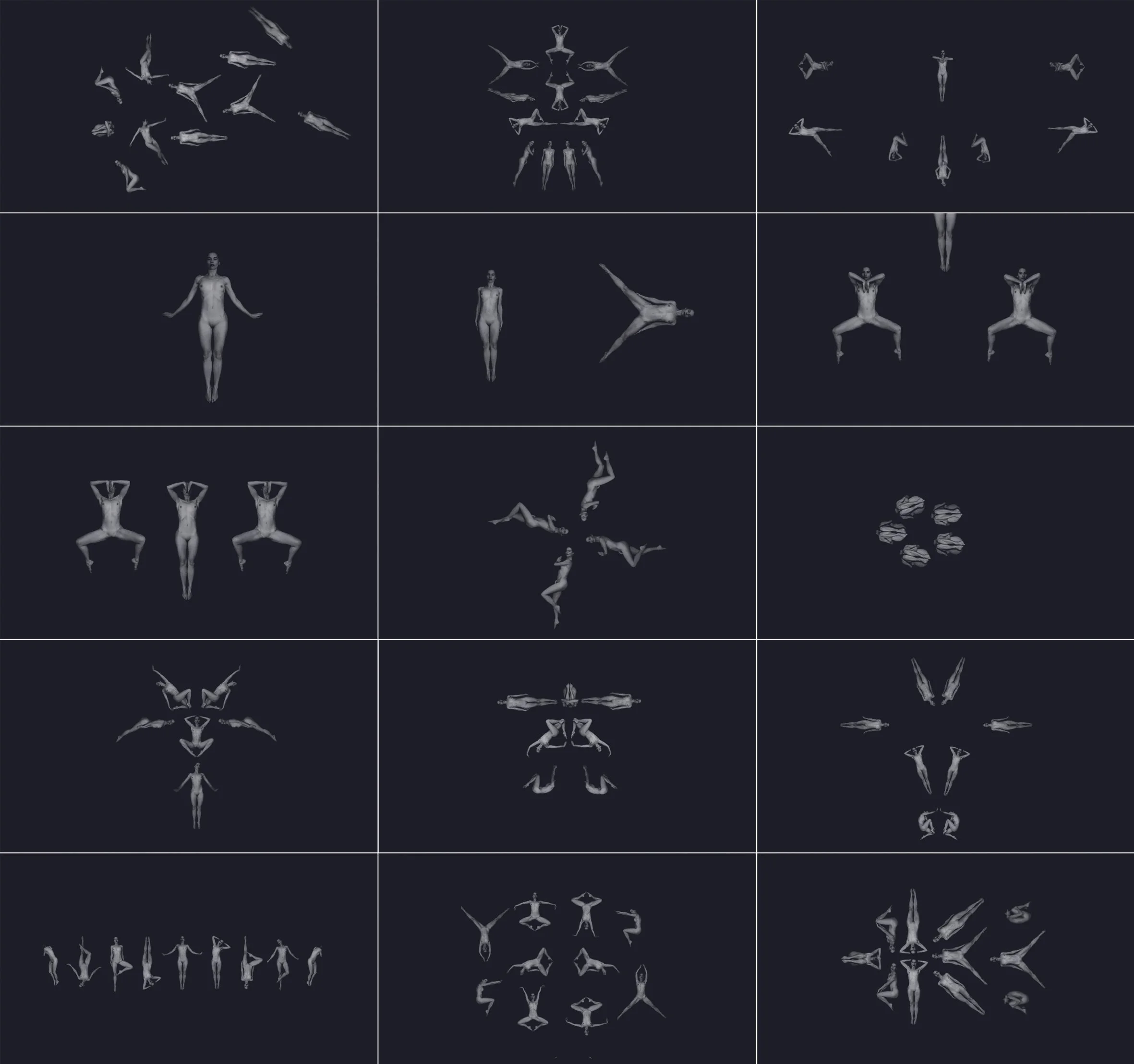
Judith Butler wrote that identity emerges through repeated gestures. The self becomes believable because it keeps returning to the same posture, the same tone, the same habits of visibility. Grzeszykowska interrupts that rhythm. In Bolimorfia, she pulls the body out of the steady loop of recognition and lets it scatter and duplicate. Against a black ground, her figure appears in multiple positions, multiplied like notation or choreography. Each pose becomes a possibility rather than a definition. Each figure proposes a version without erasing the others. Identity becomes plural, and it becomes a set of experiments.
Luce Irigaray once suggested that Western thought fears multiplicity because it cannot control what does not settle. Bolimorfia moves directly into that unsettled space. The images ask what becomes of the self when it can exist in more than one form at once. The answer is not chaos; it is freedom. The image becomes a shelter for alternatives, and the self no longer needs to match its reflection.
Then there is Negative Book, those domestic scenes turned inside out. A mother with a child. A quiet room. A gesture suspended in a space that feels suddenly emptied of warmth. The inversion carries an uncanny charge, the moment when the categories that hold the world together begin to leak. The home turns strange, the body becomes ghost, and the viewer recognizes everything without knowing where it belongs. In this reversal ordinary life reveals the instability that lived beneath its surface all along.
The Selfie diptychs open another door. In these works, Grzeszykowska's face is altered with smears of color, shifts of pigment that feel almost clinical, like forensic or medical intervention. Kaja Silverman teaches us that the face works less as a reliable window into the truth than as a surface where identity negotiates its terms. Grzeszykowska understands how little it takes to rewrite a face, and how quickly that rewriting exposes the fragility of what we call selfhood. These diptychs don't suggest disguise so much as this: identity is already mask, already act. The face is not a self-portrait. It is a threshold.
The Photograms turn the question again. They present the self as residue, as trace, as the faint echo of something that once made contact with the world and then vanished. These luminous shapes feel like biological ghosts, tender records of an existence that cannot be fully named. The image no longer describes a person. It describes the place where a person might have been.
By now a pattern has emerged: singular, stable, discoverable by looking inward, none of it holds. What holds instead is composition: description, invention, reflection, the images we make and remake, the stories we repeat, the gestures we try and try again. Identity, in this account, is less a fact than a practice.
Jean-Luc Nancy argued that the body is less a thing than an event. Aneta Grzeszykowska photographs the body as exactly that. Something that happens. Something that changes. This is why her images feel so alive. They refuse to settle. They allow the self to migrate across surfaces, postures, and ruptures. They show identity as an ongoing negotiation with the world, a fragile collaboration between what we inherit and what we invent.
The self does not precede the image. It arrives with the image, then moves on. Each photograph becomes a temporary truth, held just long enough for the next truth to appear.
In Aneta Grzeszykowska's hands the camera doesn't capture identity so much as unsettle it, loosening the borders that pretend to contain it and giving the self room to ask again who it might become.
Jorge R. G. Sagastume
I. Stills
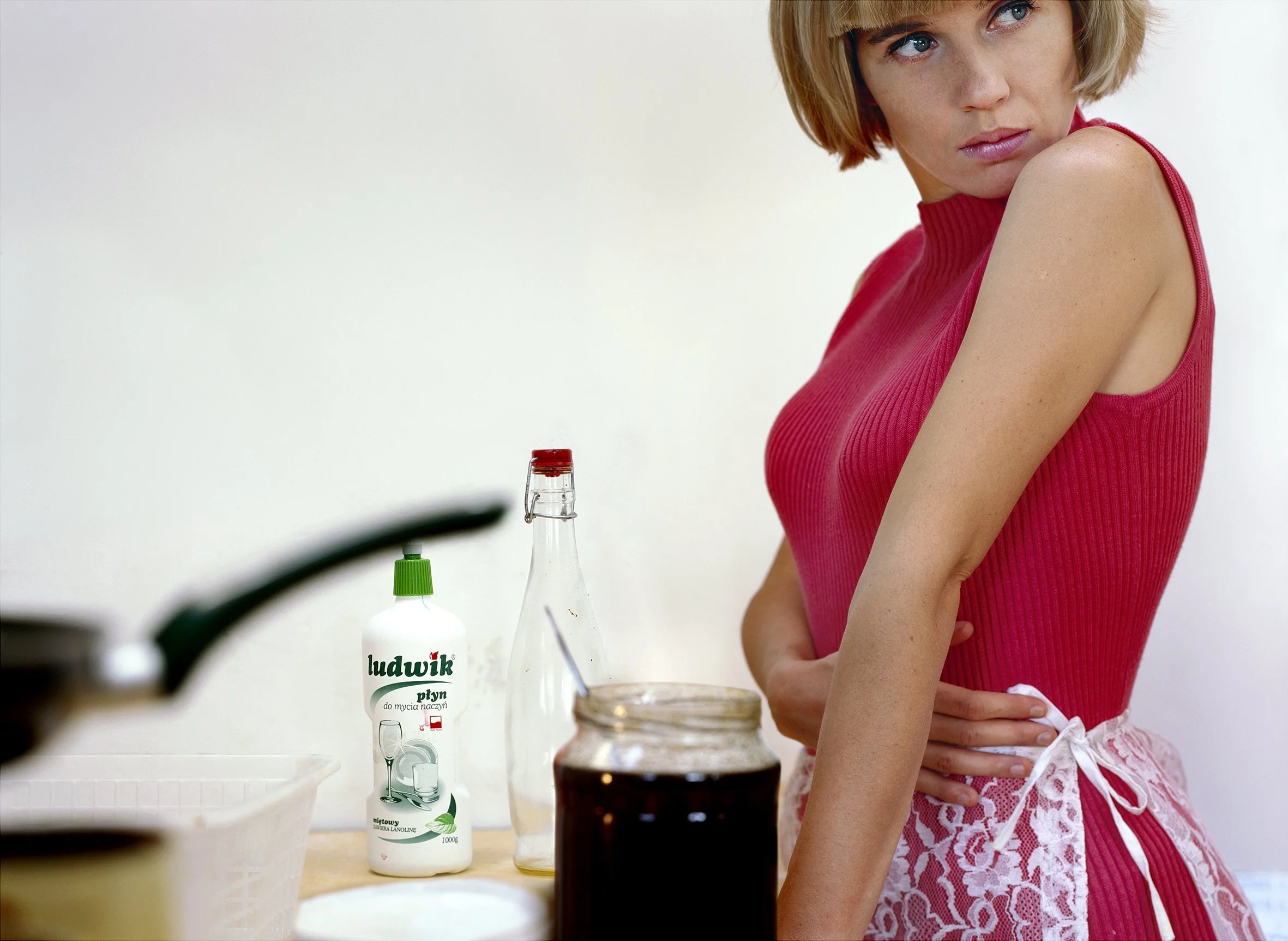
Stills # 03, 2006
C-print, app. 20 x 25 cm
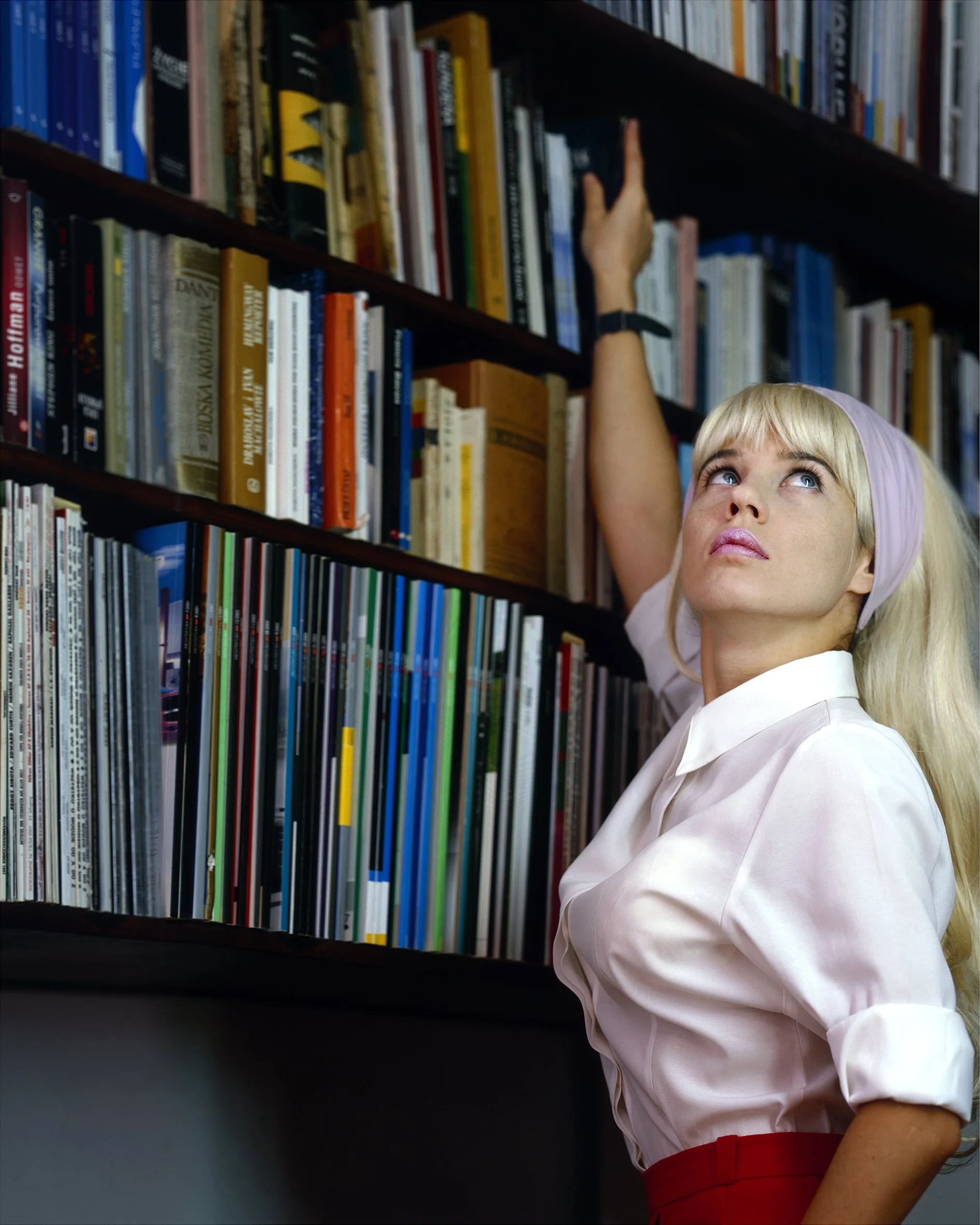
Stills # 09, 2006
C-print, app. 20 x 25 cm
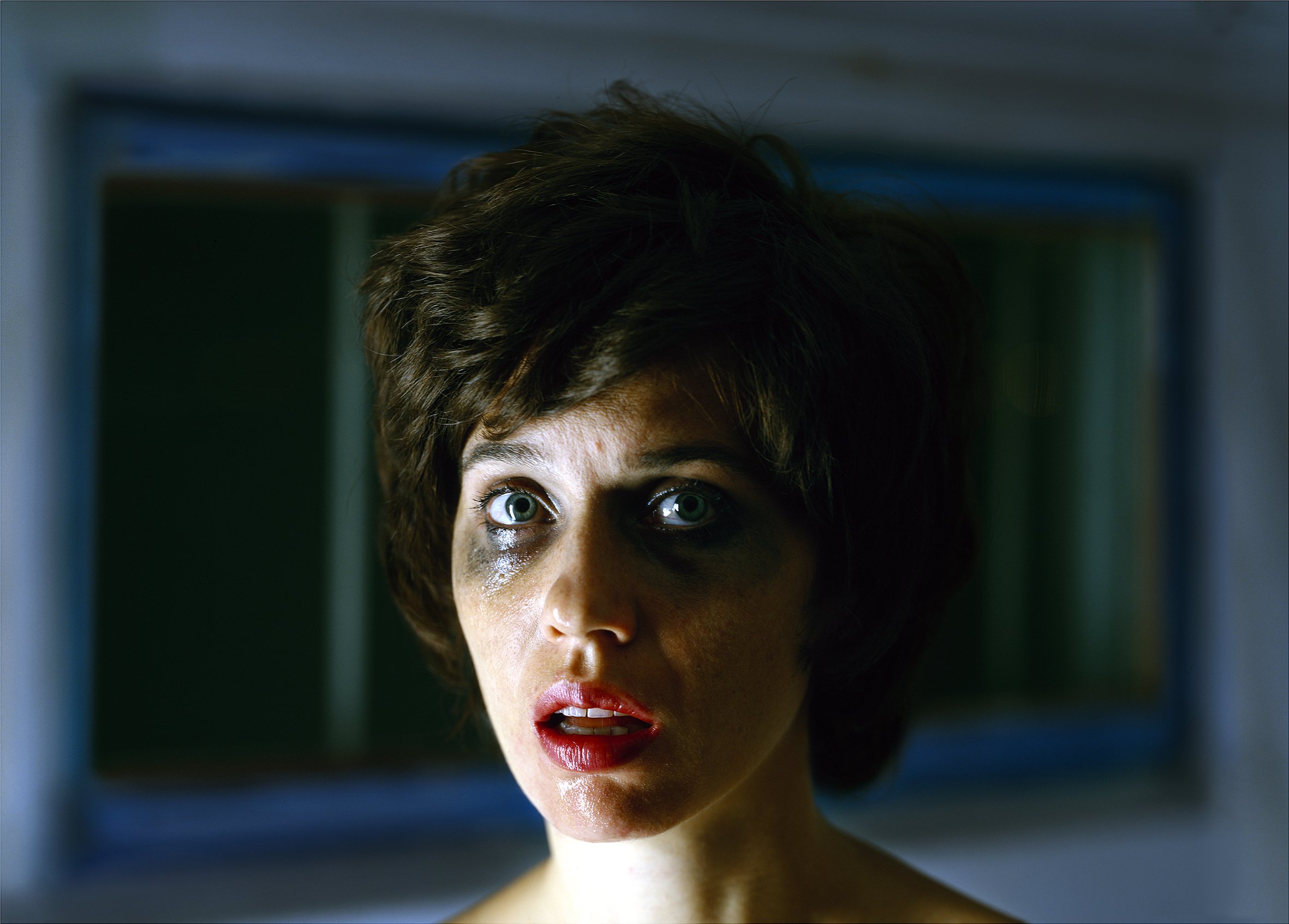
Stills # 07, 2006
C-print, app. 20 x 25 cm
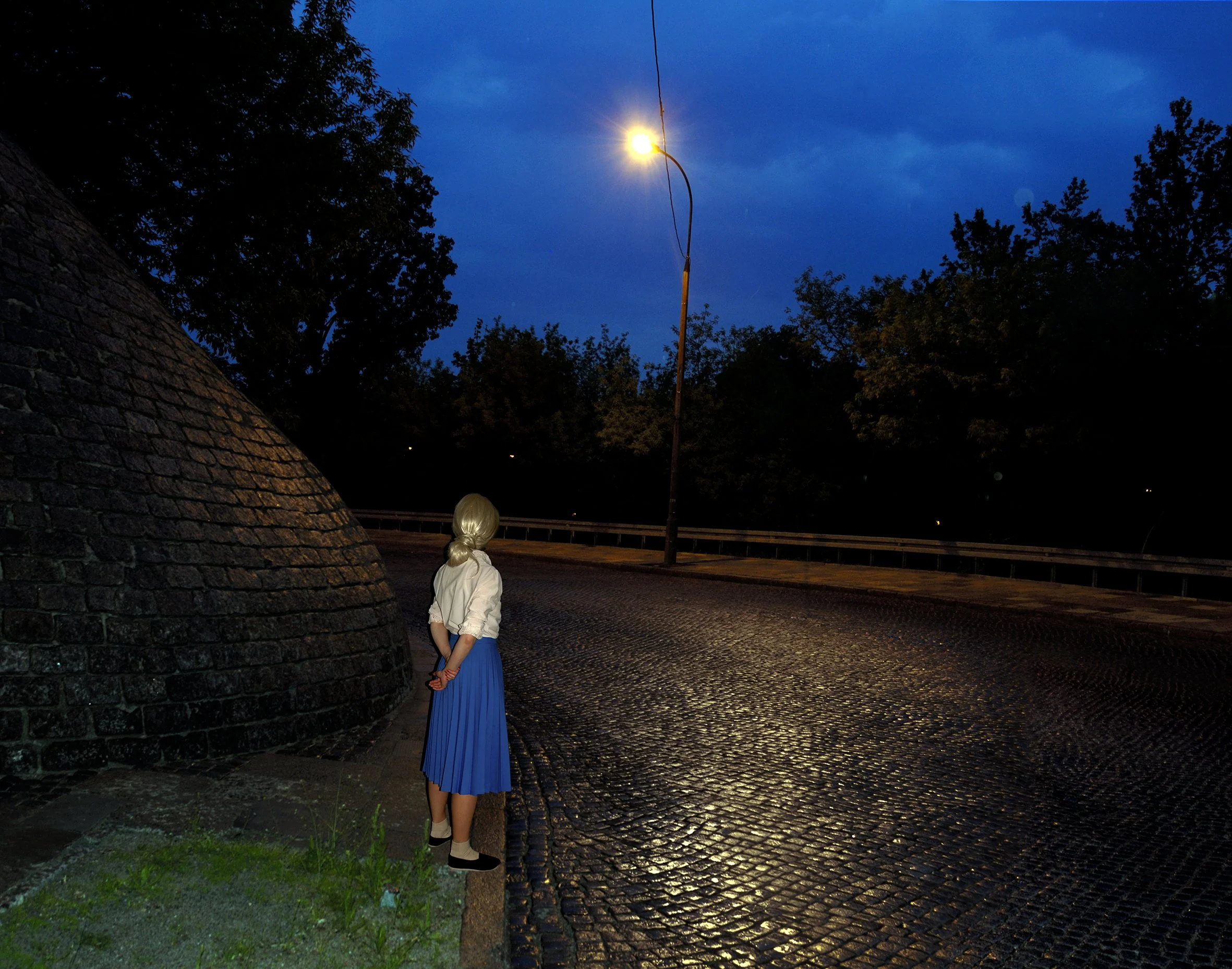
Stills # 62, 2006
C-print, app. 20 x 25 cm
II. CLOCK (2008/2011D)
12 hours, loop
Clock is a twelve-hour video in which Aneta Grzeszykowska moves through a sequence of choreographed dances, each one unfolding in time with the passing hours of the day. The work is synchronized to real time and screened as a living clock. With every hour that turns, the artist’s image is multiplied. One body becomes many, accumulating on the screen so that the number of figures mirrors the hour itself. Each new hour introduces a new composition, and with it another apparition of the artist, until movement, repetition, and duration weave together into a quiet choreography of time made visible.
III. Negative Book, (2012-2013)
Series of 84 photographs
Pigment ink on coon paper, 38 x 50 cm each
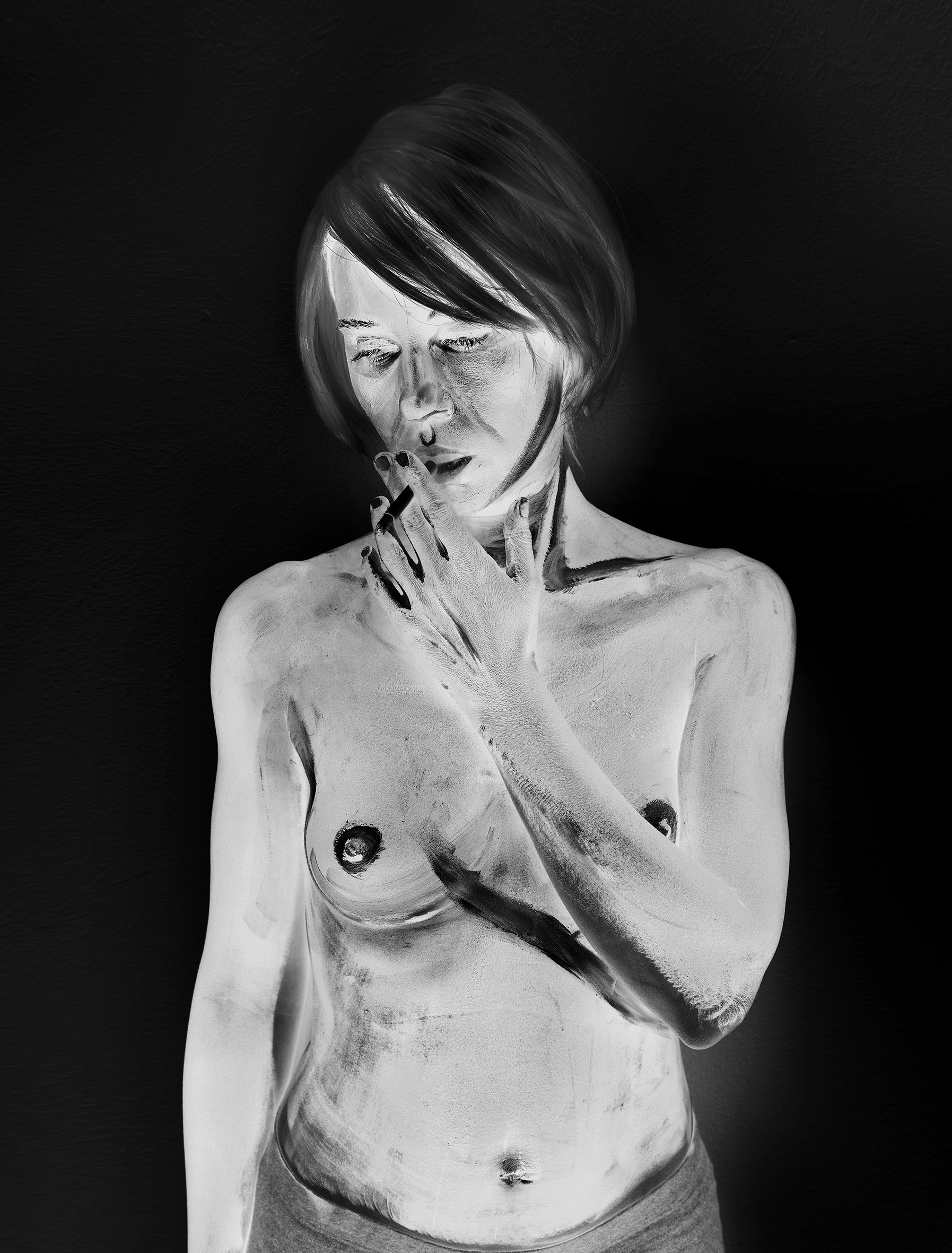
Negative Book # 04
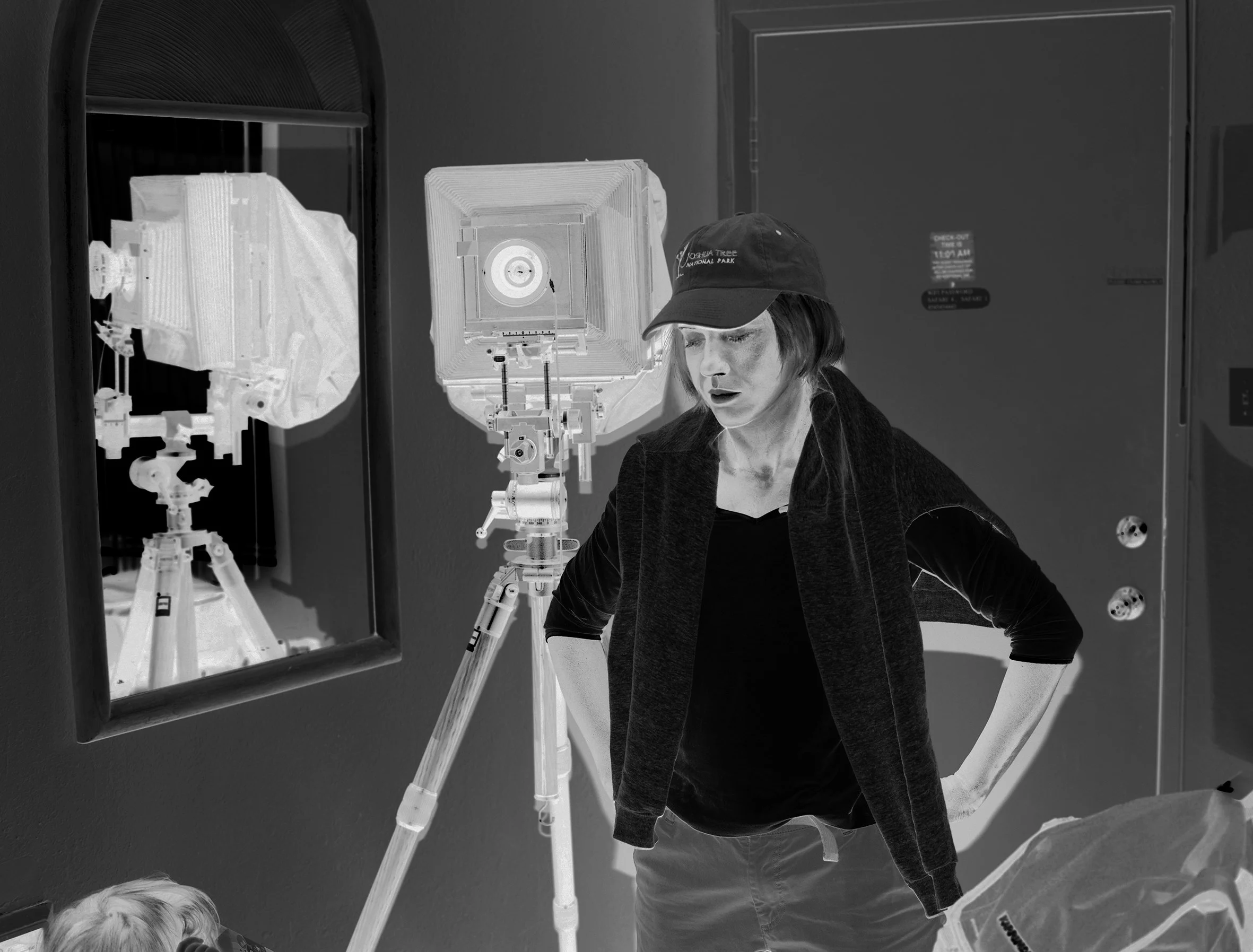
Negative Book # 54
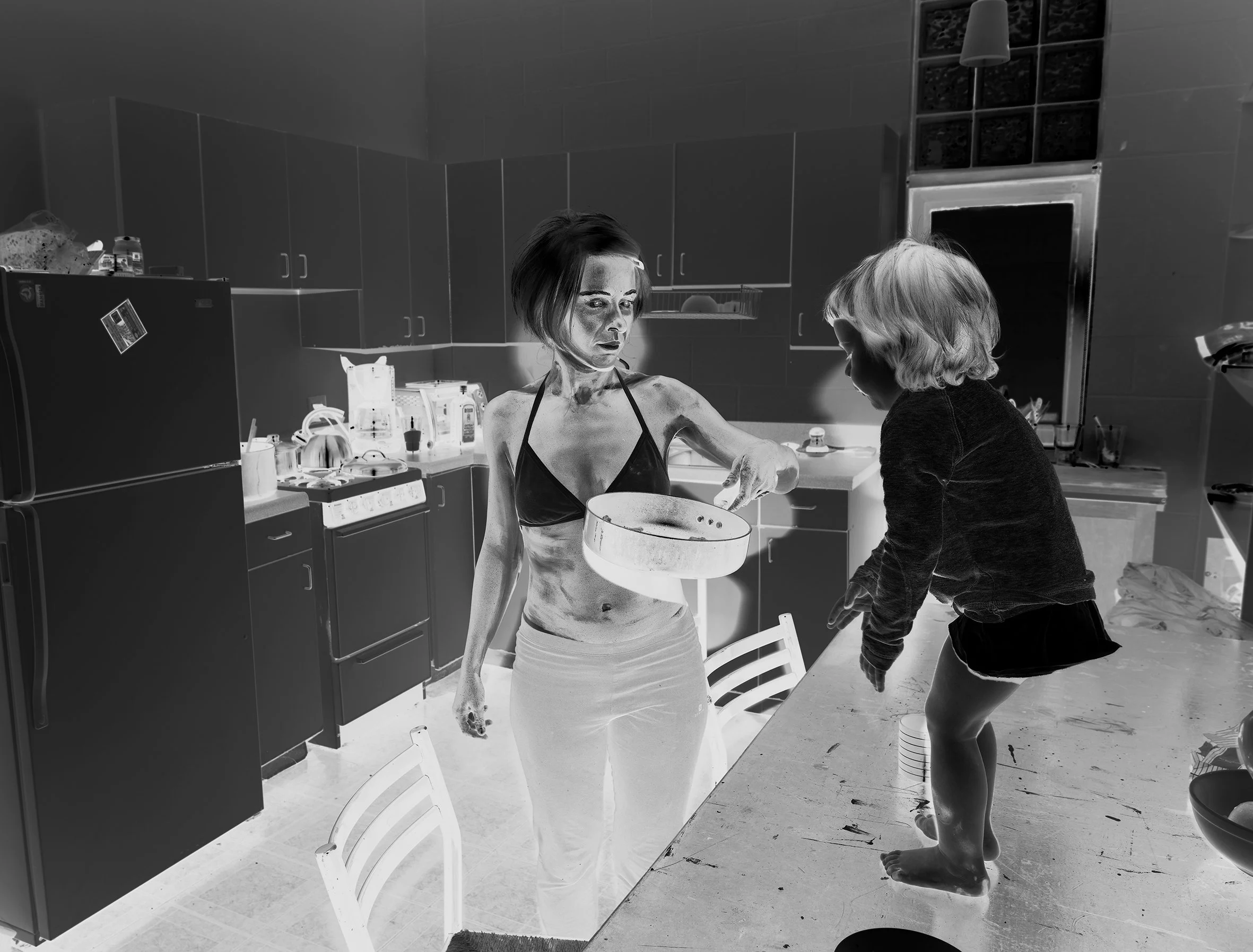
Negative Book # 65
IV. Negative Make Up, 2016
Pigment ink on coon paper,
100 x 70 cm
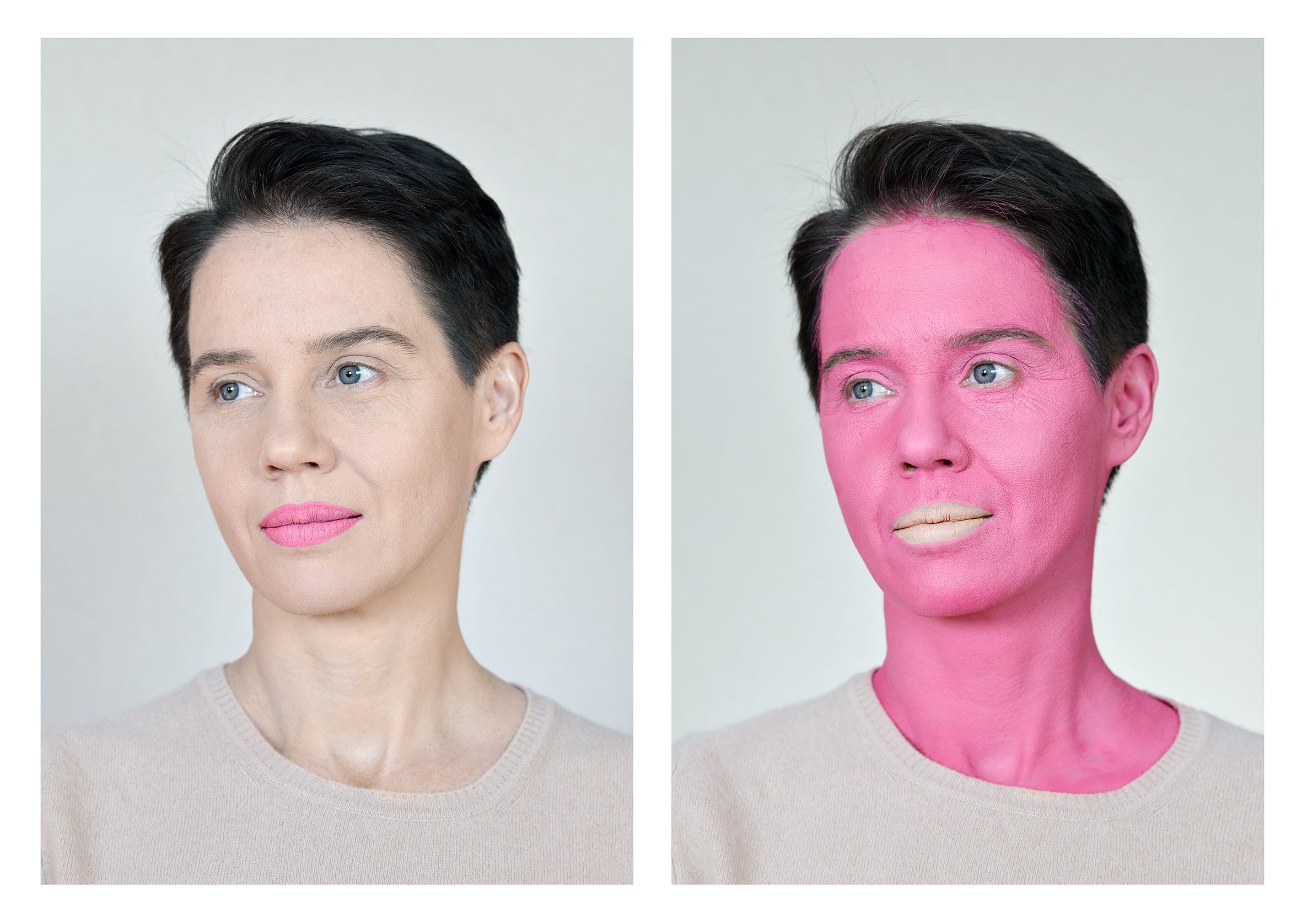
Negative Make Up (pink)
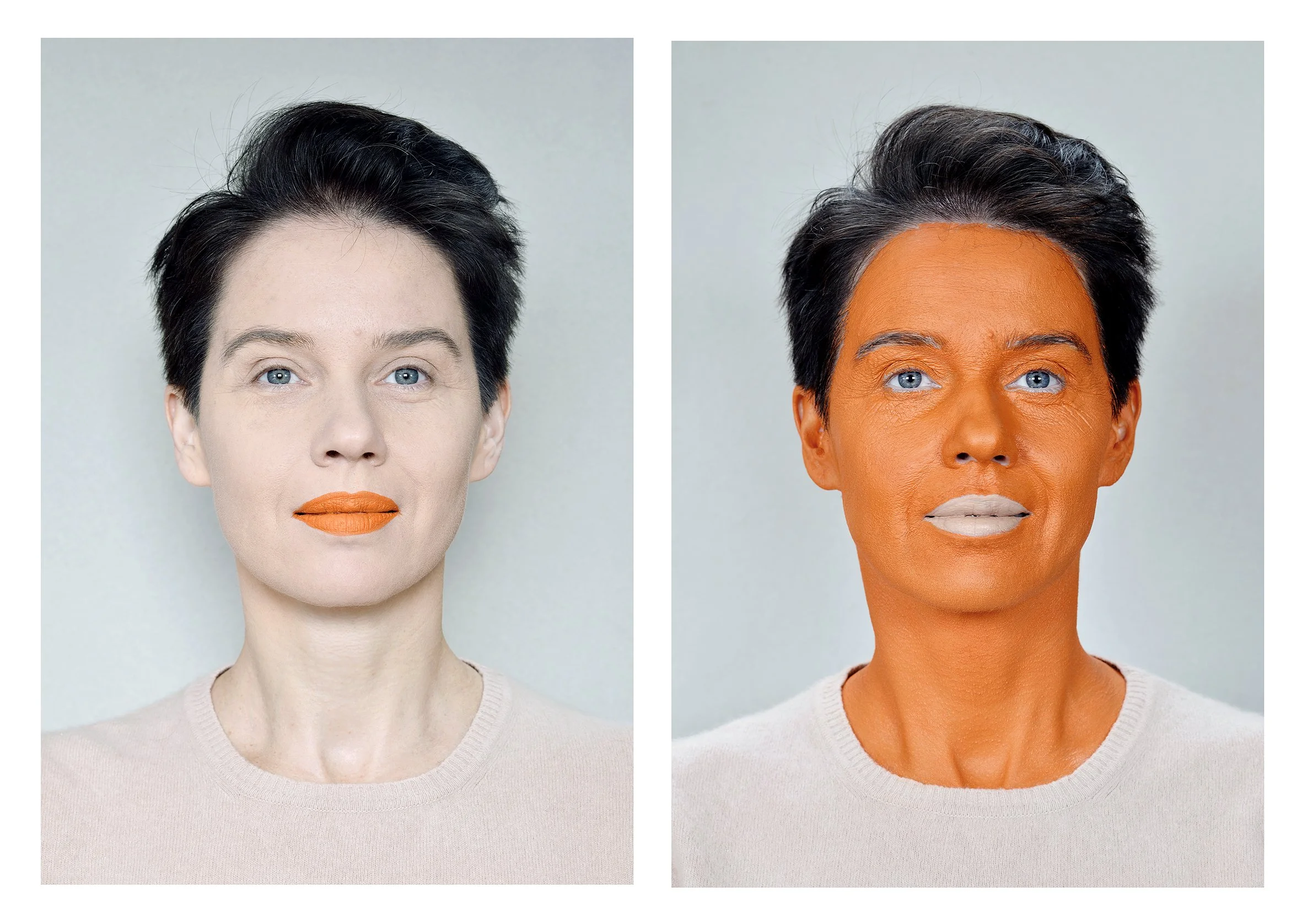
Negative Make Up (orange)
V. Negative Blood (2017–2020)
This series of abstract analog photographs was produced under an 8 × 10 inch enlarger, using the artist’s own blood as a light-sensitive substance. Poured in droplets between the glass plates of the enlarger, where a celluloid negative would normally rest, the blood became a provisional image carrier. Suspended between glass, as if under a microscope, it briefly formed a living negative through which the photographic paper was exposed. The image emerges from this fragile interval, where the body replaces film and the act of exposure becomes intimate, temporal, and irrevocable.
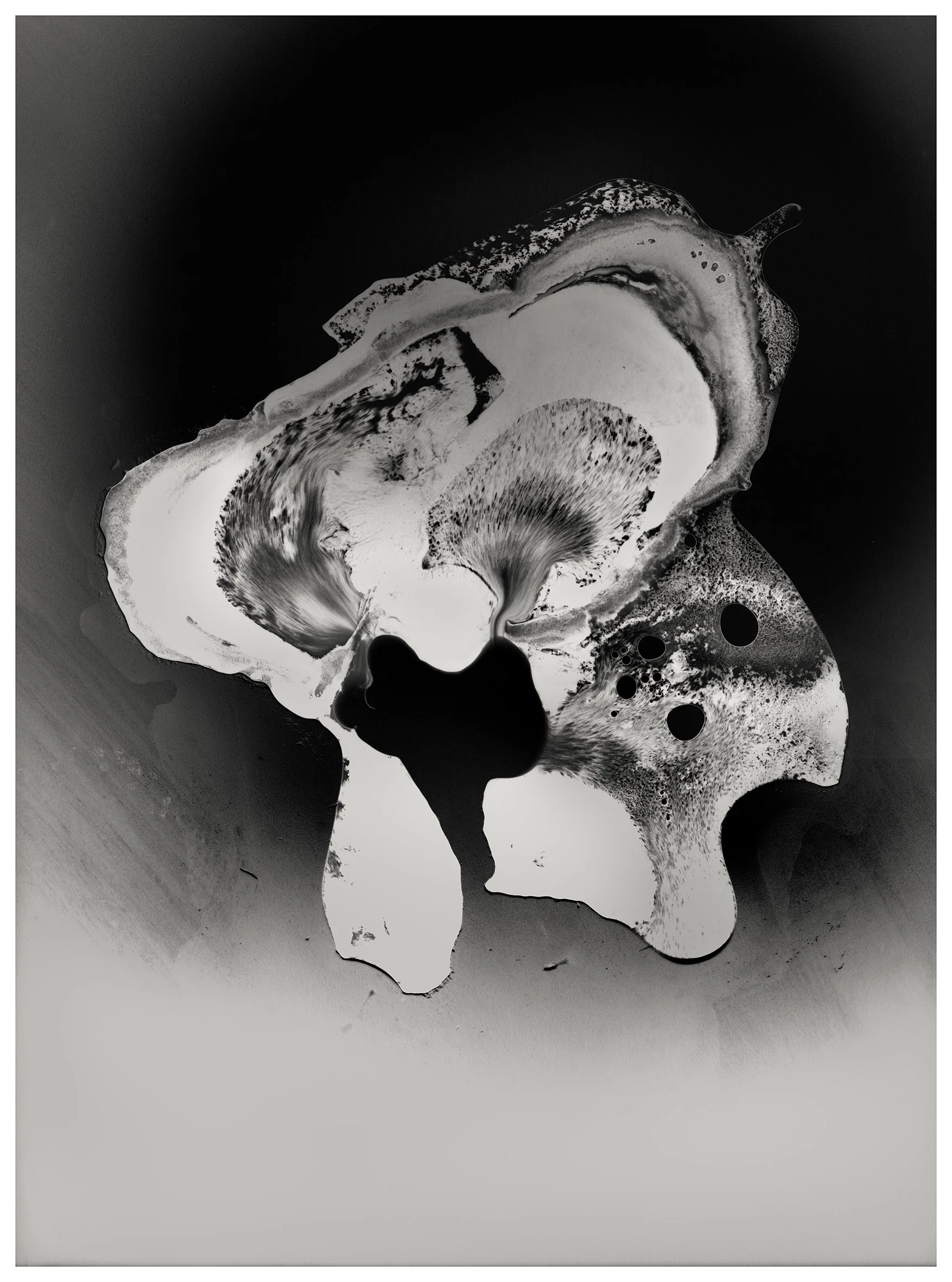
Negative Blood # 03
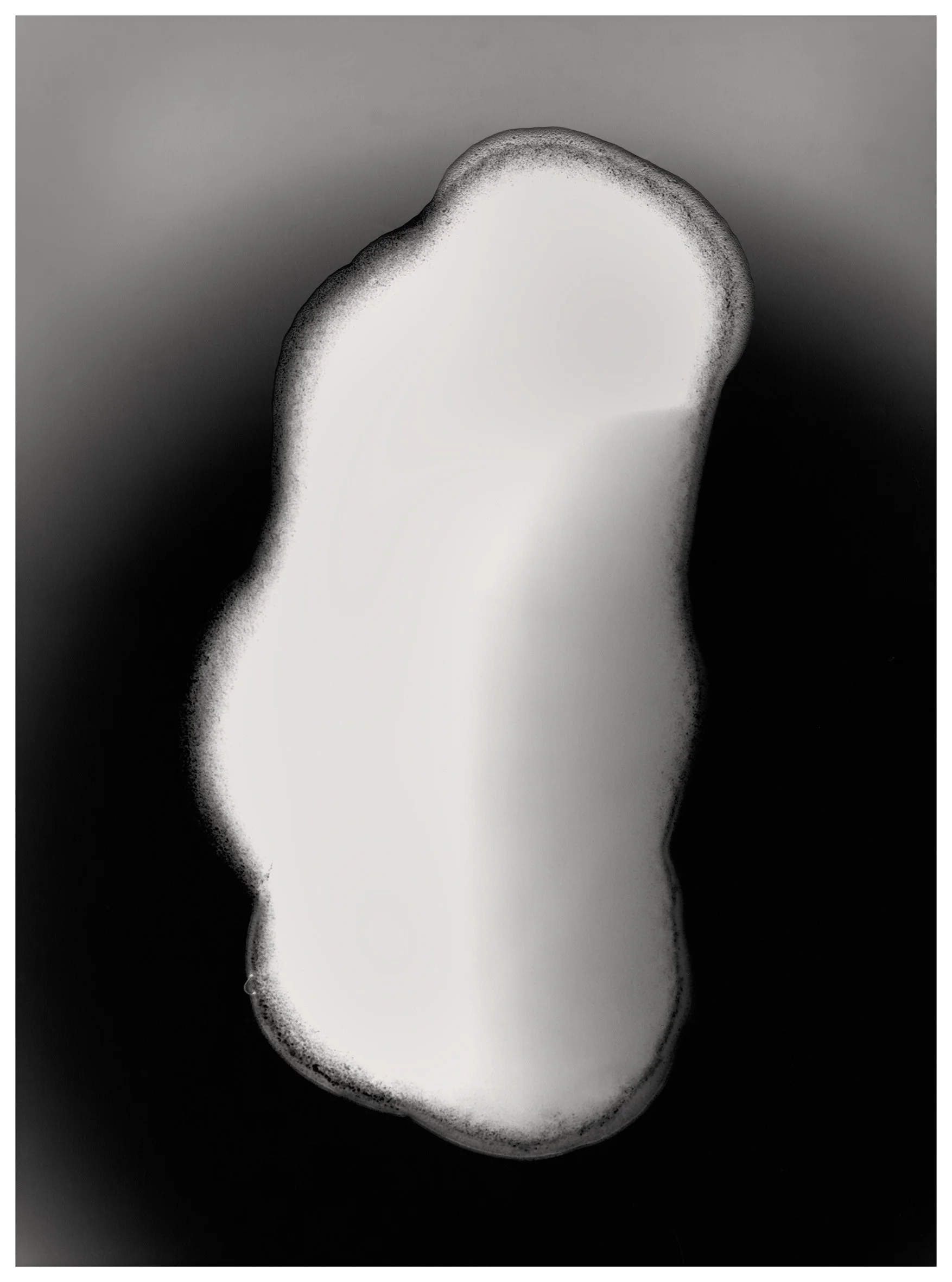
Negative Blood # 01
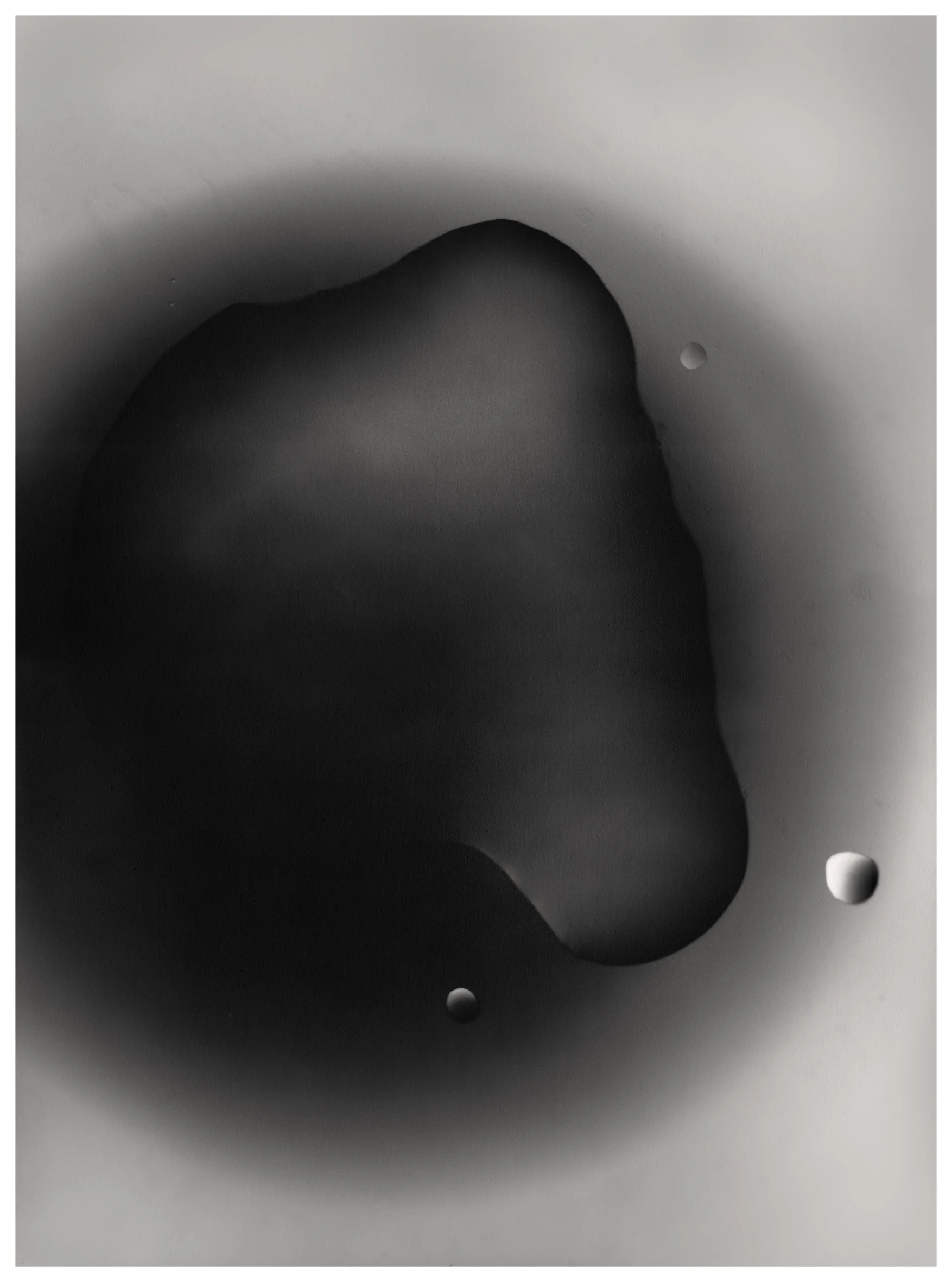
Negative Blood # 05
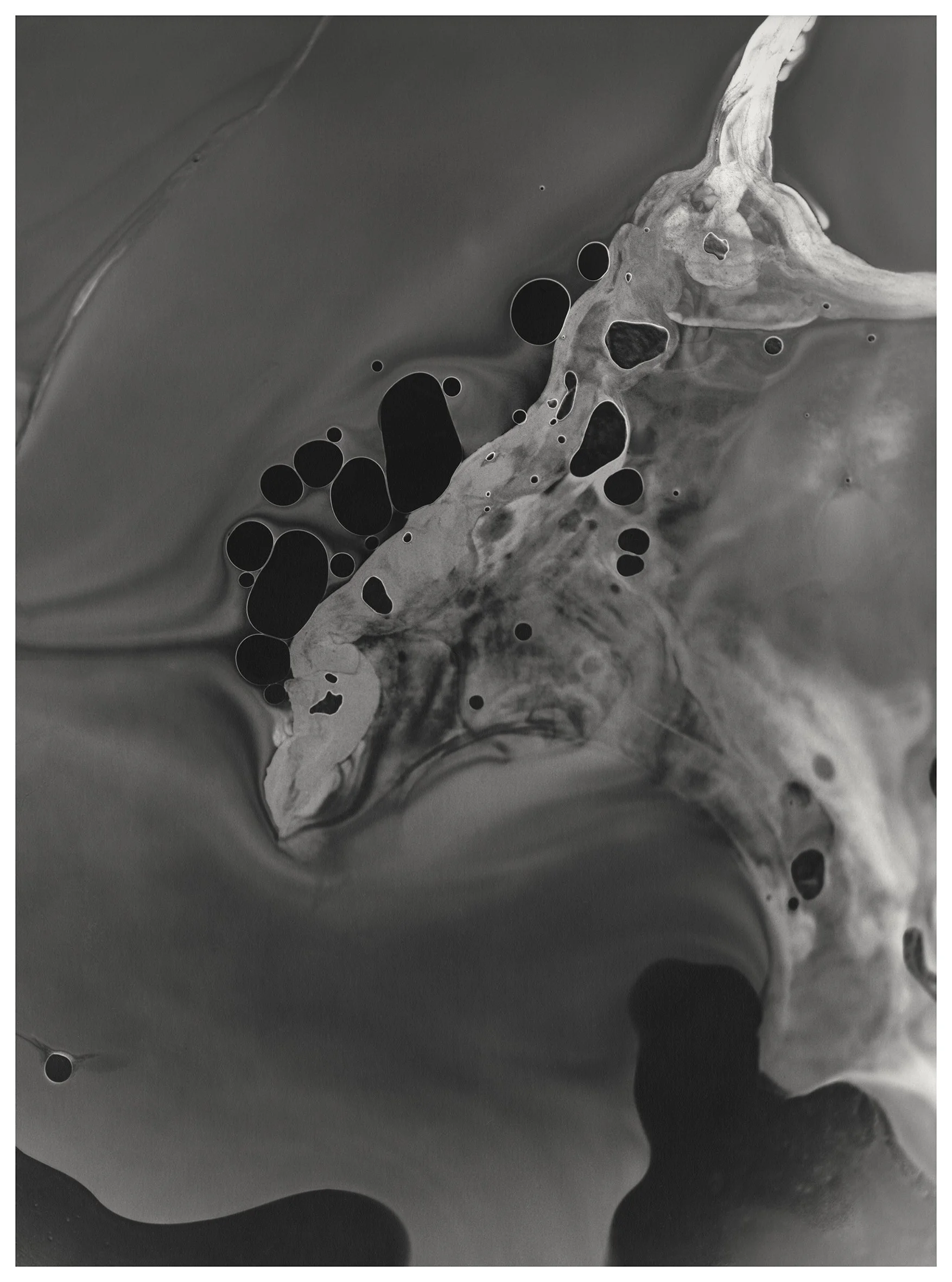
Negative Blood # 07
© All works by Aneta Grzeszykowska
Artists & Writers in This Issue
In alphabetical order by the first name
