Editor’s Note
Doppelgänger unfolds as a theatre of resemblance that never resolves into sameness. The figures repeat, double, and echo, yet something essential slips each time. Identity becomes a choreography of hesitation, a gesture that both reveals and withholds.
Pairs of bodies appear in dialogue. They sit across from one another, lean together, or turn away. Their faces fall behind veils of hair, as if recognition were suspended, or perhaps deferred. What we encounter is not mimicry but the flicker of a self dividing in order to see itself.
Neumann’s work feels close to the quiet unease of Borges y yo. Borges writes of the one who writes and the one who lives, two versions of the self that never fully coincide. Here, too, the self splits, but it does so in flesh and fabric. The doubles are not metaphors. They are presences. They belong to the world even as they question their place in it.
Color functions like architecture. Red, blue, and white recur as structural motifs. A chair, a table, a gesture of touch become elements in a grammar of embodiment. The scenes feel staged yet intimate, suggesting that identity is shaped as much by material things as by interior states. These photographs reveal the subtle labor of performing the self, especially within the codes of gender, intimacy, and family.
There is no original among these pairs. No primary and no shadow. Each figure carries equal weight, as if the self were always already doubled. The doppelgänger here is not an apparition but a threshold, a point where subjectivity wavers and becomes porous.
In Doppelgänger, Pupa Neumann invites us to pause in that wavering. The images ask us to consider how we inhabit our own likeness, how we construct and inherit our gestures, and how often we stand beside ourselves without knowing it. These works do not answer the question of identity. They illuminate the space where the question begins.
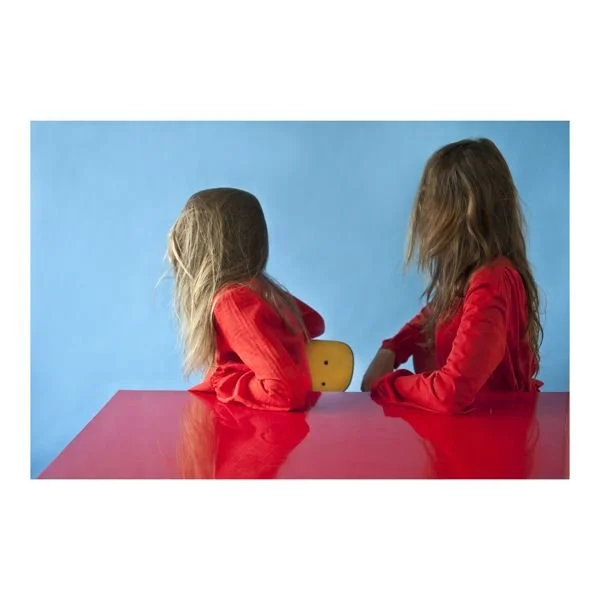
© Pupa Neumann, Doppelgänger, 2010,11
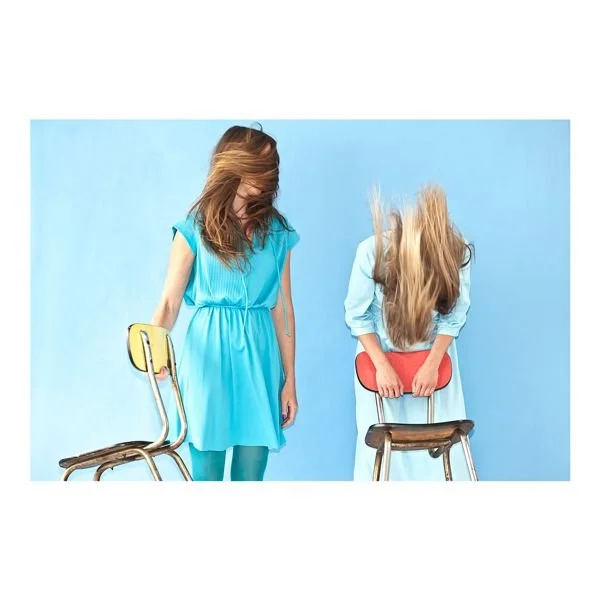
© Pupa Neumann, Doppelgänger, 2010,11
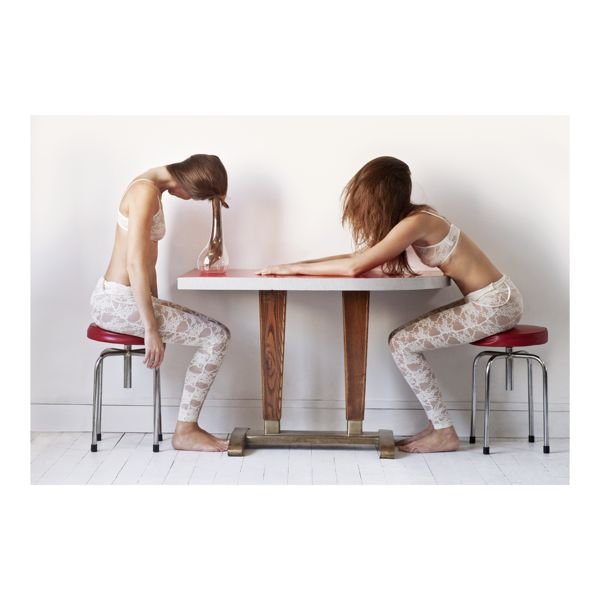
© Pupa Neumann, Doppelgänger, 2010,11

© Pupa Neumann, Doppelgänger, 2010,11

© Pupa Neumann, Doppelgänger, 2010,11
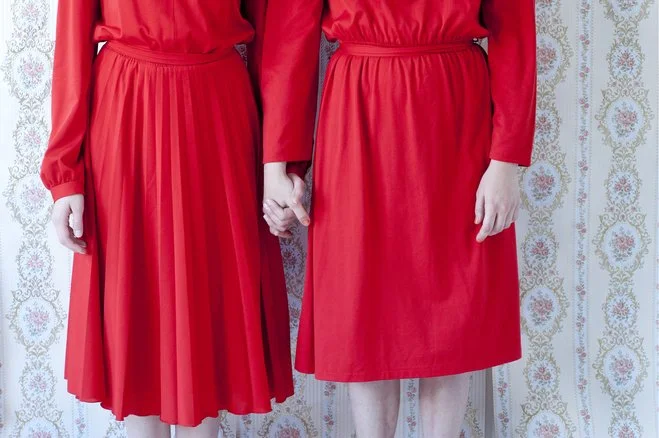
© Pupa Neumann, Doppelgänger, 2010,11

© Pupa Neumann, Doppelgänger, 2010,11
