Editor’s Note
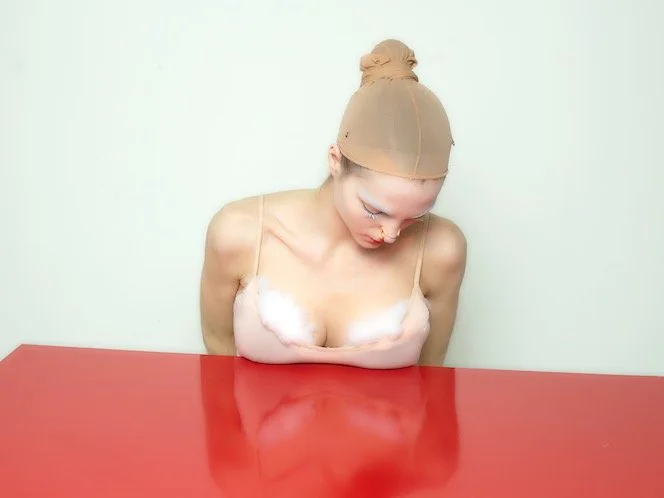
Fille de offers a sequence of portraits that feel closer to ritual than representation. A woman sits at a table, her gaze steady or emptied out, her face marked, her body arranged in gestures that are both intimate and opaque. The images do not behave like portraits, yet they do not behave like performances either. They seem to belong to a space that follows both, or perhaps to the moment after both have ended.
The title, Fille de, remains suspended. Daughter of what, or whom. The phrase suggests lineage but refuses to complete itself, leaving the viewer in the gap between inheritance and invention. In this unfinished sentence, Neumann constructs a place where identity is not given but assembled, where the self emerges from fragments, materials, and gestures rather than from any stable origin.
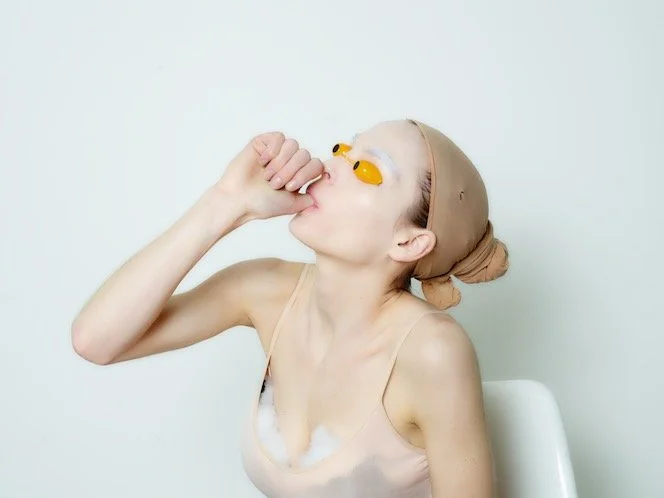
Each photograph presents the subject as a site of transformation. Feathers, yolks, silicone, powder, red pigment. These materials cling to the body like traces of earlier acts. Makeup becomes evidence of contact. The table becomes stage and altar at once. The body becomes something closer to inscription than display.
Here, the sign meets the flesh. The face, usually the anchor of identity, is unsettled. The mouth is painted but mute. The eyes look outward yet remain unreachable. These images question the codes that shape feminine visibility. They reveal how easily expression can become a mask, and how quickly a mask can feel like a wound.
Neumann’s formal language echoes the concerns of her Doppelgänger series, but here the doubling folds inward. There is no external twin. The fracture occurs within the subject, between the body that appears and the body that is felt. The woman is both spectacle and witness, both the one who is seen and the one who refuses naming.
There is no comfort in these images, but there is clarity. Neumann refuses the grammar that portraits usually obey. She offers instead a syntax of rupture, a quiet insistence that identity is always negotiated, never fixed. Fille de reveals the distance between the role and the self, between what is inherited and what is resisted.
This is not the confession of a daughter. It is the emergence of someone who has stepped outside the script.
Jorge R. G. Sagastume
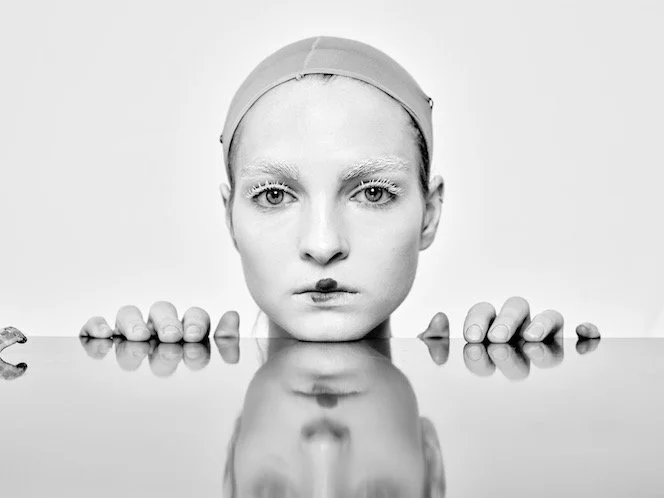
© Pupa Neumann, Fille de
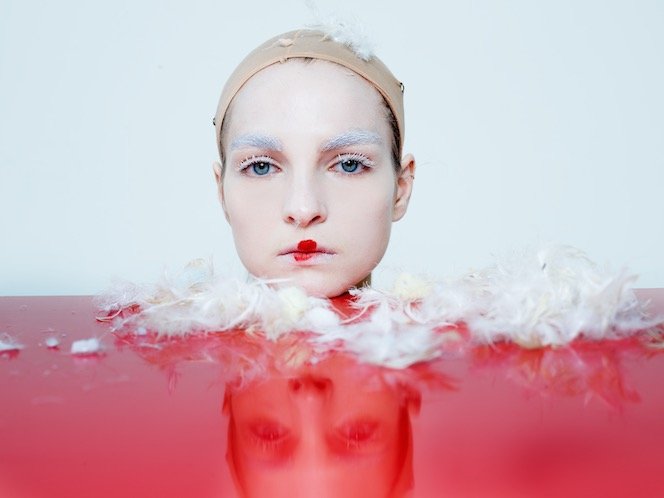
© Pupa Neumann, Fille de
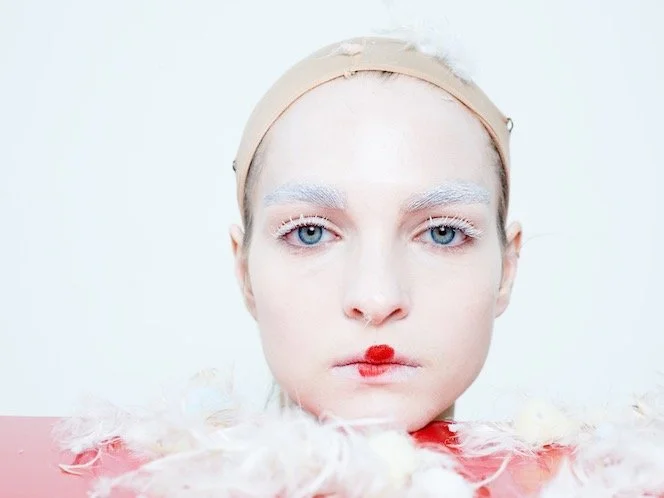
© Pupa Neumann, Fille de
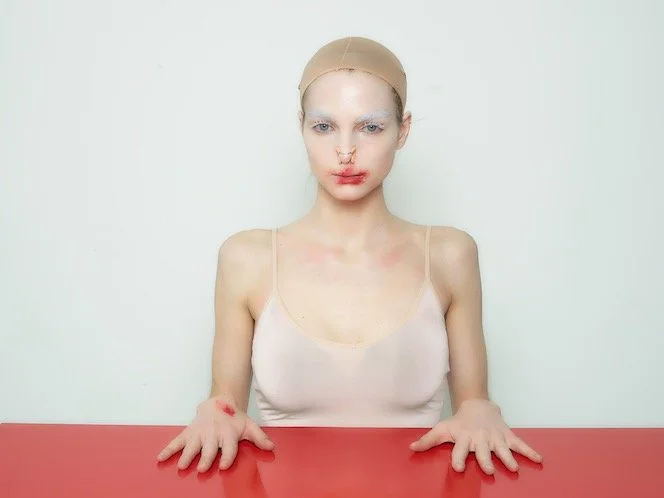
© Pupa Neumann, Fille de
© Pupa Neumann, Fille de
© Pupa Neumann, Fille de
