Editor’s Note
La Madeleine de Gide is not an act of recovery. It is an act of reimagining. Madeleine Gide, long eclipsed by the biography of her husband, Nobel laureate André Gide, emerges here not as historical supplement but as a speculative presence, freed from the margins to which her life was assigned.
Each portrait in this series is a variation on a silence. A woman sits at a red table. Her posture shifts. Her hair forms braids, ropes, or loose constellations. Her gestures move between withdrawal and assertion, ritual and stillness. Through repetition and subtle transformation, Pupa Neumann maps the fragile distance between being seen and being interpreted.
Color structures these images. The red table becomes a line of inheritance, a boundary, a surface of inscription. Against deep blue and black grounds, the figure appears luminous and withheld at once. Costume, makeup, and pose are not decorative. They are elements in a grammar of subjectivity, a way of giving shape to what history left unnamed.
What returns here is not the historical Madeleine. It is the possibility of a Madeleine who exceeds the role assigned to her: wife, cousin, caretaker, absence. Neumann does not attempt to reconstruct a life. She inhabits its gaps. She imagines the textures of a self that was never granted narrative space. This Madeleine is not remembered. She is rewritten.
There is a linguistic undertone to the series. The images test the relationship between signifier and self. The face appears, then disappears. The body bends toward meaning, then slips away. Identity becomes provisional, something formed in gesture rather than in fact. Neumann’s work suggests that the self does not stand behind the performance. The performance is where the self becomes visible.
Madeleine is not saint, muse, or martyr. She is a figure in process, a subject refusing reduction. Each image holds her in the moment before she resolves into any single identity. In that suspended state lies the philosophical force of the series. Neumann allows us to see a woman shaped by history step outside its margins, not by recovering what was lost, but by inventing a space where she can appear on her own terms.
These photographs do not restore Madeleine. They open her. They fracture and reassemble her into a presence that resists closure. What remains is not an answer to who she was, but a quiet recognition of how many selves one life can contain.
Jorge R. G. Sagastume
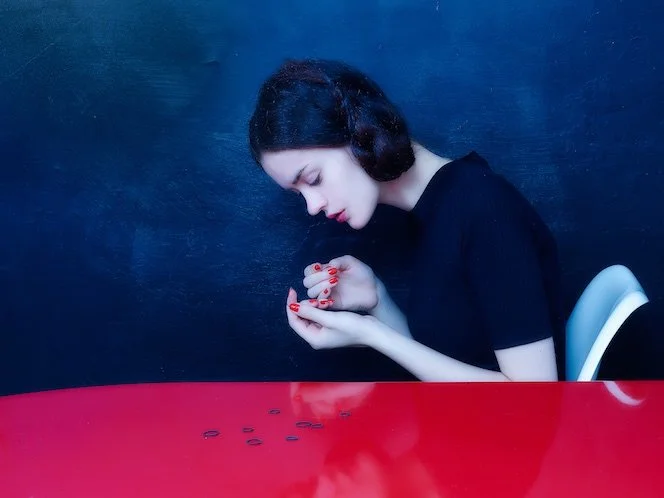
© Pupa Neumann, La Madeleine de Gide
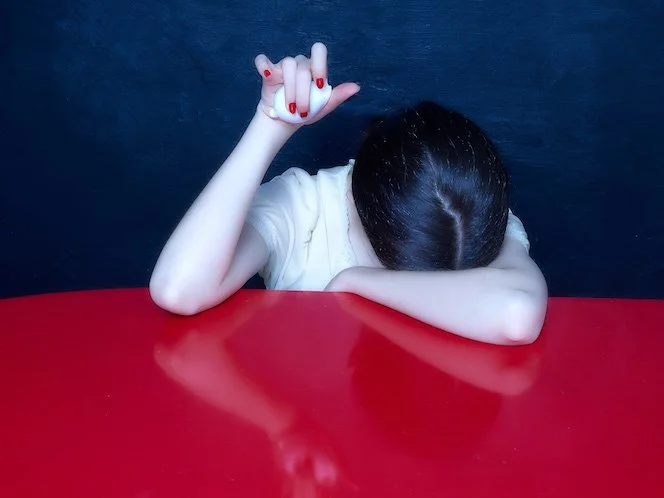
© Pupa Neumann, La Madeleine de Gide
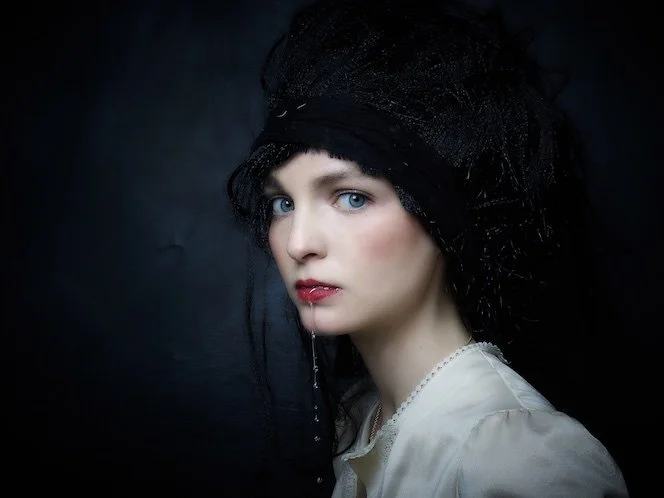
© Pupa Neumann, La Madeleine de Gide
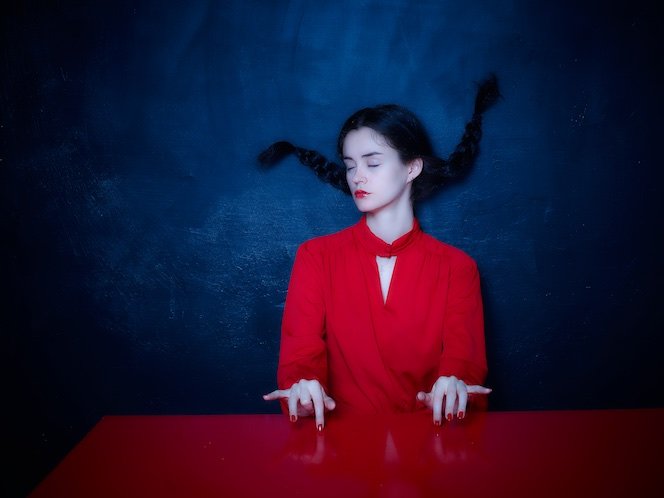
© Pupa Neumann, La Madeleine de Gide
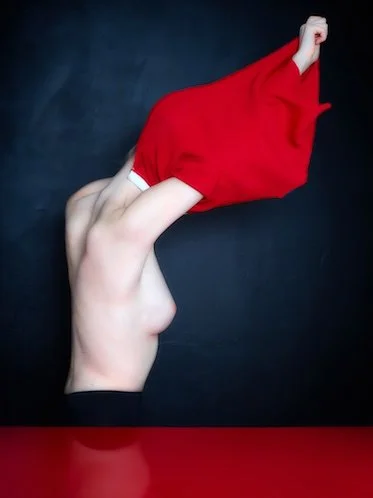
© Pupa Neumann, La Madeleine de Gide
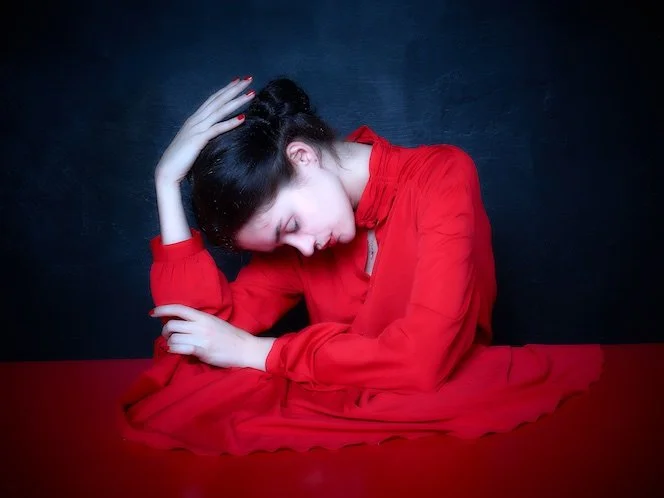
© Pupa Neumann, La Madeleine de Gide
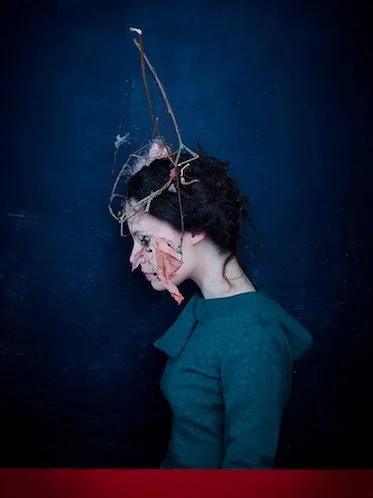
© Pupa Neumann, La Madeleine de Gide
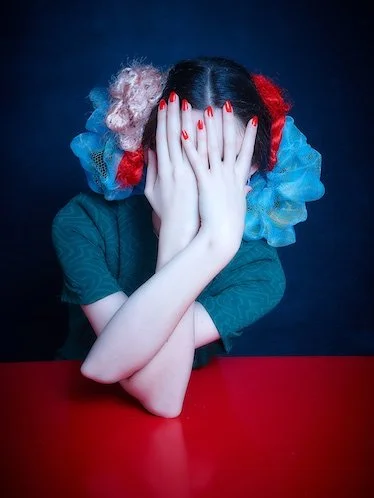
© Pupa Neumann, La Madeleine de Gide
