Editor’s Note
In Waiting Room, Pupa Neumann turns time into a material. It does not flow. It pools. It thickens around the figures, holding them in a suspension that looks voluntary but feels imposed. Nothing begins here. Nothing ends. The world has been paused, and the pause has become the subject.
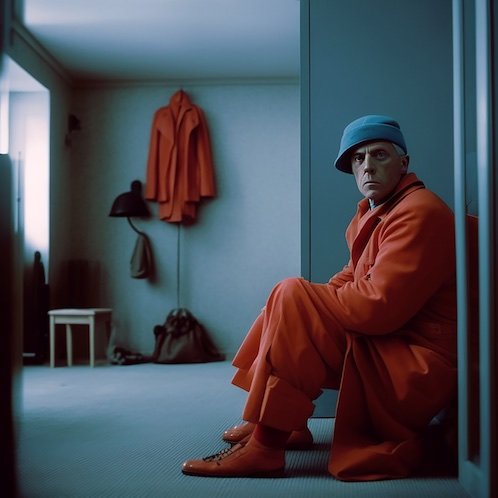
The rooms are immaculate, composed with a precision that borders on ritual. Orange and blue divide the scene like opposing clauses in a sentence. The figures sit between them, caught inside a grammar they did not write. The palette does not decorate the space. It rules it. Each block of color becomes a boundary that keeps meaning at bay.
The men inside these interiors appear dressed for transit, but transit never comes. Their coats are too formal, their hats too deliberate, their postures too resolved for anything as ordinary as waiting. They are arranged, as if the room were studying them. In several images, clothing appears without bodies, doubles hang still on hooks, and presence slips into costume. Identity becomes something that can be donned or shed.
The repetition across images deepens the disquiet. The poses shift only slightly, as if rehearsed in another life. The orange coat returns. The blue light returns. The silence returns. Familiarity tilts toward the uncanny. These figures exist inside an echo.
Neumann’s waiting is not psychological. It is structural. The men are held by the room more than by time. Their stillness is a kind of obedience, yet the obedience has no object. They are waiting not for an event but for recognition. They are waiting for the world to confirm the forms they have taken on. They are waiting to be named.
But the room does not respond. It holds them gently, almost tenderly, yet with complete indifference. The door remains closed. The air does not shift. The scene becomes a meditation on identity without momentum, on selves shaped not by action but by the spaces that contain them.
Waiting Room asks a question that hums beneath the images: What becomes of a person when the architecture defines them more clearly than memory does? Neumann offers no answer. She gives us only the rooms, the coats, the perfect posture, and the unresolved quiet where meaning should be.
Jorge R. G. Sagastume
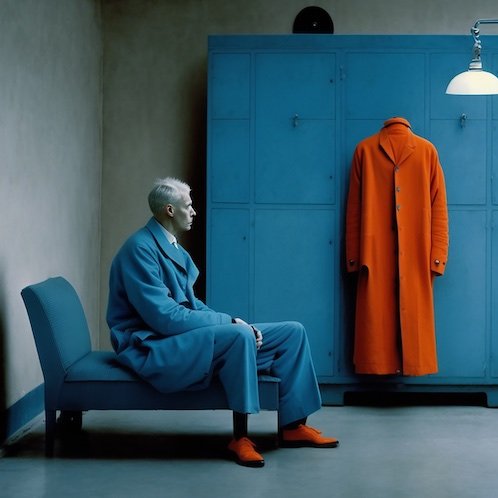
© Pupa Neumann, Waiting Room

© Pupa Neumann, Waiting Room
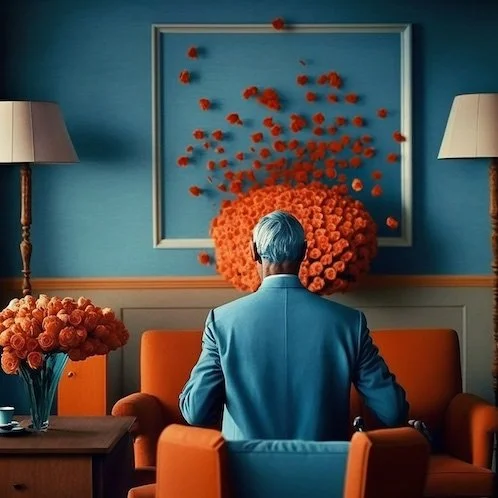
© Pupa Neumann, Waiting Room
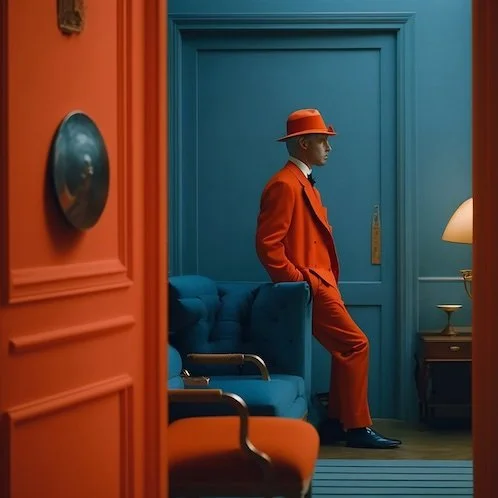
© Pupa Neumann, Waiting Room
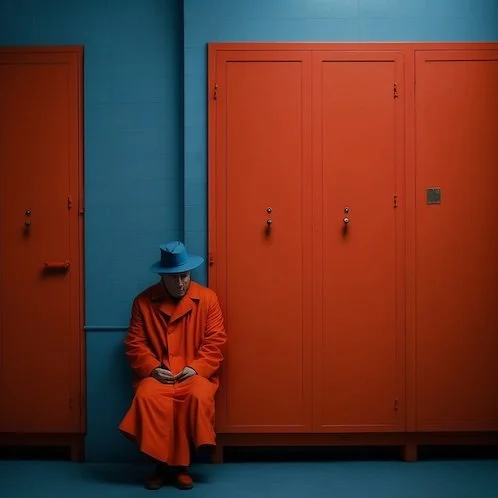
© Pupa Neumann, Waiting Room
© Pupa Neumann, Waiting Room
